

Maddy summarySRES 51 is a symbolic Senate resolution expressing that the United States Agency for International Development (USAID) is essential for advancing U.S. national security. It states USAID helps mitigate foreign threats before they reach U.S. shores, promotes global stability, addresses the root causes of migration and extremism, and counters China's influence. The resolution does not change laws or funding - it only affirms the Senate’s view on USAID’s role. It was introduced by 38 Senators and refers to existing laws requiring congressional input for USAID changes.
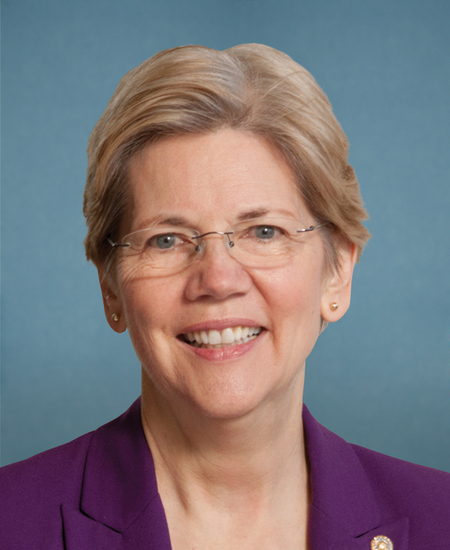
Sen. Elizabeth Warren
Sponsored bills
Maddy summaryThe Stop Arming Cartels Act of 2025 bans the civilian sale, transfer, or possession of rifles capable of firing .50 caliber ammunition, directly affecting individuals and businesses handling these weapons. It includes exceptions for government use and rifles owned before the law's enactment, and requires owners to register such rifles with the federal registry within 12 months without fees. The bill also adds new liability for sellers who knowingly transfer these rifles to foreign narcotics traffickers or individuals designated under the Foreign Narcotics Kingpin Act. Additionally, it expands firearm sales reporting to include rifles and creates a new federal prohibition on firearm transfers to designated foreign traffickers.
Maddy summarySRES 49 is a ceremonial Senate resolution designating the week beginning February 3, 2025, as "National Tribal Colleges and Universities Week." It recognizes Tribal Colleges and Universities (TCUs), which serve over 230 federally recognized tribes and provide culturally grounded education to Native and non-Native students in underserved communities. The resolution calls for public observance through activities that highlight TCUs' role in preserving indigenous languages, supporting tribal communities, and preparing students for the workforce. This symbolic measure does not create new laws or allocate funding, but aims to raise national awareness of TCUs' contributions.
Maddy summaryThis bill mandates increased federal funding for two key education programs. It requires annual appropriations for Title I of the Elementary and Secondary Education Act (which supports schools serving disadvantaged students) and the Individuals with Disabilities Education Act (IDEA, which funds special education) starting in 2026. The bill sets specific, rising annual funding levels - based on a 2025 baseline and national per-student spending - to gradually reach 40% of the national average per-pupil expenditure for IDEA by 2035. These funds directly affect school districts receiving Title I support and those providing special education services under IDEA. The funding is made mandatory, not discretionary, ensuring consistent annual support for these programs.
Maddy summaryThis Senate resolution (SRES 42) is a symbolic expression of disapproval by the Senate for pardons granted to individuals convicted of assaulting Capitol Police officers. It does not change any laws or affect legal outcomes but formally condemns those pardons as inconsistent with the Senate's position. The resolution directly addresses the Senate's stance toward those who received pardons for violent acts against law enforcement during the January 6, 2021, Capitol breach.
Maddy summaryS 280, the Global Health, Empowerment and Rights Act, removes barriers for foreign nongovernmental organizations (NGOs) seeking U.S. aid under the Foreign Assistance Act. It directly affects foreign NGOs providing health services (like counseling) with non-U.S. funds, ensuring they cannot be denied aid solely for offering such services if they comply with local laws and U.S. federal standards. The bill prohibits denying aid based on health services provided with non-U.S. funds and stops applying stricter rules on non-U.S. funds for advocacy to foreign NGOs compared to U.S. NGOs. This changes how the U.S. government evaluates eligibility for aid, making the process more consistent for foreign health-focused organizations.
Maddy summaryThis bill creates a new federal crop insurance policy to help farmers recover from income losses caused by severe weather. It directly affects farmers growing covered crops (excluding timber, pets, or animals for show) across all 50 states and territories by offering a single index policy tied to specific weather events like drought, flooding, extreme heat, or wildfires. Key features include flexible coverage options (allowing farmers to "buy-up" to 150% or "buy-down" to 5% of median county income in 5% increments), 30-day payment timelines after weather events, and reduced paperwork. The policy prioritizes support for small-scale farms, underserved producers, and those with under $350,000 in income, with a report required within one year to guide future implementation.
Maddy summaryThis bill requires Congress to formally declare war before the U.S. can conduct a first-use nuclear strike. It prohibits federal funding for any such attack unless Congress has declared war expressly authorizing it. The bill defines "first-use" as an attack launched without prior confirmation that the U.S., its territories, or allies have already been hit by a nuclear strike. This would directly affect the President’s authority to order nuclear weapons and require congressional approval for the most significant military decision.
Maddy summaryThe Neighbors Not Enemies Act repeals the Alien Enemies Act, a 19th-century law that allowed the president to detain or deport non-citizens during wartime. This removes a historical legal authority that targeted non-citizens based on nationality during declared wars. The repeal affects how the government could act against non-citizens in wartime scenarios but does not change current immigration or detention policies in peacetime. The bill makes no other policy changes beyond this specific repeal.
Maddy summaryS 173 increases taxes on aviation fuel used by private jets and non-commercial aircraft, imposing a rate of 35.9 cents plus $1.641 per gallon (compared to 4.3 cents for commercial aviation), with annual inflation adjustments starting in 2026. It creates exceptions for emergency uses like medical evacuations or disaster response, and eliminates an existing exemption for certain agricultural aviation. The additional tax revenue funds a new "Clean Communities Trust Fund" to support air quality monitoring, expand public transit infrastructure near airports, and improve transportation in disadvantaged communities - requiring at least 50% of funds to target areas disproportionately impacted by air pollution. This bill directly affects private jet operators and aviation fuel suppliers while directing resources to environmental and transit projects in low-income communities.