

Maddy summaryThe College Athlete Right to Organize Act (S 2469) would recognize college athletes receiving athletic scholarships as employees under federal labor law, granting them the right to form unions and negotiate collectively with their schools and athletic conferences. It defines a "college athlete employee" as any student participating in intercollegiate sports who receives direct financial aid (like a scholarship) for that participation, and establishes multiemployer bargaining units allowing athletes across competing schools in the same conference to collectively bargain. The bill prohibits schools from requiring athletes to waive these rights in scholarship agreements and clarifies that the law does not change how athletic scholarships are taxed or affect eligibility for federal student aid.
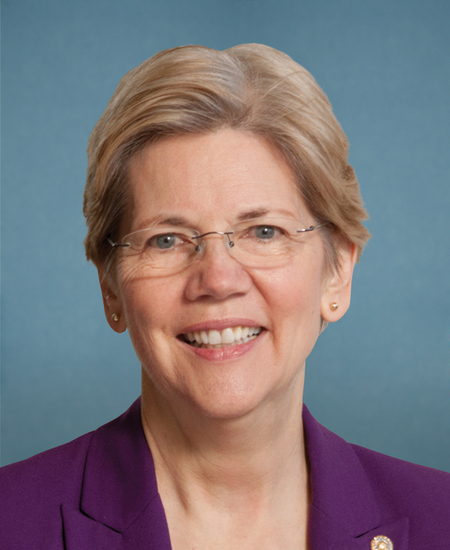
Sen. Elizabeth Warren
Sponsored bills
Maddy summaryThe End Solitary Confinement Act would prohibit solitary confinement in all federal prisons, immigration detention facilities, and other federal custody settings, with limited exceptions for emergencies. It requires all incarcerated people to have at least 14 hours per day of out-of-cell interaction in shared spaces, including structured programming, recreation, and social activities. The law establishes a community monitoring body to oversee implementation, creates detailed reporting requirements for facilities, and provides legal remedies for violations. It also incentivizes states to adopt similar standards through federal funding mechanisms, with special protections for vulnerable groups including young people, older adults, people with disabilities, and those with mental health needs.
Maddy summarySRES 338 is a non-binding Senate resolution recognizing how the Americans with Disabilities Act (ADA) of 1990 enables independent living and economic self-sufficiency for people with disabilities. It highlights that over one-third of disabled individuals rely on Medicaid for health coverage and community-based care, yet many remain in segregated institutions due to Medicaid limitations and insufficient community services. The resolution calls for bipartisan action to strengthen Medicaid funding, oppose cuts or work-reporting requirements that hinder access to care, and expand home-based services to support employment and community living. It specifically urges federal agencies to improve accessibility in housing, transportation, emergency services, and competitive employment opportunities for people with disabilities, particularly those of color facing systemic barriers. This resolution does not create new law but advocates for policy changes to fulfill the ADA’s promise.
Maddy summaryThe Transformation to Competitive Integrated Employment Act (S 2438) aims to transition people with disabilities from special certificates (which allow employers to pay below minimum wage) to competitive integrated employment. It establishes grant programs for states and eligible entities to help employers transform their business models to provide competitive wages (at least minimum wage or customary rates for similar work) and integrated services. The bill phases out special certificates with a 5-year sunset provision (ending 5 years after enactment) and requires employers to transition employees to competitive integrated employment settings. It also mandates data collection, evaluation, and stakeholder engagement, with a focus on involving people with disabilities and their families in the transition process.
Maddy summaryThe Build Now Act of 2025 adjusts federal housing funding for eligible cities and counties that receive Community Development Block Grants (CDBGs). It rewards jurisdictions with strong housing growth by adding bonus funds to their CDBG allocations if their housing growth rate meets or exceeds the median of similar areas, or if they qualify as "extremely high-growth" (4%+ annual growth). Conversely, areas with below-median growth face a 10% reduction in their standard CDBG allocation. The bill uses housing unit data from the Census Bureau to calculate growth rates and requires annual reports on these metrics before funding is distributed. This policy directly affects over 100 metropolitan areas meeting the defined eligibility criteria under the Housing and Community Development Act of 1974.
Maddy summaryThis bill establishes minimum salary ($45,000 annually for full-time) and wage ($30/hour for part-time) standards for paraprofessionals and education support staff in public schools. It authorizes $25 billion in federal funding for fiscal year 2026 with annual increases tied to inflation or 2%, to help states meet these requirements. States must submit implementation plans to ensure full-time staff meet the minimum salary and part-time staff meet the minimum wage within four years, with 98% of funds going directly to local school districts. The legislation directly affects school support staff, school districts, and state education agencies across the country.
Maddy summaryThis bill expands health coverage access for military families by modifying the TRICARE Young Adult Program. It directly affects military service members' children aged 21-26 who previously faced eligibility restrictions or separate fees. Key changes include removing a prior age limit that excluded some young adults and eliminating a separate premium for this coverage. The result is simplified access to health care under TRICARE without additional costs for qualifying dependents. These updates apply to existing TRICARE benefits, not new programs.
Maddy summaryThis bill expands Medicare Part B coverage to include specific pharmacist services, directly affecting Medicare beneficiaries and pharmacists who provide these services. It defines "pharmacist services" as evaluations and treatments for illnesses like COVID-19, flu, RSV, or strep throat, or services addressing public health emergencies, requiring collaboration with physicians as state law permits. Medicare would pay 80% of the lower of the actual charge or 85% of the physician payment rate (100% for public health emergencies), and prohibits balance billing for these services. The changes take effect January 1, 2026.
Maddy summaryThis bill eliminates government subsidies for fossil fuel production by increasing royalties for oil and gas extraction, terminating tax credits for fossil fuel companies, and prohibiting government funding for fossil fuel projects. It repeals recent legislation that provided fossil fuel subsidies, including provisions from the Inflation Reduction Act, and requires a study of additional subsidies. The bill affects fossil fuel companies, government agencies, and financial institutions that support fossil fuel development. Key provisions would take effect for production and tax years beginning after the bill's enactment.
Maddy summaryThe Stop the Scammers Act establishes a whistleblower reward program for individuals reporting violations of federal consumer financial law (e.g., scams, fraud). Whistleblowers who provide original information leading to successful enforcement actions by the Consumer Financial Protection Bureau (CFPB) may receive 10-30% of recovered civil penalties (minimum $50,000 if penalties are under $1 million). The bill mandates strong confidentiality protections for whistleblowers, prohibits employers from waiving these rights via contracts, and requires the CFPB to report annually on the program. It directly affects whistleblowers in consumer finance cases and the CFPB’s enforcement process, not the general public.