

Essential Caregivers Act of 2025 This bill prohibits certain health care facilities from limiting the access of essential caregivers to residents of those facilities, including during designated emergency periods. Specifically, the bill generally prohibits Medicare skilled nursing facilities, Medicaid nursing facilities, Medicaid intermediate care facilities, and associated inpatient rehabilitation facilities from restricting the access of essential caregivers to residents of the facilities, including during emergency periods in which visitation rights are otherwise restricted. During emergency periods, facilities may restrict access for an initial period of up to seven days and for one additional maximum seven-day period (if the additional period is approved by the state health department). Facilities may restrict access for a total of 7 days (or 14 days with the approval of the state health department) during an emergency period. Essential caregivers must agree to comply with any safety protocols set by the facility, which may be no more stringent for caregivers compared to those for staff. Caregivers who fail to comply with these requirements may be denied access, subject to an appeals process.
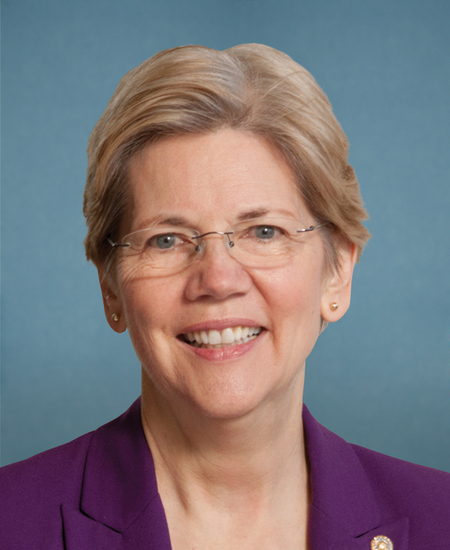
Sen. Elizabeth Warren
Sponsored bills
Maddy summaryThe ARMAS Act of 2025 transfers control of certain firearms export licensing from the Department of Commerce to the Department of State to better address illegal firearm trafficking. It designates Mexico, Central American nations, and Caribbean countries as "covered countries" subject to stricter export controls, requiring certification before exports and establishing reporting requirements to track and disrupt illegal firearms flows. The bill mandates an interagency strategy to address U.S. firearms contributing to violence in these regions and increases participation in the eTrace program for tracking firearms. It also modifies the Caribbean Basin Security Initiative to better address firearms trafficking and human rights concerns.
Maddy summaryS 3513, the "Decreasing Russian Oil Profits Act of 2025," imposes U.S. sanctions on foreign entities (including companies and individuals) involved in purchasing or facilitating the import of Russian oil or petroleum products after a 90-day delay from enactment. The sanctions block all U.S. financial transactions with these entities, though the bill includes four exception frameworks: countries reducing Russian oil purchases, payments for Ukraine support, countries providing military/economic aid to Ukraine, and limited temporary port-specific exemptions. Exceptions require annual congressional certifications and strict fund usage rules (e.g., Ukraine aid funds must support defense or humanitarian needs). The sanctions expire 5 years after enactment.
Maddy summaryThis bill amends Section 1983 of federal law to make federal law enforcement agencies financially liable when officers violate constitutional rights during searches, seizures, or arrests. It directly affects federal agencies (like the FBI or DHS) and citizens who experience such rights violations. Key provisions remove the requirement that a violation must stem from an agency's policy or custom, and waive the U.S. government's sovereign immunity - meaning agencies can be sued directly in court regardless of officer defenses or immunities. The law expands legal recourse for victims by enabling lawsuits against the agency itself, not just individual officers.
Maddy summaryThis bill prohibits the implementation of the WISeR model under Medicare, specifically blocking the Secretary of Health and Human Services from adopting the "Medicare Program; Implementation of Prior Authorization for Select Services for the Wasteful and Inappropriate Services Reduction (WISeR) Model" or any similar model. It directly affects Medicare beneficiaries and providers by preventing a new payment and service delivery approach that would require prior authorization for certain services. The key provision is a direct ban on the WISeR model's rollout, as outlined in the July 1, 2025, federal notice. This change would maintain current Medicare approval processes for affected services without creating new requirements. The bill does not establish new benefits or alter existing Medicare coverage rules.
Maddy summaryThis bill amends federal law to remove a specific deadline for completing background checks on firearm purchases. It deletes the requirement that background checks must be completed within 10 business days, as previously established under the Brady Handgun Violence Prevention Act. The change directly affects firearm sellers (such as licensed dealers) who conduct these checks, removing a strict timeline for completing the process. The bill focuses on technical adjustments to existing background check procedures without altering the underlying requirements for the checks themselves.
Maddy summaryThe Keeping All Students Safe Act prohibits inappropriate seclusion and restraint in schools, including mechanical, chemical, and certain physical restraints that pose safety risks. It requires schools to use less restrictive interventions first, train staff in crisis intervention, and notify parents within 24 hours of any restraint incident. The law mandates meetings between schools and parents after incidents to discuss prevention strategies and provides documentation requirements. It applies to all public schools receiving federal funding, with specific protections for students with disabilities. States must submit compliance plans and report on restraint use, including demographic data on affected students.
Maddy summaryThis bill creates a new federal grant program to fund public transit improvements in cities. It provides 80% federal funding for urban transit systems to cover operating costs (like vehicle service), security enhancements (including personnel), and safety projects identified by safety committees. Recipients must certify they will maintain or increase their own funding levels for these services and cannot use funds to switch to third-party on-demand transit providers. The grants are allocated based on each city's reported transit operating expenses from the previous year.
Maddy summaryThe International Human Rights Defense Act of 2025 establishes a permanent U.S. Special Envoy for LGBTQI+ rights at the Department of State, with the authority to coordinate all federal government efforts addressing discrimination and violence against LGBTQI+ people globally. The bill requires the development of a U.S. global strategy to prevent and respond to criminalization, discrimination, and violence against LGBTQI+ individuals, along with annual briefings to Congress on progress. It mandates that the Department of State's Country Reports on Human Rights Practices include detailed information about laws criminalizing or discriminating against LGBTQI+ people in all countries. The legislation also requires all U.S. government-funded programs to adopt inclusive nondiscrimination policies covering sexual orientation, gender identity, and sex characteristics. These provisions aim to strengthen U.S. foreign policy efforts to protect LGBTQI+ rights worldwide through coordinated diplomatic, humanitarian, and development initiatives.
Maddy summaryThis bill establishes comprehensive labor protections for domestic workers, including house cleaners, nannies, personal care aides, and other employees working in private homes. It directly affects approximately 2.2 million domestic workers, predominantly women of color and immigrants who have historically been excluded from key labor protections. Key provisions include requiring written employment agreements outlining wages and hours, providing earned sick days for health and safety needs, establishing fair scheduling practices with advance notice requirements, protecting privacy rights, and prohibiting unfair wage deductions. The bill also extends civil rights protections under Title VII of the Civil Rights Act to domestic workers and creates a Domestic Employee Standards Board to recommend workplace standards.