

Maddy summaryThis bill provides $16 billion in federal funding over five years (2024-2028) to stabilize the child care sector. It directly affects child care providers by offering grants to offset operating costs, support higher wages for early childhood educators without increasing fees for families, and expand access to high-quality care. Key provisions include funding for providers in underserved areas (like rural communities, infant/toddler care, and inclusive services for children with disabilities) and a requirement that 99% of funds go directly to providers. The funds are administered through the existing framework of the American Rescue Plan Act's child care program.
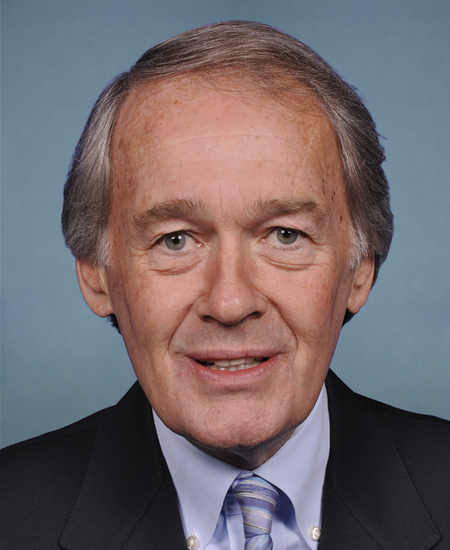
Sen. Edward J. Markey
Sponsored bills
Maddy summaryThe Wage Theft Prevention and Wage Recovery Act requires employers to provide detailed paystubs showing wage calculations, timely final payments within 14 days of termination, and strengthens workers' ability to recover stolen wages. It increases civil penalties for wage theft violations from $10,000 to $22,030 per employee affected for initial violations, and extends the statute of limitations for wage theft claims from 2-3 years to 4-5 years. The bill creates a $50 million grant program to fund community partnerships that prevent wage theft and assist workers in recovering unpaid wages. These provisions target widespread wage theft that disproportionately affects low-wage workers, women, immigrants, and racial and ethnic minorities.
Maddy summaryThis bill requires car manufacturers to include AM radio receivers as standard equipment in all new vehicles sold in the U.S., without additional cost to buyers. It mandates that AM radio controls be clearly visible on the dashboard for drivers. For vehicles sold before the rule takes effect, manufacturers must label them to disclose the absence of AM radio. The bill aims to maintain access to AM radio broadcasts, which are used for emergency alerts, but does not mandate new emergency systems.
Maddy summaryThis bill repeals a federal provision (subsection (b) of section 14 of the National Labor Relations Act) that allowed states to enact "right-to-work" laws. These laws prohibit mandatory union membership as a condition of employment. By removing this federal barrier, the bill would prevent states from passing or enforcing such laws, directly affecting workers in states with existing right-to-work statutes. The key mechanism is the federal preemption of state right-to-work laws, making union membership voluntary nationwide without requiring state action.
Maddy summaryThis bill requires the Supreme Court to establish a code of conduct for justices within 180 days of enactment, with public access to these rules on the Court's website. It sets minimum disclosure standards for gifts, income, and reimbursements received by justices and their law clerks, and strengthens recusal requirements when justices have financial ties to parties in cases. The bill creates procedures for filing complaints about justices' conduct and establishes a judicial investigation panel to review such complaints, while also requiring parties and amicus curiae to disclose gifts to justices and lobbying activities related to the nomination of justices. These provisions aim to increase transparency and accountability in Supreme Court operations.
Maddy summarySCONRES 19 is a non-binding concurrent resolution introduced in the U.S. Senate on July 27, 2023, by Senators Booker, Coons, and others. It urges the President to establish a United States Commission on Truth, Racial Healing, and Transformation to address historical racial inequities. The resolution identifies over 400 years of systemic oppression against Black, Indigenous, and other people of color, including discriminatory policies like the Chinese Exclusion Act and residential segregation. The proposed commission would aim to "jettison the belief in a hierarchy of human value," "embrace our common humanity," and eliminate persistent racial inequities. As a resolution, it does not create the commission itself but formally calls on the executive branch to take action.
Maddy summaryThis joint resolution directs the Archivist of the United States to immediately certify and publish the Equal Rights Amendment (ERA) as the 28th Amendment to the Constitution, claiming it was validly ratified after Virginia became the 38th state to approve it in 2020. It asserts that the ERA meets all constitutional requirements under Article V, including the completion of ratification by three-fourths of states (38 states total), and references historical precedents like the 27th Amendment’s delayed certification. The resolution does not alter legal rights or create new law - it solely addresses the Archivist’s statutory duty under 1 U.S.C. §106b to formally recognize the ERA’s ratification. It affects only the Archivist’s office, requiring them to fulfill a procedural step without delay.
Maddy summaryThis joint resolution designates August 20th as "Slavery Remembrance Day" to commemorate the arrival of the first 20 enslaved Africans at Fort Monroe, Virginia, on August 20, 1619. It encourages all Americans to observe the day through ceremonies and activities to acknowledge slavery's history and its lasting impacts. The resolution is symbolic - requiring no new laws or funding - and asks the President to issue a proclamation urging public observance. It does not directly affect specific groups or alter existing policies.
Maddy summarySenate Resolution SRES 320 calls for the immediate release of Eyvin Hernandez, a U.S. citizen and Los Angeles County public defender wrongfully detained in Venezuela since March 2022. It urges the Biden administration, including the Secretary of State and Special Presidential Envoy for Hostage Affairs, to use all available tools to secure his release and condemns Venezuela’s practice of detaining U.S. citizens for political purposes. The resolution also expresses support for all U.S. citizens wrongfully detained abroad and solidarity with Hernandez and his advocates. As a non-binding resolution, it does not create new law but formally states the Senate’s position on this specific case.
Maddy summarySRES 319 is a non-binding Senate resolution (introduced July 27, 2023) that declares racism a public health crisis in the United States. It cites documented health disparities affecting racial and ethnic minorities, including lower life expectancy for Black and Native American people, higher maternal mortality rates, and disproportionate COVID-19 impacts. The resolution commits the Senate to developing a nationwide strategy to dismantle systemic racism, address health inequities, and advance reforms targeting social determinants of health. It directly affects all racial and ethnic minority communities facing these documented health disparities, though it does not create new laws or allocate funding.