

Maddy summaryThis bill requires states to allow eligible voters to register or update their registration at polling places on election day for federal elections, starting with the November 2024 general election. It mandates that polling places provide the necessary forms for registration or changes, directly affecting voters and state election systems. States already without voter registration requirements for federal elections are exempt. The law includes a phased implementation for states needing time, requiring at least one compliant location per 15,000 voters in each jurisdiction before November 2026.
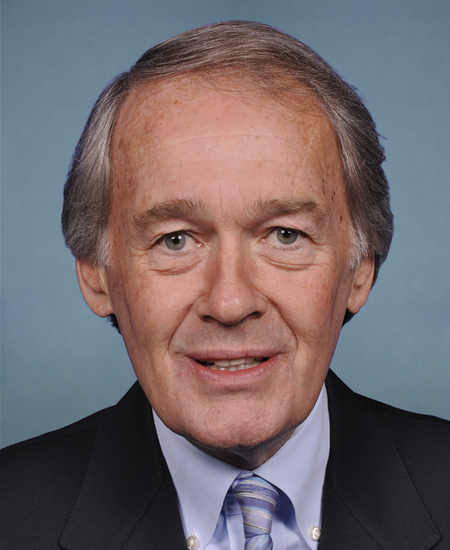
Sen. Edward J. Markey
Sponsored bills
Maddy summaryThe Civilian Climate Corps for Jobs and Justice Act establishes a national service program to create climate-related jobs and provide workforce development, with a focus on historically underserved communities including low-income communities, communities of color, and tribal communities. The program would recruit 50,000-400,000 participants annually by 2028 to work on climate resilience projects like energy-efficient building retrofits, wildfire prevention, and pollution remediation. Participants would receive a minimum $17/hour living allowance, health care, and $25,000 in educational benefits upon completion, with 50% of projects required to be located in under-resourced communities of need, including 10% in Indian country. The bill also includes provisions to ensure worker protections, including the right to organize and collective bargaining, and requires coordination with tribal nations to respect tribal sovereignty.
Maddy summaryThe Part-Time Worker Bill of Rights Act would expand protections for part-time and temporary workers by reducing the eligibility requirement for family and medical leave from 12 months to 90 days. It prohibits employers from discriminating against employees based on their work hours, requiring equal treatment in compensation, benefits, and scheduling for part-time and full-time workers. The bill also requires employers to offer preferred work schedules to existing part-time employees before hiring new workers or using temporary staffing services. Employers who violate these provisions could face civil penalties and be required to compensate affected workers. This legislation applies to most private sector employers as well as federal, state, and local government employees.
Maddy summaryThis bill prohibits states from automatically removing voters from registration lists due to factors like not voting or not responding to mail. It requires states to use only objective evidence (such as death records or proof of permanent move out of state) for removals and mandates 48-hour notice to voters with reinstatement options. Voters who move within a state can update their address through election day to vote at their new location. The law directly affects registered voters and election officials who must implement these verification and notice requirements.
Maddy summaryThe Schedules That Work Act requires employers in retail, food service, hospitality, and cleaning industries to provide 14 days' advance notice of work schedules and pay predictability pay for last-minute changes. It gives eligible nonexempt workers the right to request schedule adjustments for family care, health needs, education, or second jobs, with employers required to grant these requests unless they have a bona fide business reason for denial. The law applies to covered employers with 15 or more workers and prohibits retaliation against employees who exercise these rights. The legislation aims to address widespread issues with unpredictable scheduling that disproportionately affect low-wage workers, particularly women and people of color, by providing greater schedule stability and control.
Maddy summaryThe Register America to Vote Act of 2023 would require states to automatically register eligible citizens to vote when they turn 18 or when they interact with state motor vehicle authorities for services like license applications, with an option to decline. States would need to establish electronic systems to transfer registration information from motor vehicle offices to election officials, updating voter registration without requiring additional action from citizens. The bill includes strong privacy protections for voter information and requires states to modernize registration systems to improve accuracy and accessibility, particularly benefiting young people, individuals with disabilities, and racial and ethnic minorities. It also provides $3 billion in federal funding to help states implement these changes by 2024.
Maddy summaryThis proposed constitutional amendment would give Congress and states the authority to regulate campaign contributions and spending, including setting limits and prohibiting corporations from spending money to influence elections. It explicitly protects freedom of the press by stating the amendment cannot be used to abridge it. If ratified by three-fourths of state legislatures, it would establish a new constitutional standard for campaign finance regulation.
Maddy summaryThe Green Ribbon Act of 2023 establishes a program to recognize schools and nonformal learning institutions (like museums and libraries) that meet three environmental goals: graduating environmentally literate students, reducing operational emissions from buildings, and improving environmental health for students and staff. It authorizes $10 million for fiscal years 2024-2029 to fund state grants, requiring at least 40% of grant funds to support underresourced schools, and provides $10,000 honoraria to recognized institutions. The bill creates a new Office of School Infrastructure and Sustainability within the Department of Education to oversee technical assistance and program implementation. Annual reports are required to track progress, with programs aligned to environmental and health science through consultation with the EPA and CDC.
Maddy summaryThe Jumpstart on College Act provides $250 million annually for six years to support early college high schools and dual or concurrent enrollment programs that allow high school students to earn college credits while still in school. It targets low-income students and those from underrepresented groups by requiring eligible partnerships to serve at least 51% low-income students and providing matching funds from 20% to 50% over six years. The bill mandates specific activities including student support services, teacher professional development, and data collection to track outcomes like high school graduation rates, college credit completion, and postsecondary enrollment. States receiving funding must develop statewide strategies to expand access, address barriers, and align programs with quality standards.
Maddy summaryS 2776, the Disarm Hate Act, prohibits firearm sales, possession, shipment, or transport for individuals convicted of a misdemeanor hate crime or receiving an enhanced sentence for such a crime. It directly affects people convicted under state, federal, or tribal law of a misdemeanor involving bias motivation (based on race, religion, gender, sexual orientation, gender identity, or disability) and physical threat or force. The bill amends federal gun laws (18 U.S.C. §§922(d) and 922(g)) to add this restriction, while excluding cases where convictions were expunged, pardoned, or where legal rights were waived improperly. This is a concrete policy change affecting firearm access for a specific category of offenders, not a broader hate crime prevention measure.