

Maddy summaryThis bill amends a 1990 agricultural law to create new federal research and extension grants focused on "natural climate solutions." It directs funding for projects that improve land management practices on agricultural lands, soils, grasslands, wetlands, and forests to store carbon or reduce greenhouse gas emissions. Key provisions require these projects to incorporate traditional ecological knowledge, promote biodiversity and climate resilience, and reduce runoff. The grants directly support researchers, farmers, and land managers working on these specific conservation practices.
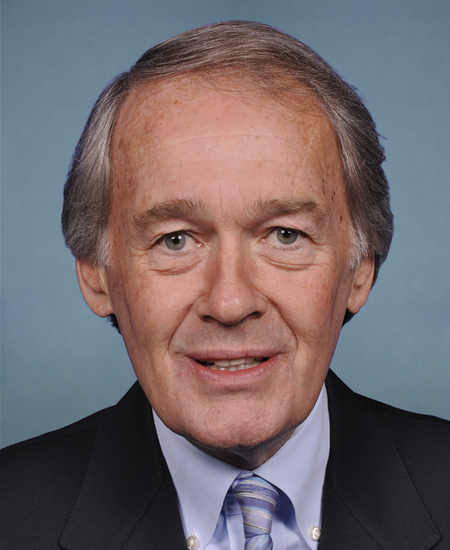
Sen. Edward J. Markey
Sponsored bills
Maddy summaryThe FARM Home Loans Act of 2023 amends the Farm Credit Act of 1971 to improve rural housing financing options. It expands the definition of "appurtenances" to include accessory dwelling units (ADUs), such as in-law suites or guest houses, making these eligible for inclusion in home loan applications. The bill also increases the maximum loan amount for certain rural housing loans from $2,500 to $10,000. These changes directly affect rural homeowners and borrowers seeking financing through the Farm Credit System, potentially broadening access to loans for properties with ADUs and increasing available funding.
Maddy summaryThe Children and Teens' Online Privacy Protection Act (S 1418) strengthens privacy protections for children under 13 and teens aged 12-17 online. It requires websites, apps, and connected devices that target children or teens, or are reasonably likely to be used by them, to obtain verifiable consent from parents for children and from teens themselves for those aged 12-17 before collecting personal information. The bill prohibits targeted marketing to children and teens, establishes a "Digital Marketing Bill of Rights for Teens," and creates a Youth Privacy and Marketing Division within the Federal Trade Commission to enforce these rules. It also sets out specific Fair Information Practices Principles requiring transparency, data accuracy, security, and proper data disposal for children's and teens' personal information.
Maddy summaryThe Eliminating Bias in Algorithmic Systems Act of 2023 requires federal agencies that use or regulate complex algorithms (like AI systems) to establish dedicated offices focused on preventing bias and discrimination. These agencies must submit detailed reports every two years to Congress on algorithmic risks, mitigation efforts, stakeholder engagement, and recommendations for improvement. The law also creates an interagency working group to coordinate anti-bias strategies across agencies. It directly affects all federal agencies whose algorithms impact government programs, economic opportunities, or protected rights, such as those managing benefits, loans, or employment systems.
Maddy summaryThe Clean Energy Minerals Reform Act of 2023 establishes a new regulatory framework for hardrock mineral mining on federal lands. It requires mining operations to pay royalties of 5-8% on mineral production (with exemptions for existing operations), introduces annual $200 maintenance fees for existing mining claims, and $50 location fees for new claims. The bill creates a Hardrock Minerals Reclamation Fund to finance reclamation of abandoned mine sites, funded by these new fees and royalties. It also establishes new permitting requirements for exploration and mining activities, including environmental protection standards and financial assurances for reclamation. The law directly affects mining claim holders, operators, and the federal government through new revenue streams and regulatory requirements.
Maddy summaryThis bill requires the Secretary of Health and Human Services to issue draft guidance within one year of enactment, focusing on developing non-addictive pain treatments for chronic pain. The guidance must align with existing provisions under the SUPPORT Act, specifying details needed for pharmaceutical developers creating these treatments. It directly affects the HHS Secretary and future pharmaceutical companies working on non-addictive analgesics. The key mechanism is a mandatory timeline for HHS to create this guidance, aiming to streamline the development process for safer pain medications.
Maddy summaryThis is a ceremonial Senate resolution (SRES 492) honoring the late First Lady Rosalynn Carter. It expresses the Senate's condolences for her passing and recognizes her lifetime of humanitarian work, including her advocacy for mental health care, founding of caregiver support programs, and service with The Carter Center. The resolution does not create new laws or policies; it is purely a commemorative statement. It was introduced by a bipartisan group of senators and adopted by the Senate on December 7, 2023.
Maddy summaryThe Farewell to Foam Act of 2023 bans the sale and distribution of expanded polystyrene food service ware (like takeout containers and cups), expanded polystyrene loose fill (packing peanuts), and expanded polystyrene coolers starting January 1, 2026. It directly affects food service providers (restaurants, grocery stores, schools), manufacturers, distributors, and retailers selling these products. Violations require written warnings for first offenses, with escalating civil penalties starting at $250 for repeat violations, though small businesses with lower annual revenue face limits on how often penalties apply. The bill excludes coolers used for medical or drug storage, focusing the ban solely on consumer food and packaging items.
Maddy summaryThe YouthBuild for the Future Act increases annual funding for the YouthBuild program from $159.5 million in 2024 to $203.6 million by 2029, reserving 20% of funds above $125 million for rural programs and initiatives serving tribal communities, Native Hawaiians, and Alaska Natives. It expands allowable uses of funds to include meal assistance, help applying for federal benefits like SNAP, and disability support services, while updating program definitions to better serve justice-involved youth and those with foundational skill needs. The bill also requires annual consultation with program providers on performance metrics and allows grantees to use funds to meet matching requirements under the National and Community Service Act.
Maddy summaryThis bill, the Inclusive Democracy Act of 2023, protects voting rights for people with criminal convictions in federal elections. It requires states to notify individuals about their voting rights at conviction, during probation/parole, and in carceral settings, while establishing procedures for incarcerated people to register to vote and access absentee ballots. The bill mandates carceral settings to provide voter registration forms, absentee ballot applications, and access to voting information, with specific deadlines for processing and transmitting these materials. It also requires states to accept and process voting applications submitted by incarcerated individuals within defined timeframes, including allowing electronic submission. The law applies to federal elections starting with the November 2024 general election.