

Maddy summaryThis bill creates "stateless protected status" for individuals in the United States who are stateless (not recognized as citizens by any country). It provides a pathway to legal status including employment authorization, travel documents, and protection from deportation for those who meet certain requirements. The bill establishes procedures for determining statelessness, including consideration of evidence from various sources, and includes provisions for family members to receive similar protections. It requires the Department of Homeland Security to report on applications and includes provisions for future naturalization. The bill does not require the U.S. to admit new people into the country, but rather provides a status for those already present.
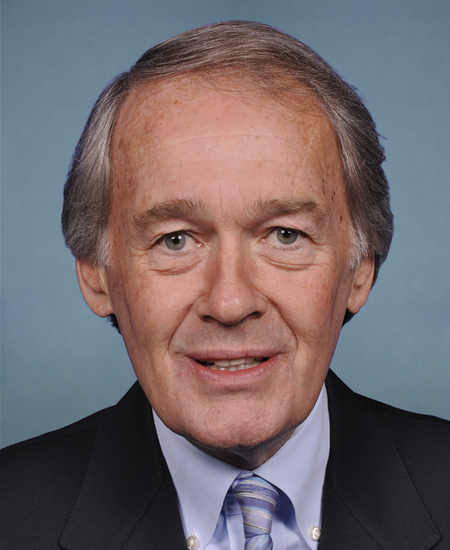
Sen. Edward J. Markey
Sponsored bills
Maddy summaryThis bill expands protections against unwanted robocalls by modifying the "Do Not Call" rules under the Communications Act. It removes the restriction to "residential" numbers, meaning the rules now apply to all phone numbers (including mobile and business lines), and prohibits any single robocall from an entity - not just repeated calls. The Federal Communications Commission must update its regulations within 270 days to implement these changes. This directly affects all American consumers who receive unsolicited automated calls, strengthening their ability to block such calls. The bill focuses on clarifying and broadening existing protections, not creating new penalties.
Maddy summaryThe PAST Act of 2024 amends the Horse Protection Act to strengthen protections against "soring" - the deliberate infliction of pain on horses to exaggerate their gait, primarily affecting Tennessee Walking Horses, Racking Horses, and Spotted Saddle Horses at shows, exhibitions, or sales. Key provisions include defining prohibited "action devices" (like certain boots or weighted shoes), implementing stricter disqualification periods for sore horses (180 days, then 1 year, then 3 years), requiring licensed, conflict-free inspectors, and increasing penalties for violations (fines up to $5,000 per offense and up to 3 years in prison). The bill directly affects event organizers, inspectors, competitors, and horse owners by mandating new inspection protocols and enforcement. It focuses on concrete policy changes to prevent animal cruelty in the horse show industry.
Maddy summaryS.Res. 593 is a Senate resolution condemning Russia's purported suspension of the New START Treaty and its nuclear threats during the invasion of Ukraine. It calls for Russia to return to full treaty compliance - including on-site inspections - and urges the President to continue arms control discussions with Russia and China. The resolution aims to maintain strategic stability and prevent nuclear escalation, directly addressing U.S. foreign policy priorities and Russia's actions. It does not impose legal requirements but expresses the Senate's position on arms control.
Maddy summarySRES 597 is a Senate resolution recognizing the heritage, culture, and contributions of American Indian, Alaska Native, and Native Hawaiian women. It formally celebrates their historical and ongoing achievements in fields like military service, business ownership, healthcare, science, arts, and civil rights, without creating new laws or policies. The resolution highlights specific examples, such as their roles in the military (including veterans and pioneers like Minnie Spotted Wolf), economic contributions (e.g., over 160,000 businesses owned by Native women), and cultural preservation efforts. As a symbolic gesture, it does not provide funding or mandate action but aims to honor these women's impact on U.S. society.
Maddy summarySRES 590 designates March 15, 2024, as "Long COVID Awareness Day" to recognize the condition affecting over 22 million Americans, including symptoms like fatigue and cognitive issues. The resolution urges federal agencies to expand research, public education, and support for people living with Long COVID, which disproportionately impacts minorities, women, and those with lower incomes. It does not create new laws or funding but symbolically highlights the need for greater attention to this health issue.
Maddy summaryThis bill establishes a federal grant program to improve mental health services for LGBTQ+ youth (including nonbinary, intersex, and Two Spirit youth). It funds eligible organizations to provide trauma-informed care, cultural competency training for caregivers, school bullying prevention guidelines, and family support resources. The bill explicitly bans the use of grant funds for conversion therapy and requires the development of a federal survey measuring mental health outcomes among these youth. It also mandates reports on mental health care in foster care and social services programs within two years.
Maddy summaryThe SAFE Act (S 3961) reforms surveillance practices under the Foreign Intelligence Surveillance Act (FISA) to better protect U.S. persons from warrantless surveillance. It requires the FBI to implement new training, approvals, and written justifications for queries of U.S. person data, prohibits warrantless access to communications of U.S. persons except in specific circumstances, and mandates enhanced reporting to Congress. The bill establishes accountability procedures for FBI employees who violate query protocols, reforms FISA Court procedures to include amicus curiae with privacy expertise, and limits how intelligence agencies can acquire and use personal data. These provisions directly affect the FBI, other intelligence agencies, and U.S. persons whose communications may be collected under FISA authorities.
Maddy summaryThis concurrent resolution (SCONRES 30) expresses Congress's support for designating March 10, 2024, as "Abortion Provider Appreciation Day." It acknowledges the critical role of abortion providers and staff in delivering essential reproductive health care, particularly amid increased restrictions following the Supreme Court's Dobbs decision, which overturned Roe v. Wade. The resolution condemns the impact of abortion bans on providers and patients while affirming Congress's commitment to protecting access to abortion care and provider safety. As a symbolic gesture with no legal effect, it does not change policy or directly affect any individuals or entities.
Maddy summarySRES 571 is a ceremonial Senate resolution honoring Edwin Walker, the Deputy Assistant Secretary for Aging at the Administration for Community Living, upon his retirement after a 30+ year career. The resolution recognizes his leadership in advancing the Older Americans Act, supporting older adults and caregivers, and managing pandemic relief efforts. It does not create new laws or policies - it simply expresses the Senate’s appreciation for his service and celebrates his retirement. The resolution has no direct policy impact or effect on legislation.