

Maddy summaryThis resolution (SRES 647) symbolically recognizes April 11-17, 2024, as the seventh annual "Black Maternal Health Week" in the U.S. Senate. It does not create new laws or allocate funding but formally acknowledges the disproportionate maternal health disparities affecting Black women, including higher mortality rates and systemic barriers in care. The resolution highlights the work of the Black Mamas Matter Alliance, which founded this annual observance to spotlight racial inequities in maternal health. It serves as a ceremonial acknowledgment of ongoing health disparities, not a policy action.
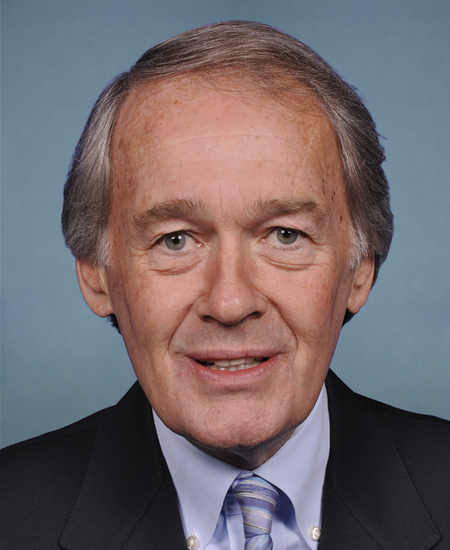
Sen. Edward J. Markey
Sponsored bills
Maddy summaryThis bill authorizes the U.S. Treasury to mint and sell commemorative coins honoring the 2026 FIFA World Cup, which will be hosted by the U.S., Mexico, and Canada. It specifies three coin types: $5 gold coins (max 100,000), $1 silver coins (max 500,000), and half-dollar coins (max 750,000), all with designs reflecting soccer and the World Cup. A surcharge is added to each coin sale ($35 for $5 coins, $10 for $1 coins, $5 for half-dollars), with all surcharge revenue going directly to FWC2026 US, Inc. to fund U.S. soccer programs, particularly youth initiatives and underserved communities. The coins may only be sold during 2026 and must cover all costs to avoid government expense.
Maddy summaryThe Forest Biomass Emissions Act of 2024 requires the Environmental Protection Agency (EPA) to account for total greenhouse gas emissions - from growing, harvesting, and burning forest biomass - when regulating electricity generated from this source. It mandates a one-year study by the EPA, in collaboration with the Energy and Agriculture Departments, to assess impacts on communities near biomass facilities, including air pollution, noise, dust, and socioeconomic factors. The study must collect data on air quality, community demographics, and facility compliance, then report findings to Congress and the Science Advisory Board within 60 days of completion. This bill directly affects EPA regulatory processes and communities living near forest biomass operations like wood pellet mills and power plants.
Maddy summarySRES 644 is a non-binding Senate resolution expressing support for designating April 1-30, 2024, as "Fair Chance Jobs Month." It highlights systemic barriers faced by formerly incarcerated individuals, including high unemployment (nearly 2/3 jobless), licensing restrictions in 20 states, and higher recidivism rates. The resolution affirms the Senate's backing for efforts to dismantle these barriers, expand workforce development programs (like pre-apprenticeships and career coaching), and foster collaboration between employers, government, and community organizations to improve employment opportunities. It does not create new laws or funding but raises awareness about fair-chance hiring practices.
Maddy summary# Summary of the Long-Term Care Workforce Support Act This comprehensive legislation establishes a framework to support and improve conditions for the direct care professional workforce (including home health aides, nursing assistants, and similar workers) through multiple key provisions: 1. **Workplace Violence Prevention** - Requires healthcare facilities to develop and implement written workplace violence prevention plans, including risk assessments, training, incident reporting procedures, and anti-retaliation policies. The plan must include specific measures to address different types of workplace violence (Type 1-4). 2. **Paid Sick Time** - Mandates that employers provide direct care professionals with paid sick time (1 hour for every 30 hours worked), with specific uses including: - Medical care for the employee - Caring for family members (children, parents, spouse, domestic partner) - Addressing domestic violence, sexual assault, or stalking - Public health emergencies (with additional paid sick time provided during declared emergencies) 3. **National Compensation Strategy** - Establishes a National Direct Care Professional Compensation Strategy to: - Identify ways to provide direct care professionals with livable wages - Guide State Medicaid agencies in compensating direct care professionals at full labor cost - Create a National Direct Care Professional Compensation Advisory Council with diverse representation - Address challenges including part-time work nature, workforce mobility, and inequities related to race, ethnicity, and immigration status 4. **Evaluation Framework** - Requires an evaluation of the Act's implementation and outcomes by an external evaluator with experience in home and community-based services, disability programs, and healthcare workforce programs. The evaluation will assess impacts on: - Workforce recruitment, retention, and advancement - Compensation and working conditions - Burnout and attrition rates - Access to long-term care services - Costs to Medicare and Medicaid programs The legislation aims to improve the quality of care for older individuals and people with disabilities by strengthening the direct care workforce through better compensation, safer working conditions, and improved benefits.
Maddy summaryThe Carried Interest Fairness Act of 2024 would change how investment fund managers are taxed on their share of profits (called "carried interest"). Currently, this is often taxed as capital gains (at lower rates), but the bill would require that certain gains be treated as ordinary income (taxed at higher rates) for managers who provide investment management services to partnerships. The bill would directly affect investment managers working for private equity, venture capital, and similar funds. Key mechanisms include reclassifying net capital gains from these interests as ordinary income, limiting ordinary losses to previously treated ordinary income, and changing how dispositions of these interests are taxed. The bill aims to align tax treatment with the nature of the compensation, which is more like wages than capital gains.
Maddy summaryThe SEEK HELP Act provides legal protections for individuals who assist during opioid overdoses. It shields people from civil lawsuits if they administer an opioid reversal drug (like naloxone) in good faith and prevents criminal charges for drug possession when someone seeks medical help (e.g., by calling 911) for an overdose. The bill also mandates a public awareness campaign about these protections and allows federal funds to support training for law enforcement and the public. This law directly affects people experiencing or witnessing overdoses, as well as emergency responders and law enforcement who interact with them during such emergencies.
Maddy summaryThe Climate Change Education Act establishes a new Climate Change Education Program within NOAA to increase climate literacy among students and educators. It directs NOAA to award grants for developing climate-focused curricula in grades 4-12, integrating climate concepts into STEM and social studies, and supporting teacher training - addressing the current gap where only 30% of middle school science teachers understand climate science consensus. Grants prioritize environmental justice communities (40% of funds) and fund higher education partnerships for applied climate research, career training in green jobs, and community-based youth programs. The program requires states to align climate education with existing standards and ensures students graduate with climate literacy knowledge. It authorizes $50 million annually for 2025-2030 to implement these provisions.
This resolution designates the first week of April 2024 as National Asbestos Awareness Week. It also urges the Surgeon General to warn and educate people about asbestos exposure, which may be hazardous to their health.
Maddy summaryThis bill requires random assignment of certain civil cases challenging laws to a district court judge, rather than allowing parties to strategically choose courts. It directly affects individuals or groups filing lawsuits seeking nationwide challenges to federal laws or statewide challenges to state laws. The key provision mandates that cases asking courts to block, invalidate, or order enforcement of laws (including regulations or agency policies) must be randomly assigned to a judge in the filing district. This aims to prevent "judge shopping" by eliminating the ability to select a court based on perceived judicial bias. The rule applies to both federal and state law challenges filed in district courts.