

Maddy summary# Summary of the Cannabis Administration and Opportunity Act This comprehensive legislation establishes a federal regulatory framework for cannabis in the United States, creating a legal, taxed, and regulated market while addressing social equity, public health, and workplace safety concerns. ## Key Provisions ### Federal Regulation & Taxation - Creates Chapter 56 of the Internal Revenue Code for cannabis taxation - Establishes a federal permit system for cannabis businesses (cultivation, production, distribution, retail) - Implements a tiered tax structure with special provisions for small businesses and social equity applicants - Requires compliance with federal labor laws (Fair Labor Standards Act, OSHA, National Labor Relations Act) ### Public Health & Safety - Integrates cannabis regulation under the Federal Food, Drug, and Cosmetic Act - Establishes specific rules for CBD products and dietary supplements - Creates transition periods (18 months for products, 3 years for drugs) for existing state-legal products - Requires safety data for new cannabis products before market entry ### Workplace Safety - Mandates compliance with OSHA standards for cannabis employers - Requires the Department of Labor to issue guidance on workplace safety practices - Funds research on workplace impacts of cannabis legalization - Includes provisions for worker training and hazard mitigation ### Social Equity & Community Investment - Creates a social equity program for cannabis business permits - Establishes a Cannabis Products Advisory Committee with diverse representation - Allocates $200 million annually for Community Development Financial Institutions - Provides $300 million annually for housing and community development in communities impacted by the "war on drugs" ### Banking Access - Updates anti-money laundering guidance to support cannabis-related businesses - Requires the Financial Crimes Enforcement Network to update guidance on reporting requirements - Prohibits financial institutions from denying services based on nonviolent cannabis offenses ### Enforcement & Compliance - Creates new enforcement mechanisms for violations of cannabis regulations - Establishes a process for addressing labor law violations in the cannabis industry - Includes provisions for criminal penalties for violations of the regulatory framework This legislation represents a comprehensive approach to federal cannabis regulation, balancing market creation with public health protections, social equity considerations, and workplace safety requirements, while addressing longstanding barriers to financial services for cannabis businesses.
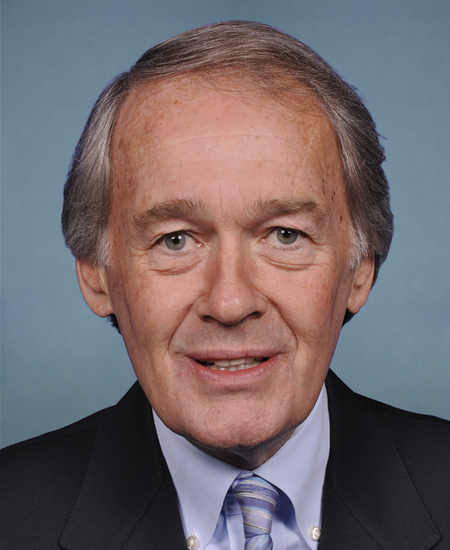
Sen. Edward J. Markey
Sponsored bills
Maddy summarySRES 664 is a symbolic Senate resolution designating April as "Community College Month" to honor the role of over 1,000 U.S. community colleges. It recognizes these institutions for supporting access to higher education and workforce training, particularly for local communities. The resolution highlights their economic contributions, including serving millions of students and contributing to national prosperity, but does not create new programs or alter funding. This is purely a commemorative resolution with no binding policy effects.
Maddy summaryThe Captive Primate Safety Act prohibits the trade, breeding, and possession of certain nonhuman primates - including chimpanzees, gorillas, lemurs, and other species - in interstate or foreign commerce. It directly affects private owners, breeders, and businesses involved in the primate trade, with exceptions for those who owned primates before the law's enactment (requiring 180-day registration with the U.S. Fish and Wildlife Service and restrictions on breeding/selling) and for registered research facilities. The law also exempts entities transporting primates to approved facilities. The U.S. Secretary of the Interior must issue implementing regulations within 180 days, but the prohibitions take effect immediately without them.
Maddy summaryThe Next Step Home Act restores voting rights in federal elections for U.S. citizens who have completed sentences for federal felony convictions after December 21, 2018. It directly affects people released from federal custody who have served their sentences, requiring federal agencies to notify them of their voting rights upon release. Key provisions include mandating notification by the Bureau of Prisons or probation officers, establishing legal remedies for voting denial, and tying federal prison funding to compliance with the law. The bill applies only to federal elections (not state/local), does not override state voting laws, and takes effect for elections after its enactment.
Maddy summarySRES 655 is a Senate resolution passed on April 18, 2024, to honor the late Joseph I. Lieberman, a former U.S. Senator from Connecticut (1988-2013), following his death. The resolution recognizes his career, including his role in creating the Department of Homeland Security, establishing the 9/11 Commission, and advocating for civil rights and environmental protections. It directs the Senate to adjourn in his memory and transmit a copy to his family, expressing the Senate's sorrow and respect. This procedural resolution does not create new laws or affect policy, as it solely commemorates his legacy.
Maddy summarySRES 648 is a Senate resolution that proclaims a Declaration of Environmental Rights for people incarcerated in U.S. prisons and jails. It affirms 12 specific rights, including the right to refuse hazardous work, access to information about environmental hazards, and the right to advocate for safer conditions without retaliation. The resolution directly affects nearly 2 million incarcerated individuals who often face environmental health risks like toxic air, contaminated water, and poor healthcare in facilities. While not a binding law, it calls for future legislation to adopt these principles and recognizes the need for humane treatment in correctional settings.
Maddy summaryThis bill (S 4188) bans financial markets from trading water or water rights as commodities for future delivery. It amends the Commodity Exchange Act and Public Law 85-839 to explicitly prohibit trading in water, water rights, or related financial indices or data. The change directly affects commodity exchanges, financial institutions, and traders who might have offered such contracts. It does not alter water management rules, usage rights, or affect water users.
Maddy summaryThe Youth Climate Leadership Act of 2024 requires five major federal agencies (EPA, Interior, Energy, Agriculture, and Commerce) to establish youth advisory councils. These councils, composed of 15-25 members aged 16-29 from diverse backgrounds and requiring at least 50% representation from disadvantaged communities, provide recommendations to agencies on environmental programs, climate impact metrics, and environmental justice. Councils must meet annually with public access, submit annual reports, and receive agency-provided educational materials. The bill mandates agencies to fund these councils with $250,000 annually per agency from 2025-2035.
Maddy summaryThe Green Climate Fund Authorization Act of 2024 authorizes $4 billion in U.S. funding for each of fiscal years 2025 and 2026 to be contributed to the Green Climate Fund (GCF), a global multilateral fund supporting climate action in developing countries. The GCF, established in 2010, finances projects focused on reducing greenhouse gas emissions, adapting to climate impacts, and addressing climate-related losses and damages across nearly 130 countries. The bill requires U.S. contributions to align with environmental justice principles, including free prior informed consent from indigenous communities, gender equality, and respect for human rights in all funded projects. This authorization aims to fulfill U.S. international climate finance commitments, building on a prior pledge of $3 billion for the GCF’s second replenishment period.
Maddy summaryThe Protecting Communities from Plastics Act of 2024 establishes new environmental justice protections for communities near plastics facilities by requiring environmental justice assessments for permits, setting a temporary moratorium on new permits for plastics facilities, and mandating new emissions standards. The bill directly affects covered facilities (plastics production facilities) and fenceline communities (low-income communities, communities of color, and Indigenous communities located near these facilities), requiring facilities to reduce emissions, provide community benefit agreements, and conduct environmental monitoring. It sets specific targets for reducing single-use plastics (25% source reduction by 2034) and increasing reusable alternatives (30% reuse/refill by 2034), with exemptions for medical products and certain food packaging. These provisions aim to address the disproportionate health and environmental impacts of plastics production on vulnerable communities through concrete regulatory changes.