

Maddy summaryS 4906, the FASTER Act, removes a requirement that aviation security fees be deposited into a separate Treasury account. Instead, these fees will be directly available to the Transportation Security Administration (TSA) Administrator to fund security operations without restrictions from laws like the Anti-Deficiency Act. The bill streamlines how TSA manages its budget for aviation screening services, directly affecting TSA's funding flexibility. This change modifies administrative procedures for fee usage but does not introduce new security policies or requirements.
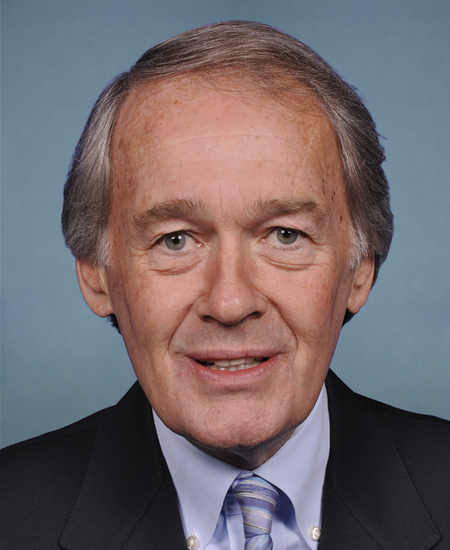
Sen. Edward J. Markey
Sponsored bills
Maddy summaryThe FORECASTS Tracking Act of 2024 aims to improve weather and climate forecasting by authorizing $50.3 million annually for NOAA to enhance subseasonal-to-seasonal forecasting through advanced modeling, data collection, and multi-model ensemble systems. It creates a new $40 million per year workforce development program to train next-generation researchers and technicians in weather modeling, data assimilation, and emerging technologies like AI. The bill requires NOAA to develop annual workforce plans identifying staffing needs and gaps, and to submit reports to Congress on the program's effectiveness. These changes directly affect NOAA's research divisions, weather forecasting centers, and institutions of higher education that partner with NOAA on workforce development. The legislation focuses on concrete improvements to forecasting technology and workforce capabilities rather than specific policy outcomes.
Maddy summarySRES 776 is a symbolic Senate resolution recognizing the 49th anniversary of Cabo Verde's independence (July 5, 1975) and honoring Cabo Verdean-Americans for their contributions to democracy in both Cabo Verde and the United States. It highlights historical ties between the U.S. and Cabo Verde, including shared migration patterns, cultural connections, and mutual support for democratic values. The resolution expresses the Senate’s support for Cabo Verde’s democratic governance and commends the Cabo Verdean-American community as a bridge between the nations. As a commemorative resolution, it has no binding effect but serves to affirm diplomatic and cultural relationships.
Maddy summaryThe New England Coastal Protection Act prohibits the federal government from issuing new leases for oil and gas exploration and production in federal offshore areas off the coasts of Maine, New Hampshire, Massachusetts, Rhode Island, and Connecticut. This law amendment adds a specific ban to the Outer Continental Shelf Lands Act, blocking future leasing in these designated coastal waters. The bill directly affects the federal government's leasing authority and any companies seeking to develop oil or gas resources in this region. It does not impact existing leases or activities but prevents new development in the specified offshore areas.
Maddy summaryThis bill establishes the Destination Reception Assistance Act, creating a federal program to provide medium-term support services to certain immigrants released into the U.S. by Homeland Security. It directly affects individuals granted parole, placed in removal proceedings, or with pending asylum applications ("eligible arrivals"). The program funds local governments and nonprofits to deliver concrete services including housing assistance, healthcare, job training, legal aid for work authorization/asylum applications, childcare, transportation support, and case management. Administered through a New Arrival Services Board and local community boards, it allocates $3 billion annually (2025-2028) to prioritize communities with high concentrations of eligible arrivals facing acute service needs.
Maddy summary# Summary of the American Housing and Economic Mobility Act of 2024 This comprehensive housing bill aims to increase housing affordability, expand fair housing protections, and improve housing options for vulnerable populations through several key provisions: ## Fair Housing and Anti-Discrimination - Expands Fair Housing Act protections to include gender identity, sexual orientation, marital status, source of income, and veteran status - Requires public housing agencies to analyze location disparities and develop policies to increase access to higher-opportunity neighborhoods - Strengthens enforcement mechanisms for housing discrimination ## Housing Affordability Initiatives - Creates a Local Community Investment Program to fund affordable housing development - Expands the Housing Choice Voucher Program - Establishes a Supportive Housing for the Homeless program - Increases accessibility requirements for housing assisted under the Act (requiring twice as many accessible units) ## Special Populations Housing - Creates a program for housing for people with disabilities - Establishes housing assistance for veterans, including temporary eligibility for direct descendants of certain veterans - Provides housing for seniors through rental assistance programs ## Housing Finance and Tax Reforms - Amends estate tax rules, increasing rates and reducing the basic exclusion amount - Eliminates generation-skipping transfer tax exemption for transfers to certain persons - Implements new surcharge on high income estates and trusts - Modifies rules for valuation of certain assets and grantor trusts ## Community Development - Requires public housing agencies to form Community Advisory Committees - Mandates regional planning to increase access to higher-opportunity areas - Provides incentives for credit unions to serve underserved areas The bill represents a significant overhaul of housing policy with the goal of creating a more equitable housing system that promotes economic mobility and reduces housing discrimination.
Maddy summaryThis resolution recognizes the progress made by the Americans with Disabilities Act of 1990 in advancing independent living and economic self-sufficiency for people with disabilities, while highlighting persistent challenges like high poverty rates, employment barriers, and inaccessible services. It calls on multiple federal agencies - including the Department of Labor, Health and Human Services, and the Federal Communications Commission - to take specific actions, such as developing employment policies, improving accessibility in communications, and expanding home- and community-based services. The resolution urges bipartisan efforts to dismantle systemic barriers and strengthen opportunities for people with disabilities to fully participate in work and community life. As a non-binding resolution, it does not create new laws but serves as a formal statement of congressional intent and a framework for future policy action.
Maddy summaryS 4807 creates a new pilot grant program under the Workforce Innovation and Opportunity Act to address economic and workforce impacts of substance use disorders. The bill authorizes $25-37.5 million annually (2025-2030) for competitive grants to state/local boards (eligible entities) partnering with treatment providers, employers, education institutions, and community organizations. These partnerships will provide job training, supportive services (like treatment coordination), and employer engagement to help workers affected by substance use disorders or seeking jobs in recovery-related fields (e.g., treatment, mental health). The program requires evidence of community impact from substance use disorders and limits administrative costs to 10% of grant funds. It directly targets communities with widespread substance use disorder impacts, including areas facing economic downturns or high unemployment.
Maddy summaryThis bill would cancel federal oil and gas leases held by companies found by the Federal Trade Commission (FTC) to have coordinated with OPEC or OPEC+ countries to manipulate oil/gas prices in violation of antitrust law. If the FTC issues a final order confirming such illegal coordination, the Secretary of the Interior must cancel all existing federal leases held by that company and bar them from bidding on new leases. The bill directly affects oil and gas companies holding federal leases who violate antitrust laws through collusion with specific foreign oil-producing nations listed in the bill (including Saudi Arabia, Russia, and Venezuela). It creates a direct link between FTC enforcement actions and the automatic cancellation of federal leasing rights.
Maddy summaryThe State-Based Universal Health Care Act of 2024 establishes a framework for states to create their own universal health care systems by applying for waivers from certain federal health care requirements. States would replace federal programs like Medicaid, Medicare, and ACA subsidies with their own state-based systems, while maintaining coverage that's at least as comprehensive as the programs they're replacing. The bill requires states to achieve 95% coverage of residents within 5 years, with federal funding redirected to states based on what would have been spent on the replaced federal programs, adjusted for inflation. It also includes specific provisions for Indian health care and establishes an Independent Assessment Panel to review waiver applications.