

Maddy summarySRES 51 is a symbolic Senate resolution expressing that the United States Agency for International Development (USAID) is essential for advancing U.S. national security. It states USAID helps mitigate foreign threats before they reach U.S. shores, promotes global stability, addresses the root causes of migration and extremism, and counters China's influence. The resolution does not change laws or funding - it only affirms the Senate’s view on USAID’s role. It was introduced by 38 Senators and refers to existing laws requiring congressional input for USAID changes.
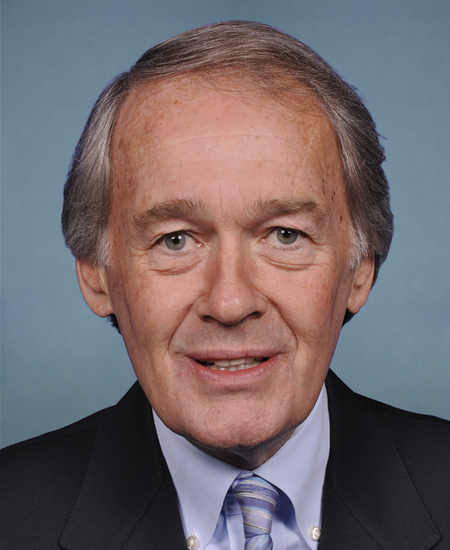
Sen. Edward J. Markey
Sponsored bills
Maddy summaryThis bill mandates increased federal funding for two key education programs. It requires annual appropriations for Title I of the Elementary and Secondary Education Act (which supports schools serving disadvantaged students) and the Individuals with Disabilities Education Act (IDEA, which funds special education) starting in 2026. The bill sets specific, rising annual funding levels - based on a 2025 baseline and national per-student spending - to gradually reach 40% of the national average per-pupil expenditure for IDEA by 2035. These funds directly affect school districts receiving Title I support and those providing special education services under IDEA. The funding is made mandatory, not discretionary, ensuring consistent annual support for these programs.
Maddy summaryThis bill establishes a federal task force within NOAA to coordinate heat-health efforts across 15+ agencies (including Health and Human Services, EPA, and FEMA). It requires the task force to create a 5-year strategic plan within two years, focusing on sharing heat-related health data, improving research, and developing tools for communities. The plan must address heat risks for all Americans, with specific attention to tribal governments and vulnerable populations during heat events. The bill authorizes $5 million annually (2025-2029) to fund this coordination and the National Integrated Heat Health Information System.
Maddy summaryThis Senate resolution (SRES 42) is a symbolic expression of disapproval by the Senate for pardons granted to individuals convicted of assaulting Capitol Police officers. It does not change any laws or affect legal outcomes but formally condemns those pardons as inconsistent with the Senate's position. The resolution directly addresses the Senate's stance toward those who received pardons for violent acts against law enforcement during the January 6, 2021, Capitol breach.
Maddy summaryS 280, the Global Health, Empowerment and Rights Act, removes barriers for foreign nongovernmental organizations (NGOs) seeking U.S. aid under the Foreign Assistance Act. It directly affects foreign NGOs providing health services (like counseling) with non-U.S. funds, ensuring they cannot be denied aid solely for offering such services if they comply with local laws and U.S. federal standards. The bill prohibits denying aid based on health services provided with non-U.S. funds and stops applying stricter rules on non-U.S. funds for advocacy to foreign NGOs compared to U.S. NGOs. This changes how the U.S. government evaluates eligibility for aid, making the process more consistent for foreign health-focused organizations.
Maddy summarySRES 36 is a non-binding Senate resolution expressing the Senate's support for the United States working with states, cities, Tribal nations, businesses, and institutions to achieve the goals of the Paris Agreement on climate change. It urges federal, state, and local policies to reduce emissions and align with the Paris Agreement's objectives. The resolution highlights existing climate actions by states, cities, and businesses (like renewable energy commitments and the Inflation Reduction Act) but does not create new laws or funding. It serves as a symbolic statement of bipartisan support for climate action, noting the U.S. has submitted updated emissions targets to meet Paris goals.
Maddy summaryThis non-binding Senate resolution (SRES 37) expresses the Senate's view that U.S. citizens should maintain continuous access to health information provided by the Department of Health and Human Services (HHS). It references existing HHS communications like the Morbidity and Mortality Weekly Report and CDC health alerts (e.g., for avian influenza or measles) as critical tools for public health. The resolution does not create new laws, funding, or requirements - it simply states a principle supporting current HHS information-sharing practices. It directly affects the public by affirming their right to rely on these established federal health communications.
Maddy summaryThis bill requires Congress to formally declare war before the U.S. can conduct a first-use nuclear strike. It prohibits federal funding for any such attack unless Congress has declared war expressly authorizing it. The bill defines "first-use" as an attack launched without prior confirmation that the U.S., its territories, or allies have already been hit by a nuclear strike. This would directly affect the President’s authority to order nuclear weapons and require congressional approval for the most significant military decision.
Maddy summaryThe Neighbors Not Enemies Act repeals the Alien Enemies Act, a 19th-century law that allowed the president to detain or deport non-citizens during wartime. This removes a historical legal authority that targeted non-citizens based on nationality during declared wars. The repeal affects how the government could act against non-citizens in wartime scenarios but does not change current immigration or detention policies in peacetime. The bill makes no other policy changes beyond this specific repeal.
Maddy summaryThe "BIG OIL from the Cabinet Act" (S 170) prohibits appointing individuals who served as executives of fossil fuel companies, fossil fuel lobbyists, or executives of fossil fuel trade associations within the past decade to specific high-level government roles. It directly affects positions such as the Secretary of Energy, Secretary of the Interior, EPA Administrator, and other defined "covered department heads" or "covered political appointees." The law bars these individuals from both permanent appointments and acting service in these roles, with "fossil fuel" defined to include oil, natural gas, coal, and similar energy sources. The bill aims to reduce direct industry influence in policymaking on energy and environmental matters.