

Maddy summaryThis bill repeals four executive orders issued on January 20, 2025, which related to energy policy and environmental agreements. It directly affects federal agencies responsible for implementing those orders, prohibiting the use of federal funds for any of their provisions. The key mechanism is an immediate ban on funding for the orders' implementation upon the bill's enactment, effectively canceling their legal force.
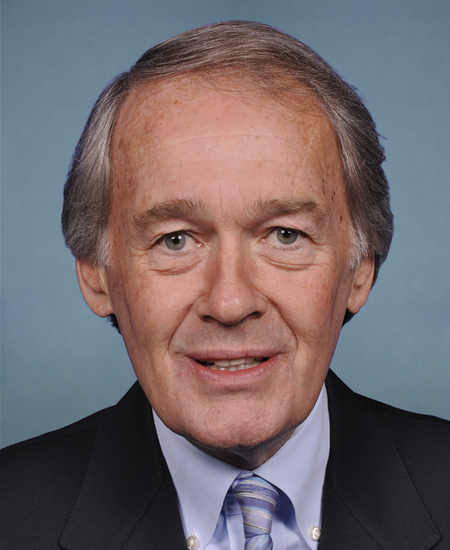
Sen. Edward J. Markey
Sponsored bills
Maddy summaryThis bill closes tax loopholes by equalizing excise tax rates across all tobacco products. It increases cigarette taxes to $100.66 per pack, matches pipe tobacco tax to $49.56 per pound, sets smokeless tobacco at $26.84 per pound (with a new $100.66 tax per thousand single-use units), and imposes a new tax of $50.33 per 1,810 milligrams on nicotine for vaping products. The bill also establishes an annual inflation adjustment for tax rates starting in 2026 and requires manufacturers of nicotine to pay the tax unless products are FDA-approved for medical use. These changes primarily affect tobacco manufacturers and importers who will pay higher taxes on their products.
Maddy summaryThe Social Security Expansion Act (S 770) increases benefits for Social Security recipients by raising the first bend point percentage from 90% to 95% and adding an 18% increase for those eligible after 2025. It establishes a new Consumer Price Index for Elderly Consumers (CPI-E) to calculate cost-of-living adjustments and increases minimum benefits for lifetime low earners based on years worked, with benefits ranging from 16.25% to 125% of poverty guidelines. The bill also extends benefit eligibility for children who are full-time students until age 22 (instead of 19) and introduces new taxes on high earners, including a payroll tax on income between the contribution base and $250,000, a tax on self-employment income above $250,000, and raises the investment gains tax from 3.8% to 16.2%. The legislation consolidates Social Security's trust funds into a single Social Security Trust Fund.
Maddy summaryThe SAFE Lending Act of 2025 aims to protect consumers from abusive lending practices in small-dollar credit transactions. It prohibits unauthorized remotely created checks (checks not created by the consumer's bank and without their signature), requires written consumer consent for such checks (which can be revoked anytime), and bans fees for overdrafts on prepaid accounts. The bill also establishes a registration requirement for small-dollar lenders (those offering credit under $5,000 with specific repayment terms) and restricts lead generation activities that collect sensitive financial information without directly providing credit. Additionally, it mandates a study on small-dollar credit availability and impact on Native American Tribal members.
Maddy summaryS 786, the Public Health Funding Restoration Act, restores annual funding for the Prevention and Public Health Fund under the Affordable Care Act to $2 billion starting in fiscal year 2026. This bill directly affects federal health programs at the Department of Health and Human Services (HHS), as well as state, local, tribal, and territorial health departments. The key provision amends the Affordable Care Act to set this specific funding level, reversing prior cuts and ensuring resources for evidence-based prevention programs like immunizations, tobacco cessation, chronic disease prevention, and pandemic preparedness. The restored funding aims to support community health initiatives that have demonstrated cost savings - such as $16.50 saved per $1 spent on childhood vaccines - while strengthening public health infrastructure nationwide.
Maddy summaryS 803, the Keep Americans Safe Act, prohibits the import, sale, manufacture, transfer, or possession of large capacity ammunition feeding devices (devices holding more than 10 rounds, excluding specific .22 caliber tubular devices) in interstate or foreign commerce. It directly affects the general public, while exempting law enforcement officers (including campus police), retired officers with agency-issued devices, nuclear security personnel, and manufacturers testing under federal authorization. Key provisions include requiring serial numbers on new devices, expanding forfeiture for violations, and allowing federal Byrne grants to fund buy-back programs for surrendered devices. The bill takes effect upon enactment, with existing devices lawfully owned before enactment remaining legal.
Maddy summaryThe No Cuts to Public Schools Act (S 810) prevents funding reductions for specific federal education programs by requiring the government to provide additional funds to offset any shortfall compared to 2024 levels. It applies to critical programs like those under the Individuals with Disabilities Education Act and the Elementary and Secondary Education Act (including Title I, Title III, and other ESEA components). For fiscal years 2025-2027, if a program’s annual budget allocation falls below its 2024 funding level, the bill mandates an equal additional appropriation to restore the full amount. This ensures these programs maintain their 2024 funding levels without changing overall budget authority. The bill directly affects federal budget allocations for these education programs, protecting existing resources from cuts.
Maddy summarySJRES 10, introduced by Senators Kaine and Heinrich, would terminate the national emergency related to energy declared by the President on January 20, 2025, under Executive Order 14156. This resolution ends the emergency as authorized by the National Emergencies Act, removing the special legal authorities granted during the emergency period. Upon passage, federal agencies would no longer operate under the emergency framework for energy-related policies, reverting to standard regulatory processes.
Maddy summaryThis resolution expresses the Senate's disapproval of the U.S. delegation's February 24, 2025, vote at the United Nations General Assembly against a Ukraine peace resolution (A/ES-11/L.10). It condemns the vote as the first U.S. alignment with Russia on Ukraine since 2014, criticizing the refusal to identify Russia as an aggressor or demand its withdrawal from Ukraine. The resolution has no binding effect but formally urges future UN cooperation with Ukraine and allies while reaffirming support for Ukraine's sovereignty.
Maddy summaryThis bill adjusts the World Trade Center (WTC) Health Program to expand access to mental health evaluations and correct funding mechanisms. It allows licensed mental health providers (not just physicians) to certify mental health conditions for WTC responders and survivors, and extends the timeframe to add new health conditions from 90 to 180 days. The bill also modifies how annual funding is calculated - using a 7% annual increase plus a population-based adjustment - to ensure long-term program sustainability through 2090. Additionally, it removes deceased individuals from enrollment counts to improve program accuracy and clarifies provider credentialing rules for the nationwide health network. These changes directly affect WTC responders and survivors seeking health coverage under the program.