

Department of Energy and Nuclear Regulatory Commission Whistleblower Protection Act This bill revises protections for the rights of whistleblowers of nuclear safety violations. Specifically, the bill clarifies that whistleblower protection rights may be enforced against any employers (e.g., the Department of Energy and the Nuclear Regulatory Commission).
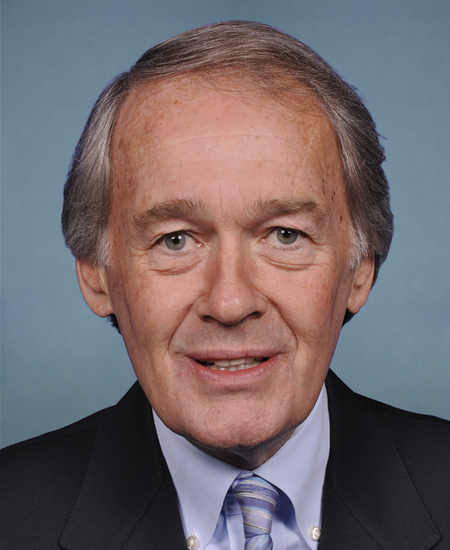
Sen. Edward J. Markey
Sponsored bills
Harriet Tubman Bicentennial Commemorative Coin Act This bill directs the Department of the Treasury to mint and issue 50,000 $5 gold coins, 400,000 $1 silver coins, and 750,000 half-dollar clad coins emblematic of the legacy of Harriet Tubman as an abolitionist. The Secretary may issue coins under this bill only during the period of January 1, 2024, through December 31, 2024. All surcharges received by Treasury from the sale of such coins must be paid equally to the National Underground Railroad Freedom Center in Cincinnati, Ohio, and The Harriet Tubman Home, Inc. in Auburn, New York, for the purpose of accomplishing and advancing their missions.
Maddy summaryThis resolution designates February 28, 2022, as "Rare Disease Day" in the U.S. Senate. It symbolically recognizes the importance of raising awareness about rare diseases (affecting fewer than 200,000 people in the U.S.), improving early diagnosis, and supporting global efforts to develop treatments for these conditions. The resolution does not create new policies or funding but aligns with the annual global observance of Rare Disease Day, first recognized in the U.S. in 2009 and observed in over 100 countries. It acknowledges the challenges faced by the estimated 7,000+ rare diseases affecting roughly 1 in 10 Americans.
This resolution recognizes Black History Month as an opportunity to reflect on U.S. history and to commemorate the contributions of African Americans. It calls for the United States to (1) honor the contribution of pioneers who helped to ensure its legacy; and (2) move forward as a nation "indivisible, with liberty and justice for all."
Maddy summarySRES 520 is a ceremonial Senate resolution designating the week of February 21-25, 2022, as "Public Schools Week." It does not create new laws, allocate funding, or directly affect any individuals or institutions. The resolution uses symbolic language to highlight the importance of public education in the U.S. but contains no policy changes or actionable provisions. As a procedural resolution, it serves only to recognize public schools during that specific week.
Neighbors Not Enemies Act This bill repeals provisions authorizing the President to apprehend and remove from the United States the citizens of a particular nation, if the United States has declared war against that nation or that nation has threatened an invasion against the United States.
This resolution expresses that the Senate stands in solidarity with the people of Afghanistan and with vulnerable groups, including women and children; religious and ethnic minorities; lesbian, gay, bisexual, transgender, queer, and intersex (LGBTQI) persons; civil society actors; journalists; and other at-risk populations in Afghanistan; calls on the Taliban to uphold the protection of universal human rights, including the commitments set forth in the Universal Declaration of Human Rights and enshrined in the International Covenant on Civil and Political Rights, to which Afghanistan is a party; calls for the international community to condemn human rights violations committed by the Taliban; and calls on the U.S. government to work closely with the international community and nongovernmental organizations, particularly such organizations based in Afghanistan, to support at-risk Afghan minority populations and other vulnerable communities.
Maddy summarySRES 516 designates the week of February 7-11, 2022, as "National School Counseling Week." The resolution encourages the public to observe this week with activities that raise awareness about school counselors' role in supporting students' academic, social, and emotional development. It does not create new laws or alter funding but highlights existing challenges like the high student-to-counselor ratio (424:1 nationally) and counselors' contributions to student well-being. The resolution applies broadly to all U.S. schools and communities, aiming to increase recognition of counseling professionals' work.
Transportation Equity Act This bill directs the Department of Transportation (DOT) to reestablish the Transportation Equity Committee. The committee must study, advise DOT about, and develop a strategic plan concerning transportation equity issues. The committee must also evaluate the work of DOT in connecting people to economic and related forms of opportunity; revitalizing communities through strategic, research, technological, regulatory, community engagement, and economic policy activities related to transportation and opportunity; and ensuring equal access to transportation for all residents. In addition, DOT must appoint a full-time federal employee to serve as coordinator and act as the designated federal officer for the committee.
Schedules That Work Act This bill provides employees with the right to request changes to their work schedules related to the number of hours they are required to work or be on call, the location of the work, the amount of notification about work schedule assignments, and fluctuations in work hours. Employers must negotiate in good faith with employees who make such requests and comply with certain work schedule notice and split shift pay requirements for retail, food service, cleaning, hospitality, or warehouse employees.