

Maddy summaryS 1231 (SAD Act) prohibits crisis pregnancy centers (CPCs) from making deceptive claims about providing abortion services, contraception, or employing licensed medical staff. It directly affects CPCs that falsely represent themselves as reproductive health providers, which the bill states often target underserved communities. The law authorizes the Federal Trade Commission (FTC) to enforce this prohibition under existing consumer protection laws, imposing civil penalties of up to $100,000 or 50% of a CPC's revenue. The FTC must also submit biennial reports to Congress on enforcement actions. The bill aims to ensure patients receive accurate information about reproductive health services.
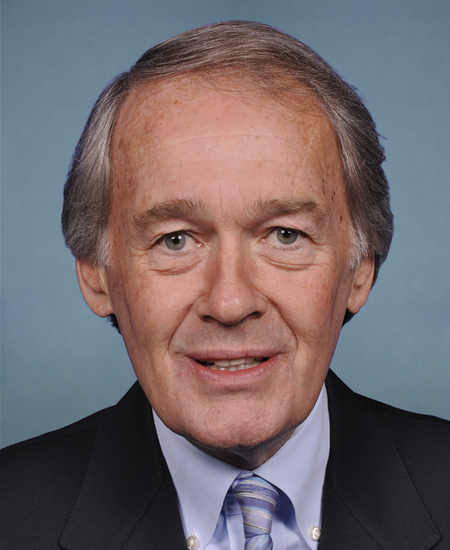
Sen. Edward J. Markey
Sponsored bills
Maddy summaryThe SMART Prices Act (S 1246) repeals a provision blocking states from negotiating Medicare drug prices and accelerates the Medicare Drug Price Negotiation Program. It increases the annual number of drugs eligible for negotiation from 10 to 40 starting in 2027, shortens the timeframes for qualifying drugs from 7 to 3 years, and adjusts price ceiling percentages (e.g., raising the maximum fair price cap for some drugs from 75% to 76%). These changes directly affect Medicare beneficiaries by potentially lowering drug costs and pharmaceutical companies by altering negotiation timelines and pricing rules. The bill aims to reduce Medicare drug spending through faster, more aggressive price negotiations.
Maddy summaryThe Green New Deal for Health Act establishes an Office of Climate Change and Health Equity within the Department of Health and Human Services to coordinate federal efforts addressing climate impacts on health. It creates a National Strategic Action Plan to improve health sector resilience, allocates $10 billion for climate-ready medical facilities through Green Hill-Burton funds, and requires hospitals to notify the government 90 days before discontinuing essential services or closing. The bill directly affects health care facilities, communities disproportionately impacted by climate change (defined as communities with significant representation of communities of color, low-income populations, or Tribal communities), and individuals with vulnerabilities like those under 5 or over 65, facing racial bias, or with disabilities. Key provisions include mandatory climate risk disclosure for medical supplies, grants for community mental health programs focused on climate resilience, and requirements to maintain essential health care access during climate disasters.
Maddy summaryS 1202, the "Keep Our PACT Act," mandates increased annual federal funding for two key education programs. It requires specific minimum funding levels for Title I of the Elementary and Secondary Education Act (which supports schools in high-poverty areas) and the Individuals with Disabilities Education Act (IDEA, which funds specialized education for students with disabilities) from fiscal years 2024 through 2033. The bill sets annual dollar targets that increase each year, with IDEA funding eventually reaching 40% of national per-pupil spending for students with disabilities by 2033. These funds directly affect public schools serving low-income students and students with disabilities across all states. The bill does not change eligibility or program requirements but ensures specified funding levels are appropriated annually.
Maddy summaryS 1196, the "Ending Qualified Immunity Act," amends Section 1983 of federal law to remove qualified immunity as a defense for government officials who violate constitutional rights. It directly affects state and local officials (like police officers) sued under Section 1983 for civil rights violations. The bill eliminates four specific defenses: claims of acting in "good faith," believing conduct was lawful, arguments that rights weren't "clearly established," or that the law was unclear at the time of the violation. This change would allow lawsuits to proceed without requiring plaintiffs to prove the right was explicitly defined before the incident. The bill aims to restore the original intent of Section 1983, which Congress states was never meant to include these immunity defenses.
Maddy summaryThe Community Broadband Act of 2023 prohibits states from banning local governments, cooperatives, or public-private partnerships from providing broadband services. It ensures these community-based providers (like city-run networks or utility cooperatives) can offer internet access without state restrictions, while requiring them to apply rules fairly to competing private providers. Key provisions define "public provider" (e.g., a city or county), "cooperatively organized provider" (tax-exempt co-ops), and "public-private partnership," with anti-discrimination safeguards to prevent favoritism. The bill does not override existing federal or state regulations governing all broadband providers. It directly affects communities seeking to build local broadband infrastructure, particularly in underserved areas.
Maddy summaryThe Latonya Reeves Freedom Act of 2023 establishes a federally protected right for individuals with disabilities who require long-term services and supports (LTSS) to live in community-based settings rather than institutions. The bill defines specific requirements for "community-based" settings, including housing options that allow individuals to live in their own homes or shared residences with privacy rights, choice, and control over their services. It requires states to develop transition plans with measurable goals to move people from institutional settings to community-based supports within 12 years, along with annual reporting on progress. The Department of Justice and Department of Health and Human Services will enforce the law through investigations, compliance reviews, and the ability to seek injunctive relief for violations.
Maddy summaryThe Do No Harm Act amends the Religious Freedom Restoration Act (RFRA) to clarify that RFRA does not apply when federal laws protect against discrimination (like the Civil Rights Act of 1964), guarantee workplace protections (such as the Family and Medical Leave Act), prevent child exploitation, or ensure health care access. It specifically prevents religious freedom claims from blocking enforcement of these existing laws. The bill directly affects individuals or entities attempting to use RFRA to challenge such federal protections in court. This amendment ensures that religious freedom arguments cannot override established civil rights, workplace, child safety, or health care regulations.
Maddy summaryS.1190, the "End the Threat of Default Act," repeals the statutory debt ceiling (Section 3101 of Title 31, U.S. Code), eliminating the legal limit on federal borrowing. This directly affects how the U.S. Treasury manages debt issuance, as it removes the requirement for Congress to vote on raising the debt limit. The bill replaces all references to "debt subject to limit" with terms like "face value of obligations" to align with the repealed ceiling mechanism, preventing future government shutdowns or default risks tied to debt ceiling negotiations.
Maddy summaryS 1208, the Dignity for Detained Immigrants Act of 2023, establishes minimum standards for Department of Homeland Security detention facilities based on American Bar Association guidelines to protect detainees' health and safety. The bill requires annual unannounced inspections by the Inspector General, with public reporting of findings, and imposes fines on private facilities that fail to meet standards. It phases out private detention facilities over three years, requiring all facilities to be owned and operated by the Department, and prohibits solitary confinement for all detainees. The bill also creates new procedures to ensure detainees have access to legal counsel and makes custody determinations more transparent and individualized.