

Maddy summaryThe BAN Fossil Fuel Exports Act would give the President authority to restrict U.S. exports of coal, petroleum, natural gas, and energy-related equipment. It specifically prohibits exports of U.S. crude oil and natural gas, with possible exemptions if the President determines they serve national interest. Exemptions could be based on destination, purpose, or other criteria, but must align with the bill's goals. This directly affects U.S. energy producers and exporters seeking international markets for fossil fuels.
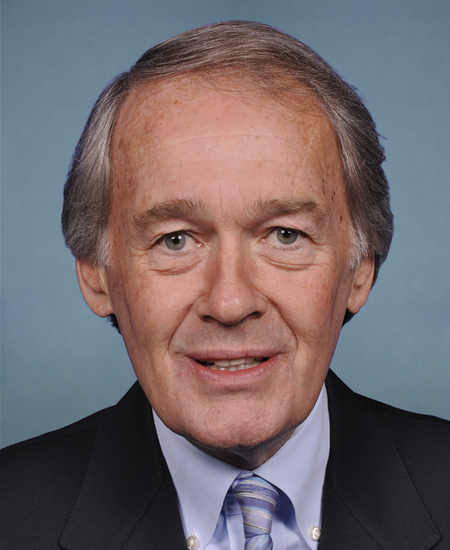
Sen. Edward J. Markey
Sponsored bills
Maddy summaryThe Real Education and Access for Healthy Youth Act of 2023 would establish federal grant programs to fund comprehensive sex education and sexual health services for young people aged 10-29. It authorizes $100 million annually to support evidence-based sex education in schools and colleges, educator training, and youth-friendly sexual health services specifically designed for marginalized young people including Black, Indigenous, Latine, Asian American, Native Hawaiian, Pacific Islander, and LGBTQ+ youth. The bill prohibits funding for abstinence-only education and requires programs to be medically accurate, culturally responsive, trauma-informed, and inclusive of diverse gender identities and sexual orientations. Grants would require reporting on how services reach diverse youth populations, including disaggregation by race, ethnicity, sexual orientation, and gender identity. This legislation aims to address current gaps in sex education that disproportionately affect marginalized young people.
Maddy summaryThis bill prohibits the use of "unlawful seclusion or restraint" in schools receiving federal funding, including mechanical, chemical, and certain physical restraints that pose risks to students. It requires schools to implement positive behavioral interventions instead of restraint, mandates staff training in crisis intervention, and establishes procedures for reporting and following up after restraint incidents. The bill requires states to create monitoring plans and collect detailed data on restraint use, with specific reporting requirements for schools and Head Start programs. Schools must provide immediate parent notification after restraint incidents and hold meetings to discuss prevention strategies. The bill applies to public schools, special education schools, and other federally funded programs, but does not affect private schools not receiving federal support or home schools.
Maddy summarySRES 215 is a Senate resolution designating May 9, 2023, as National Fentanyl Awareness Day. It supports raising public awareness about the dangers of fake or counterfeit fentanyl pills, which are often disguised as legitimate medications and contribute to overdose deaths. The resolution encourages existing law enforcement efforts to combat counterfeit pill distribution and acknowledges the severe impact of fentanyl on young people, citing statistics on rising overdose deaths. It does not create new laws or funding but formally recognizes the issue through congressional support.
Maddy summaryThis resolution designates the week of May 14-20, 2023, as "National Police Week" to honor law enforcement officers who have died in the line of duty. It recognizes 444 officers killed in 2022 (including specific names listed in the resolution) and acknowledges 32 officers killed in 2023, while expressing support for law enforcement personnel. The resolution encourages the public to observe this week by honoring law enforcement officers and promoting awareness of their essential service. As a ceremonial resolution, it does not create new policy or alter existing laws.
Maddy summaryThe Medicare for All Act would establish a national health insurance program providing comprehensive coverage to all U.S. residents without patient cost-sharing for medically necessary services, including hospital care, prescription drugs, mental health services, dental, vision, and reproductive care. The program would replace private health insurance, Medicare, and Medicaid by prohibiting duplicate coverage from private insurers and requiring automatic enrollment for all residents. It would include a transition period allowing current Medicare beneficiaries to maintain their coverage while the new system is phased in, with full benefits available for most people by 2026. The bill also establishes a national health budget, includes provisions to address health care disparities, and sets quality standards for care through the Office of Health Equity.
Maddy summaryThis bill changes the structure of the U.S. Supreme Court by adding four associate justices, increasing the total to 12 associate justices plus a Chief Justice. It also raises the required quorum for Court business from six to eight justices. The bill directly affects the Supreme Court's composition and operational rules. This is a procedural amendment to the Court's size and voting requirements, with no direct impact on public policy or laws.
Maddy summaryThis bill creates a new 21-day administrative leave for active-duty service members to obtain reproductive care not provided at military medical facilities (such as abortions or fertility treatments like IVF), or to accompany a spouse or dependent receiving such care. It also authorizes travel and transportation allowances for this care, explicitly covering abortion and assisted reproductive technology. The bill prohibits additional requirements like mandatory counseling or chaplain consultations for requesting this leave, while prioritizing privacy for service members and their families. It defines "non-covered reproductive health care" to include specific procedures like egg retrieval, sperm processing, and in vitro fertilization, ensuring these are eligible for the new leave and travel benefits.
Maddy summary# Summary of Maternal Health Legislation This comprehensive legislative document outlines a multi-faceted approach to improving maternal health outcomes across multiple domains. The bill is structured into 13 titles addressing various critical aspects of maternal care. ## Key Focus Areas 1. **Justice for Incarcerated Moms** (Title VIII) - Prohibits shackling of pregnant individuals in prisons - Establishes model programs in Bureau of Prisons facilities for pregnant and postpartum incarcerated individuals - Creates grant programs for State and local prisons to improve maternal health outcomes for incarcerated individuals 2. **Technology in Maternal Care** (Title IX) - Expands telehealth options for pregnancy and postpartum care - Funds technology-enabled collaborative learning models for maternal health providers - Promotes digital tools to reduce maternal health disparities 3. **Pandemic Response** (Title XI) - Establishes a task force to develop Federal recommendations for respectful maternity care during public health emergencies - Requires data collection and surveillance on maternal health outcomes during public health emergencies - Mandates public health communication strategies for pregnant and postpartum individuals 4. **Climate Change Protection** (Title XII) - Creates a grant program to protect vulnerable mothers and babies from climate change risks - Establishes a NIH Consortium on Birth and Climate Change Research - Develops a strategy for identifying climate change risk zones for vulnerable mothers and babies 5. **Maternal Vaccinations** (Title XIII) - Expands awareness and equity campaigns for maternal vaccinations - Increases funding for vaccination programs targeting pregnant and postpartum individuals ## Cross-Cutting Themes - **Racial and Ethnic Disparities**: The legislation consistently emphasizes addressing racial and ethnic disparities in maternal health outcomes throughout all titles - **Social Determinants of Health**: The bill recognizes the importance of addressing social determinants like housing, transportation, nutrition, and access to care - **Technology Integration**: Multiple provisions focus on leveraging technology to improve maternal health outcomes - **Data Collection and Surveillance**: Strong emphasis on collecting and analyzing demographic data to better understand and address health disparities The legislation includes significant funding allocations across all titles, with annual appropriations ranging from $5 million to $100 million for various programs, all aimed at improving maternal health outcomes, particularly for vulnerable populations.
Maddy summaryThis bill establishes a federal grant program to protect pregnant people, new mothers, and children under 3 from climate change risks. The program funds local initiatives that identify climate risks and provide services like air conditioning, housing assistance, and mental health support to vulnerable populations, with specific requirements to address racial and ethnic disparities in maternal and infant health outcomes. It also creates a separate grant program for health profession schools to develop climate change education in their curricula and establishes an NIH research consortium to study climate change impacts on maternal and infant health. The bill requires grantees to involve community organizations in planning, monitor health outcomes by race and ethnicity, and prevent negative environmental or housing impacts from funded initiatives.