

Maddy summaryThe HEAL for Immigrant Families Act of 2023 would expand health insurance access for immigrants by removing immigration status barriers to Medicaid, CHIP, and Affordable Care Act coverage. It makes all lawfully present immigrants eligible for these programs, including those with deferred action status like DACA recipients, and allows states to choose to extend coverage to individuals without lawful presence. The bill specifically addresses reproductive health coverage gaps, ensuring access to contraception, pregnancy-related care, and abortion services for immigrant women who face compounded barriers. It directly affects immigrant families, particularly Black, Indigenous, Latinx, Asian, Pacific Islander, LGBTQ, and disabled immigrants who currently experience significant health inequities. The legislation aims to address preventable pregnancy-related deaths and improve health outcomes by eliminating discriminatory eligibility restrictions based on immigration status.
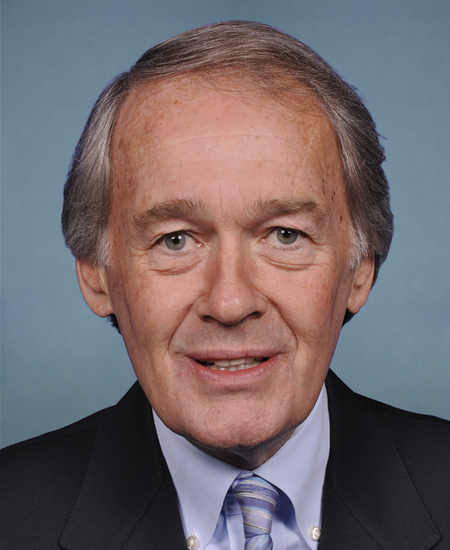
Sen. Edward J. Markey
Sponsored bills
Maddy summaryThis bill establishes the Connecticut River Watershed Partnership program to coordinate conservation efforts across federal, state, tribal, and local entities in the 5-state Connecticut River region (CT, MA, ME, NH, VT). It creates a grant program providing competitive matching funds to eligible entities - like states, tribes, nonprofits, and universities - to carry out restoration and protection projects, with 90% federal funding available for projects serving environmental justice communities. Key provisions include requiring equitable fund distribution, prioritizing nature-based solutions for climate resilience, and mandating public engagement with environmental justice communities. The program focuses on improving water quality, habitat restoration, public access, and tribal cultural practices while coordinating with existing watershed management groups.
Maddy summaryThe Housing for All Act of 2023 addresses housing shortages and homelessness through significant funding increases for existing housing programs and new initiatives. It allocates $45 billion annually to the Housing Trust Fund, expands the housing choice voucher program by 1 million vouchers over four years, and creates new programs including safe parking initiatives and eviction protection grants. The bill also establishes a Commission on Racial Equity in Housing to examine and address racial disparities in housing and homelessness services. It directly affects low-income individuals, seniors, people with disabilities, and communities of color disproportionately impacted by housing instability. Key mechanisms include new funding streams for housing assistance, coordination between health and housing services, and requirements to prioritize vulnerable populations in program administration.
Maddy summaryThis bill creates a dedicated "Broadband and Emerging Information Technology Coordinator" within the Small Business Administration (SBA) to help small businesses adopt and use modern technologies. The coordinator will work with other federal agencies (like the FCC and Commerce Department), identify helpful tools and training, and provide staff training on technologies including AI, IoT, and 5G. It also requires the SBA to conduct a study on how broadband access and emerging tech impact small businesses, including surveys on speed, cost, and usage. The coordinator must submit biennial reports to Congress on these efforts.
Maddy summaryS 2585, the National Office of New Americans Act, establishes a new office within the Executive Office of the President to coordinate federal efforts supporting immigrant and refugee integration. The office, led by a presidentially appointed Director confirmed by the Senate, will focus on welcoming immigrants, promoting English language learning, improving workforce development access, and ensuring citizenship pathways. Key mechanisms include creating specialized deputy director roles (for citizenship, workforce, and children's integration), forming a Federal Initiative with cabinet-level agencies to coordinate services like education and legal assistance, and requiring biannual reports to Congress on integration progress and policy impacts. This bill directly affects immigrants, refugees, and federal agencies responsible for integration programs, aiming to streamline support across government.
Maddy summaryThe Rebuild America's Schools Act of 2023 allocates $20 billion annually for fiscal years 2024-2028 to fund improvements to public school facilities nationwide. It provides grants to states, which then distribute funds to local school districts based on need, prioritizing schools serving high percentages of students eligible for free or reduced lunch. The bill requires projects to meet energy efficiency standards, address health and safety concerns (like lead in water or toxic substances), and use American-made materials when possible. It also includes specific provisions for repairing schools with foundations damaged by pyrrhotite, a mineral that causes concrete deterioration.
Maddy summarySRES 312 is a non-binding Senate resolution recognizing the role of the Americans with Disabilities Act (ADA) in enabling independent living for people with disabilities and highlighting ongoing challenges like institutional segregation and disparities in healthcare, employment, and accessibility. It calls on federal agencies - including the Departments of Labor, Health and Human Services, Housing, and Transportation - to take specific actions to improve home- and community-based services, accessibility, and economic opportunities for people with disabilities. The resolution emphasizes addressing barriers identified 33 years after the ADA's passage, including pandemic impacts and racial disparities affecting disabled communities. As a symbolic resolution, it does not create new laws or funding but urges bipartisan collaboration and agency action to advance ADA goals.
Maddy summaryThe Reproductive Health Care Accessibility Act (S 2544) creates federal programs to improve reproductive health care access for people with disabilities by establishing training for health care professionals, expanding educational opportunities for people with disabilities pursuing reproductive health careers, and funding accessible reproductive health education. The bill authorizes $10-15 million annually through 2028 to support workforce development programs, a National Technical Assistance Center, and research on effective reproductive health care models for people with disabilities. Key provisions require culturally competent care training, accessibility improvements for medical equipment, and coordination of services including mental health, social services, and transportation. These programs directly affect people with disabilities seeking reproductive health care, health care providers, and educational institutions training health care professionals. The bill supplements existing funding rather than replacing it, with reports to Congress required annually on program implementation and outcomes.
Maddy summaryThis bill requires employers to prevent heat-related illness and injury by implementing specific protections for workers exposed to heat stress. It mandates employer actions including providing cool water, scheduled rest breaks, access to shade, acclimatization policies, and training on heat illness symptoms and responses. The law also requires employers to cover costs for personal cooling equipment, develop written heat illness prevention plans with worker input, and ensure training is accessible in workers' preferred languages. These provisions directly affect outdoor workers, agricultural laborers, construction crews, and others in high-heat occupational settings.
Maddy summarySCONRES 2 is a symbolic congressional resolution commending Iranian protesters who risked their safety to demonstrate against the Iranian regime's human rights abuses, particularly following the death of Mahsa Amini after her arrest by morality police for alleged hijab violations. It specifically highlights protests in over 133 cities where demonstrators, including women removing headscarves, have faced violent crackdowns, with reports of over 500 deaths and 19,000 arrests. The resolution condemns the regime's brutality, supports internet freedom tools to bypass censorship, and urges the administration to impose human rights sanctions on officials responsible for repression. As a non-binding resolution, it expresses congressional support for protesters but does not enact new laws or policies.