

Maddy summaryS 810 requires Congress to make state memorials related to Article V constitutional conventions publicly accessible online. It mandates that the Senate Secretary and House Clerk post each memorial (whether a new application for a convention or a cancellation of a prior application) on their official websites within 90 days of the bill's enactment. The online records must be searchable by state and year, clearly label whether the memorial is an application or cancellation, and include the exact Congressional Record citation where it was recorded. This bill directly affects state legislatures that submit such memorials to Congress, aiming to increase transparency around efforts to propose constitutional amendments.
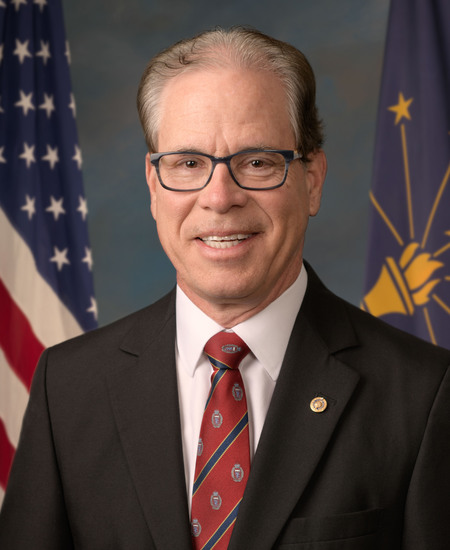
Sen. Mike Braun
Sponsored bills
Maddy summaryS 805, the Fighting Trade Cheats Act of 2023, increases penalties for importers who commit customs fraud or gross negligence. It triples civil penalties for fraudulent violations (to three times the domestic value) and raises gross negligence penalties (up to ten times the domestic value), while adding a five-year import ban for fraudulent violators and a two-year ban for gross negligence. The bill also creates a new private lawsuit mechanism, allowing U.S. manufacturers, workers, or trade groups harmed by customs violations to sue violators for triple damages plus attorney fees. Additionally, it excludes individuals or related businesses found guilty of such violations from participating in the U.S. importer of record program. This directly affects importers who violate customs laws, U.S. businesses competing with fraudulent imports, and customs enforcement processes.
Maddy summaryS 802, the Plant Biostimulant Act of 2023, removes plant biostimulants from regulation under the Federal Insecticide, Fungicide, and Rodenticide Act (FIFRA). It defines plant biostimulants as substances or microorganisms that improve plant growth and nutrient efficiency without relying on their nutrient content, excluding them from FIFRA oversight. The bill requires the EPA to revise regulations within 120 days to reflect this exclusion and mandates a soil health study by the Secretary of Agriculture. This study will evaluate how biostimulants affect soil health metrics like organic matter, nutrient runoff, and carbon sequestration, with a public report due within one year. The bill directly affects producers and users of biostimulant products in agriculture.
Maddy summaryThis bill protects small community banks and their customers by limiting special fees and preventing fee hikes. It prohibits the FDIC from imposing special assessments on banks with under $10 billion in assets and bans these banks from raising customer fees to cover costs from the 2023 Silicon Valley Bank resolution. The bill also requires officers of failing banks to repay incentive-based bonuses if the FDIC steps in as receiver, with a civil penalty of three times the amount for non-repayment. These changes directly affect community banks under $10 billion and their executives, focusing on preventing cost-shifting to consumers and holding leadership accountable.
Maddy summaryThis bill amends the Fair Labor Standards Act to change how tipped employees' wages are calculated. It removes the previous requirement that tipped workers must "customarily and regularly receive more than $30 a month in tips" to qualify for the lower cash wage rate. Instead, it requires employers to ensure that tipped employees' combined cash wages and tips meet or exceed the federal minimum wage for each pay period. Employers can choose the pay period (daily, weekly, biweekly, etc.) for calculating this combined wage, but must guarantee the total meets the minimum wage. The bill directly affects restaurant servers, bartenders, and other workers who rely on tips as part of their income.
Maddy summaryS 778, the COST Act of 2023, requires federal agencies and recipients of federal funds (including states, universities, and contractors) to publicly disclose funding sources for any program, project, or activity using federal money. Specifically, they must state the percentage and dollar amount of federal funding, plus the percentage and dollar amount from non-government sources in all communications (except short social media posts). Recipients must certify compliance in progress reports, and the Office of Management and Budget must annually review compliance and publish results. The bill also creates a public mechanism for anonymous reporting of non-compliant communications.
Maddy summaryThis bill authorizes the minting of commemorative coins to mark the 100th anniversary of the U.S. Foreign Service. It specifies three coin types: up to 50,000 $5 gold coins (90% gold), 400,000 $1 silver coins (90% silver), and 750,000 half-dollar clad coins, all to be issued in 2025. A surcharge ($35 for gold, $10 for silver, $5 for half-dollars) will be added to each coin's sale price, with all funds going directly to the Association for Diplomatic Studies and Training to support its diplomatic history preservation work. The bill ensures no net cost to the government by requiring all design, production, and marketing expenses to be recovered through coin sales.
Maddy summaryThis bill requires the FDA to provide generic drug manufacturers with specific, written disclosures about whether their proposed drug formulation matches the reference drug's inactive ingredients in both type and concentration. If differences exist, the FDA must identify the specific ingredients and quantify any deviations. The bill also mandates that the FDA issue guidance within one year on how it will assess formulation similarity, including a 60-day public comment period. These requirements apply immediately upon the bill's enactment to all generic drug applicants seeking approval under Section 505(j).
Maddy summaryThis concurrent resolution expresses Congress's support for the Local Radio Freedom Act by opposing new fees for local radio stations playing music over the air. It states that imposing performance fees would harm the longstanding relationship between radio stations and the music industry, jeopardize emergency broadcasts and local programming, and cause economic hardship for radio stations and small businesses (like bars and retail stores) that rely on free music licensing. The resolution specifically urges against any new fee, tax, or royalty related to radio stations' public performance of sound recordings. As a non-binding statement, it does not create new law but formally advocates for maintaining the current system.