

Maddy summaryS 942 is a procedural Senate rule that would prevent consideration of any bill or amendment attempting to change the number of justices on the U.S. Supreme Court. It creates a "point of order" (a procedural objection) that, if sustained by the Senate chair, would automatically remove such provisions from legislation. This rule applies to all Senate consideration stages, including amendments and conference reports, and requires a two-thirds vote to override. The bill directly affects any legislation proposing to alter the Supreme Court's size, blocking it from advancing through Senate procedures.
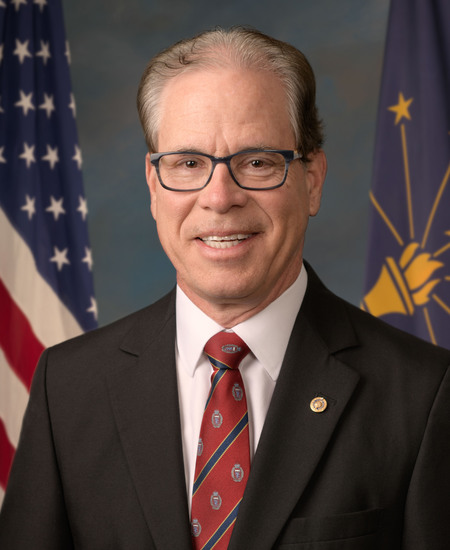
Sen. Mike Braun
Sponsored bills
Maddy summaryThis bill requires TSA to deny airport security access to travelers presenting certain immigration enforcement documents (like deportation warrants or "Notice to Appear" forms) at checkpoints. It mandates TSA to notify immigration agencies when such documents are presented and to collect biometric data (fingerprints, photos) from non-citizens without valid ID who cannot verify U.S. citizenship. Travelers departing for deportation are exempt from entry restrictions. The law directly affects individuals under immigration supervision attempting to access secured airport areas using prohibited documents.
Maddy summaryThis bill prohibits entities controlled by the governments of Iran, North Korea, China, or Russia from purchasing or leasing agricultural land in the United States. It also prevents these entities from participating in most Department of Agriculture programs if they own or lease agricultural land, with limited exceptions for food safety and certain agency programs. The bill amends existing reporting requirements to include security interests and leases in the Agricultural Foreign Investment Disclosure Act, requiring more comprehensive transparency about foreign ownership. It mandates annual reports to Congress on foreign ownership risks and the effectiveness of current monitoring systems. The legislation aims to protect agricultural land from foreign influence while improving transparency about who owns U.S. farmland.
Maddy summaryThis bill establishes the Michael Enzi Voluntary Protection Program, a workplace safety initiative allowing employers to voluntarily participate in a recognized safety system. Employers must apply, demonstrate comprehensive hazard assessment and prevention programs, ensure employee participation and training, and undergo periodic onsite evaluations (without enforcement citations during visits). Participating worksites receive exemption from routine safety inspections while maintaining their safety standards. The program replaces existing voluntary programs with no cost to employers and requires the Labor Secretary to issue implementing regulations within two years.
Maddy summaryS 887 would amend the Federal Reserve Act to prohibit Federal Reserve banks from offering financial products or services directly to individual consumers. Specifically, the bill bans these banks from maintaining personal accounts or issuing a central bank digital currency directly to people. This change would require the Federal Reserve to avoid direct consumer financial services, shifting such offerings to commercial banks and other institutions. The bill does not alter the Federal Reserve's core responsibilities for monetary policy or bank regulation.
Maddy summaryThis bill requires the CDC to collect and publicly share information about concussions and traumatic brain injuries (TBIs) affecting public safety officers, including research on prevention, diagnosis, and treatment. It mandates updating the CDC website and developing targeted resources for medical professionals, public safety employers, mental health providers, patients/families, and researchers. The goal is to improve care for officers, reduce injury incidents through better protocols, and enhance awareness of TBI impacts. The bill specifically covers law enforcement, firefighters, and other public safety personnel as defined by federal law.
Maddy summaryThis bill (S 901, the SAFE Act of 2023) aims to prevent trade disruptions for U.S. agricultural exports during animal disease outbreaks. It directs the Secretary of Agriculture to proactively negotiate regionalization agreements with key export markets, allowing targeted trade access instead of broad export bans during disease threats. The bill also requires the USDA to notify state agriculture departments and entities that petitioned for specific export rules when language is removed from the Import and Export Library. These changes directly affect U.S. agricultural exporters, state agencies, and foreign governments involved in trade with the U.S.
Maddy summaryThis bill establishes a new competitive grant program to help farmers and ranchers adopt climate-smart conservation practices. It provides $13 million annually for grants to eligible land-grant universities (1862, 1890, and 1994 institutions) to fund outreach, workshops, and technical assistance. Grants require a 25% increase in farmer engagement and partnerships with entities like the Natural Resources Conservation Service, focusing on practices that improve soil health, reduce emissions, and sequester carbon. Each grant is capped at $400,000 for up to 4 years, with no more than 30% of funds used for administrative costs. The program directly supports agricultural producers seeking to voluntarily implement climate-friendly farming methods.
Maddy summaryThis bill prohibits the Surgeon General and federal agencies from mandating COVID-19 vaccination for interstate travel. It also bans interstate transportation providers (like airlines, trains, and buses) from denying service to travelers based solely on their COVID-19 vaccination status. The law specifically applies to interstate passenger transportation under Department of Transportation jurisdiction and explicitly excludes intrastate travel. It does not affect existing health regulations or require vaccination for travel. The bill clarifies that no federal authority may impose a vaccine mandate for travel under this law.
Maddy summaryThis bill reduces the weight thresholds triggering enhanced federal sentencing for fentanyl and synthetic opioid offenses. It amends the Controlled Substances Act to lower quantities from 400 grams to 20 grams for mandatory minimums (and similar reductions for other penalties), directly affecting individuals convicted of fentanyl-related trafficking. The bill also directs the U.S. Sentencing Commission to update federal sentencing guidelines within 120 days to align with these changes. Additionally, it requires the U.S. Postal Service to increase chemical screening devices, dedicate personnel for 24/7 analysis, and allocates $9 million for interdiction efforts targeting fentanyl and synthetic opioids in mail shipments.