

Maddy summaryThis bill authorizes $1.88 billion to support Ukraine's energy sector reconstruction and help European countries reduce dependence on Russian energy. It provides funding for rebuilding Ukraine's damaged energy infrastructure, technical assistance for grid modernization, and support for European nations to diversify energy sources away from Russian supplies. The bill includes requirements for certifications regarding Ukrainian energy company governance and anti-corruption measures, while also addressing environmental remediation needs from war damage and nuclear safety concerns at Ukrainian power plants. Funding is allocated with $1.1 billion for Ukraine's energy sector and $500 million for European energy diversification efforts. The legislation emphasizes coordination with international partners and requires regular reporting to Congress on how these programs benefit U.S. energy suppliers and manufacturers.
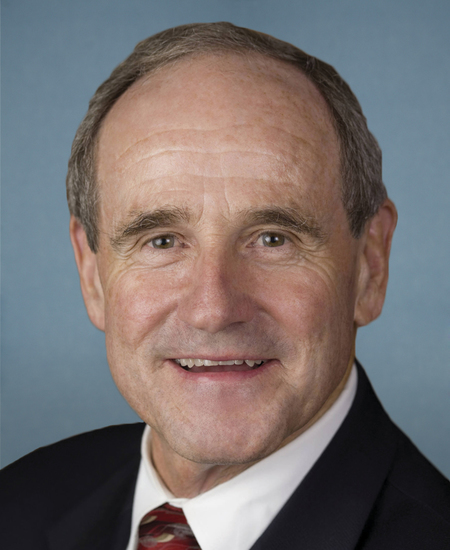
Sen. James E. Risch
Sponsored bills
Maddy summaryThis bill (S 2647, SHINE for Autumn Act of 2023) provides federal funding to improve stillbirth data collection, research, and education. It authorizes $5 million annually for states to collect stillbirth data using existing health records while protecting privacy, $1 million for developing standardized data collection guidelines and public educational materials, and $3 million for specialized training programs in perinatal pathology and stillbirth research. The bill directly affects state health departments, medical professionals (like obstetricians and pathologists), and families impacted by stillbirth through improved data systems and educational resources. Key provisions require standardized data reporting, consultation with affected families and healthcare providers, and mandatory reports on program progress within five years of enactment.
Maddy summaryThis bill expands Health Savings Account (HSA) eligibility and use by broadening what health coverage qualifies and what expenses can be paid from HSAs. It allows individuals with Medicaid, CHIP, TRICARE, veterans' health plans, or health care sharing ministries (a type of faith-based health cost-sharing program) to use HSAs, and increases annual contribution limits significantly (to $10,800 for individuals and $29,500 for families). It also permits HSA funds to pay for health insurance premiums, periodic provider fees for defined care packages, and health care sharing ministry membership fees as qualified medical expenses. These changes directly affect HSA account holders, particularly those using non-traditional health coverage options or seeking greater flexibility in medical expense management.
Maddy summaryThis bill amends the Public Health Service Act to prohibit the Secretary from requiring any State, clinic, or provider to counsel or refer for abortions as a condition for receiving Title X family planning funding. It directly affects Title X-funded clinics and health centers that provide reproductive health services. The key provision explicitly adds that no entity receiving Title X funds may be compelled to offer or facilitate abortion services. This changes existing requirements by removing mandatory abortion counseling or referral as a condition for federal funding under Title X. The bill focuses on clarifying funding rules without altering other Title X program requirements.
Maddy summaryThe Promotion and Expansion of Private Employee Ownership Act of 2023 aims to increase employee ownership in S corporations by making it easier for companies to adopt Employee Stock Ownership Plans (ESOPs). Key provisions include extending tax deferral for sales of company stock to ESOPs, creating a Treasury Department office to provide technical assistance for ESOPs, and amending small business laws to ensure ESOP-owned businesses remain eligible for small business programs. The bill also establishes a dedicated Advocate for Employee Ownership within the Department of Labor to promote ESOP adoption, provide education, and help resolve disputes related to ESOPs. This legislation directly affects S corporations considering employee ownership transitions, their employees who would become partial owners, and small businesses that want to maintain eligibility for small business programs after an ESOP transition. The bill seeks to expand a model that studies show provides employees with retirement savings and greater job stability compared to traditional companies.
Maddy summarySCONRES 2 is a symbolic congressional resolution commending Iranian protesters who risked their safety to demonstrate against the Iranian regime's human rights abuses, particularly following the death of Mahsa Amini after her arrest by morality police for alleged hijab violations. It specifically highlights protests in over 133 cities where demonstrators, including women removing headscarves, have faced violent crackdowns, with reports of over 500 deaths and 19,000 arrests. The resolution condemns the regime's brutality, supports internet freedom tools to bypass censorship, and urges the administration to impose human rights sanctions on officials responsible for repression. As a non-binding resolution, it expresses congressional support for protesters but does not enact new laws or policies.
This resolution recognizes the 30th anniversary of the founding of the Department of Defense State Partnership Program and its outsized influence in developing and supporting enduring relationships around the world. The resolution also expresses deep gratitude for the service of members of the National Guard to the program.
Maddy summaryS 2470, the IDB Transparency Act, requires the U.S. Treasury Secretary to submit a detailed report within 180 days of enactment about China's influence at the Inter-American Development Bank (IDB). The report must include a full list of IDB projects funded by China or Chinese companies (with project details, funding amounts, and implementation status), an analysis of potential human rights or corruption risks, and an assessment of how China uses the IDB to advance its interests. It also directs the U.S. Executive Director at the IDB to actively reduce China's role through transparency measures and voting against projects involving significant Chinese funding or influence. The bill mandates follow-up reports every two years and requires public summaries of these findings. This directly affects U.S. government agencies, the IDB, and projects involving Chinese funding or participation.
Maddy summaryThis bill ties U.S. aid to Tunisia's progress on democratic reforms. It withholds 25% of U.S. foreign assistance funds (except for civil society support) until Tunisia ends its 2021 state of emergency. A new $100 million Tunisia Democracy Support Fund will be created to encourage reforms, but funds can only be used after the U.S. Secretary of State certifies Tunisia meets six specific democratic benchmarks, including restoring parliamentary power, judicial independence, ending military trials of civilians, and protecting press freedom. The bill directly affects U.S. aid disbursement decisions and Tunisia's government, requiring concrete actions to meet these benchmarks before full aid is released.
Maddy summaryThis bill modifies two federal land management laws to change consultation requirements for existing land plans. It specifies that approved, amended, or revised land management plans under the National Forest System or Bureau of Land Management are no longer considered "continuing Federal agency actions" or "discretionary Federal involvement." As a result, future actions taken under these finalized plans (like timber sales or grazing permits) will not require additional environmental consultation under laws such as the Endangered Species Act. The bill directly affects the USDA Forest Service and Bureau of Land Management, streamlining their management of existing federal lands.