

Maddy summaryThis Senate resolution (SRES 390) designates September 2025 as "National Voting Rights Month" to honor voting rights history and encourage civic engagement. It does not create new laws but urges Congress to advance voting rights legislation (like the John Lewis Voting Rights Advancement Act), recommends schools teach about voting history and suppression, and encourages media campaigns to promote voter registration and election awareness. The resolution directly affects all U.S. citizens by highlighting voting access issues and promoting educational efforts, though it has no legal force. It follows historical context about voter suppression and recent voting rights challenges, including the 2013 Shelby County v. Holder Supreme Court decision.
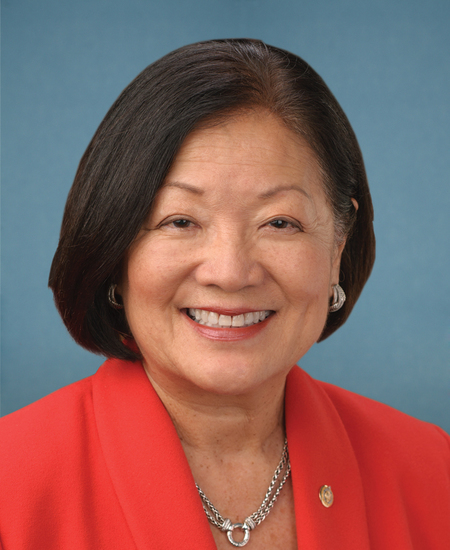
Sponsored bills
Maddy summarySRES 392 is a Senate resolution designating November 16, 2025, as "National Warrior Call Day." It encourages all U.S. citizens to reach out to active-duty service members and veterans through phone calls or conversations to reduce isolation and connect them with support resources. The resolution specifically highlights the importance of peer-to-peer connections in addressing mental health challenges, citing veteran suicide statistics as context. As a symbolic measure (not a law), it does not create new programs but urges public engagement to support military personnel transitioning from service.
Maddy summarySRES 394 designates September 2025 as "National Literacy Month" through a Senate resolution. It calls on federal, state, local, schools, libraries, nonprofits, businesses, and the public to observe the month with literacy-focused programs. The resolution does not create new laws, funding, or policy requirements. It references statistics on literacy challenges (e.g., adult illiteracy costs) but serves solely as a symbolic recognition of literacy's importance.
Maddy summaryThe Register America to Vote Act of 2025 would require states to establish automatic voter registration systems through state motor vehicle authorities. When individuals interact with these agencies (such as when applying for a driver's license), they would be automatically registered to vote unless they decline. The bill would mandate states to send written notices about registration status, protect privacy of voter registration information, and provide federal funding to help states implement these systems. This would affect eligible citizens who interact with state motor vehicle authorities, with exemptions for states that already have automatic registration systems in place.
Maddy summaryThe FAMILY Act (S 2823) would establish a federal paid family and medical leave insurance program that provides wage replacement benefits for eligible workers who need time off for family or medical reasons. It directly affects workers who need leave to care for a family member with a serious health condition, address their own serious health condition, or deal with family violence or other qualifying acts of violence. The program would pay a percentage of an individual's average earnings (up to 85% for lower earners), with maximum monthly benefits of $4,000 and minimum benefits of $580 in 2026, while requiring employers to maintain health coverage during leave. The Social Security Administration would administer the program through a new Office of Paid Family and Medical Leave, with benefits available starting 18 months after enactment.
Maddy summaryThis bill requires states to allow eligible voters to register or update their registration at polling places on election day or during early voting for federal elections. It mandates that states provide the necessary registration forms at all polling locations and ensures voters can cast a ballot immediately after registering. The law applies to all states (except those already without voter registration requirements for federal elections) and takes effect for the 2026 general election, with phased implementation for earlier elections. States must meet specific location requirements to comply before 2028, and can seek extensions for 2028-2030 elections by certifying impracticality.
Maddy summaryThe Head Start for America's Children Act authorizes $144.872 billion for Head Start in fiscal year 2026 with annual inflation adjustments, creating new funding streams for facility improvements, transportation, workforce development, and mental health services. It updates eligibility criteria to include children developing English proficiency and children with disabilities, while adding specific requirements for Native American and Native Hawaiian Head Start programs, including culturally responsive curricula and language preservation. The bill mandates that most Head Start agencies provide center-based services for at least 1,380 hours annually (with exemptions for Native American and migrant programs), and improves staff compensation standards to ensure parity with public school educators. These changes directly affect Head Start programs serving children from birth through age 5, particularly in underserved communities and Native American and Native Hawaiian populations.
Maddy summarySRES 386 designates the week of September 14-20, 2025, as "Community School Coordinators Appreciation Week" in the U.S. Senate. The resolution recognizes community school coordinators for their role in building partnerships that support student success, family engagement, and community resources. It encourages schools, families, and officials to celebrate these coordinators through events during the designated week. This is a symbolic resolution with no funding or policy changes, solely intended to honor coordinators' contributions.
Maddy summaryS 2798, the Equal Employment for All Act of 2025, prohibits most employers from using credit reports for hiring decisions or employment-related adverse actions. The bill amends the Fair Credit Reporting Act to ban employers from accessing or using credit history information (like credit scores or debt records) when making job offers, promotions, or other employment decisions, except for roles requiring national security clearances or when legally required. It also states that even if a job applicant consents to a credit check, employers cannot use it for hiring purposes. This directly affects most employers across all industries and job seekers who would otherwise face employment barriers due to credit history.
Maddy summaryThis bill bans forced arbitration clauses in employment, consumer, antitrust, and civil rights disputes. It prohibits agreements that require individuals to resolve such disputes through private arbitration before any conflict arises, and also blocks waivers that prevent people from joining class or collective lawsuits. The law directly affects workers facing workplace issues, consumers with purchase disputes, and individuals alleging discrimination or civil rights violations. It ensures these cases can be handled in court rather than private arbitration, applying to disputes occurring after the law takes effect.