

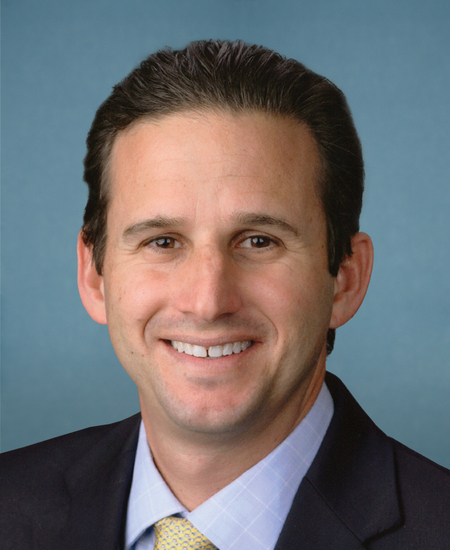
Maddy summarySJRES 10, introduced by Senators Kaine and Heinrich, would terminate the national emergency related to energy declared by the President on January 20, 2025, under Executive Order 14156. This resolution ends the emergency as authorized by the National Emergencies Act, removing the special legal authorities granted during the emergency period. Upon passage, federal agencies would no longer operate under the emergency framework for energy-related policies, reverting to standard regulatory processes.
Sponsored bills
This resolution recognizes Black History Month as an opportunity to reflect on U.S. history and to commemorate the contributions of African Americans. It calls for the United States to (1) honor the contribution of pioneers who helped to ensure its legacy; and (2) move forward as a nation "indivisible, with liberty and justice for all."
Maddy summaryThis resolution expresses the Senate's disapproval of the U.S. delegation's February 24, 2025, vote at the United Nations General Assembly against a Ukraine peace resolution (A/ES-11/L.10). It condemns the vote as the first U.S. alignment with Russia on Ukraine since 2014, criticizing the refusal to identify Russia as an aggressor or demand its withdrawal from Ukraine. The resolution has no binding effect but formally urges future UN cooperation with Ukraine and allies while reaffirming support for Ukraine's sovereignty.
Maddy summaryThis bill grants permanent residence status in the U.S. to Vichai Sae Tung (also known as Chai Chaowasaree), bypassing standard immigration rules. It allows him to be considered lawfully admitted for permanent residence upon paying required visa fees. The bill also requires the Secretary of State to reduce the number of immigrant visas available for his country of birth by one, either in the current or next fiscal year. This is a personal "relief" bill affecting only one individual, not a broad policy change.
Maddy summaryS 726, titled "Ethan's Law," requires gun owners to store firearms securely in homes where minors (under 18) or individuals ineligible to own guns (per federal/state law) reside. It makes unsecured storage unlawful if a person "knows or reasonably should know" access is possible, with exceptions for gun safes, secure locations, or carrying firearms on one's person. Violations incur $500 fines per offense, and enhanced penalties apply if injury or death occurs. The bill also creates a federal grant program to support states with similar secure-storage laws and states that non-compliance constitutes negligence. This law directly affects households with minors or prohibited individuals, aiming to reduce accidental shootings, youth access, and firearm thefts.
Maddy summaryThis bill directs the U.S. Assistant Secretary of Commerce for Travel and Tourism to coordinate with the Commerce and State Departments to expand travel and tourism cooperation with Taiwan within 90 days. It requires identifying opportunities to enhance U.S.-Taiwan travel, strengthen mutual tourism industries (including hotels, airlines, cultural sites, and safety coordination), and protect U.S. economic interests. The Departments must also submit annual reports for five years detailing cooperation efforts and challenges, plus a separate report within 180 days analyzing the feasibility and impacts of establishing U.S. preclearance facilities in Taiwan. The bill affects U.S. travel/tourism agencies, Taiwan's tourism authorities, and related industry sectors through these coordination and reporting mechanisms.
Maddy summaryThis Senate resolution (SRES 91) commemorates the third anniversary of Russia's full-scale invasion of Ukraine (launched February 24, 2022) and expresses U.S. Senate support for Ukraine. It symbolically affirms U.S. solidarity with Ukraine, rejects Russia's territorial seizures, reaffirms U.S. support for Ukraine's sovereignty and territorial integrity within its 1991 borders, and encourages continued international efforts to counter Russian aggression. As a non-binding resolution, it does not create new laws or directly affect any individuals or groups but serves as a formal statement of congressional support for Ukraine.
Maddy summaryThis bill prohibits federal funding for Executive Order 14160 (and any successor policies), which attempted to deny U.S. citizenship to children born in the U.S. to non-citizen parents. It directly affects the executive branch by blocking financial support for the controversial order, which contradicted the 14th Amendment and established court precedent like *United States v. Wong Kim Ark*. The bill’s key mechanism is a funding ban, ensuring no government resources can be used to implement policies that undermine birthright citizenship guaranteed by the Constitution and immigration law. It does not alter citizenship rules but prevents enforcement of the challenged executive order.
Maddy summarySRES 83 is a symbolic Senate resolution designating February 2025 as "Hawaiian Language Month" or "'Ōlelo Hawai'i Month." It recognizes the historical significance of the Hawaiian language as the Native language of Native Hawaiians and acknowledges decades of revitalization efforts, including the state's 1978 constitutional recognition of the language. The resolution commits the Senate to supporting the language's preservation per existing federal policy (the Native American Languages Act) and encourages the public to celebrate with activities, though it does not create new legal requirements or funding. This is a non-binding gesture focused on cultural recognition, not a policy change with enforceable provisions.
Maddy summaryThis bill (S 634) amends U.S. Code § 4001 to prohibit federal authorities from detaining individuals solely based on protected characteristics. It directly affects anyone detained by federal law enforcement, banning detention based on race, ethnicity, national origin, religion, sex, gender identity, sexual orientation, disability, or any additional characteristic the Attorney General designates. The key provision adds a new subsection requiring that no one be imprisoned or detained "based solely on an actual or perceived protected characteristic," with the Attorney General having authority to expand the list of protected traits. This creates a clear legal standard to prevent discriminatory detention practices under federal law.