

Maddy summaryThis bill requires the Department of Homeland Security's Inspector General to regularly investigate and report on how people apprehended at the southwest border are processed. Specifically, it mandates reports every 60 days (until monthly apprehensions drop below 35,000 for three months) detailing vetting, releases, parole decisions, asylum applications, removal proceedings, and monitoring of individuals released without detention. The reports must cover specific data points like the number of people released without tracking devices, those given reporting notices, and where released individuals were resettled. The bill directly affects DHS operations and its oversight, focusing on transparency in border processing procedures rather than changing immigration laws.
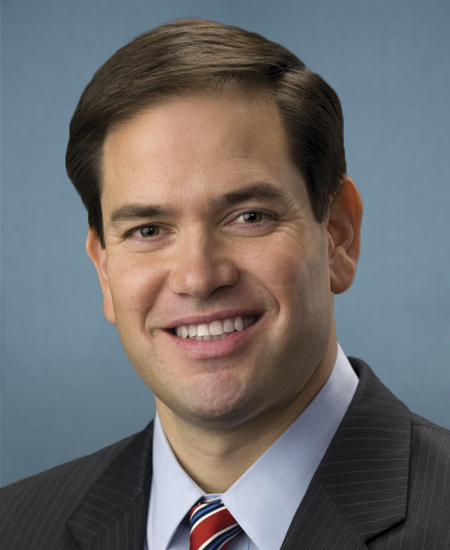
Sen. Marco Rubio
Sponsored bills
Maddy summaryThe Rachael Booth Act amends military compensation rules to expand eligibility for transitional pay to dependents of service members separated due to dependent abuse allegations. It adds two new categories: (1) members convicted of dependent abuse in federal/state court who are separated for other offenses, and (2) members accused but not convicted of abuse who are found to have committed it via commander review (based on preponderance of evidence) and forfeit pay for other offenses. Payments now begin at specific, defined points for accused members - either after a 7-day pretrial review or when a commander determines probable cause of abuse. This directly affects military dependents whose service member faces separation tied to abuse allegations, updating eligibility criteria and payment timing without altering benefit amounts.
Maddy summaryThis bill imposes a moratorium on all energy development (oil, gas, wind) in specific Gulf of Mexico areas east of the Military Mission Line and certain other zones identified as affecting military readiness. The ban lasts from enactment until June 30, 2032, affecting energy companies seeking leases in those regions. Exceptions allow leasing for environmental projects like wetlands restoration or beach protection. The bill also requires the Department of Defense to submit reports by 2031 on how energy development impacts military testing capabilities in the Gulf.
Maddy summaryThis Senate resolution (SRES 25) recognizes January 2023 as "National Mentoring Month" to highlight the importance of mentoring relationships for young people. It acknowledges that one in three U.S. youth lacks a mentor outside their home and emphasizes mentoring's role in improving academic success, mental health, career development, and reducing delinquency. The resolution promotes expanding quality mentoring programs nationwide but does not create new laws or allocate funding. It serves as a symbolic gesture to encourage community, school, and workplace efforts supporting youth development through mentoring.
Maddy summaryThis bill (S 256) terminates existing U.S. sanctions waivers that permitted specific nuclear activities in Iran under the 2015 Iran nuclear deal (JCPOA). It ends exemptions for activities like modernizing Iran's Arak reactor, modifying centrifuges at Fordow, operating the Bushehr nuclear plant, and transferring uranium or heavy water. The bill takes effect upon enactment, prohibiting the President from issuing new waivers for these activities. It directly affects Iran's nuclear program by reinstating sanctions on these specific cooperation areas. The legislation targets the JCPOA-related waivers, not broader sanctions.
Maddy summaryThe CHOICE Act creates three education programs: (1) it updates DC opportunity scholarships for low-income students to require enrollment in public or private schools for the next school year; (2) it expands parental choice under IDEA for children with disabilities by allowing public or private funds (including tax credits) to cover school costs, while protecting religious school autonomy; and (3) it launches a 5-year military scholarship pilot for dependents living on installations, providing up to $12,000 annually per secondary student (with inflation adjustments) to attend chosen public or private schools, funded at $10 million yearly. The military program uses random selection for oversubscribed applications and requires participating schools to comply with anti-discrimination rules except for religiously affiliated institutions. All programs aim to increase educational options for specific student groups while maintaining state accreditation and parental choice.
Maddy summaryS 251, the "Stop Supreme Court Leakers Act of 2023," makes it a federal crime for current Supreme Court employees or officers to leak specific confidential information. The bill defines confidential information broadly, including internal case notes, draft opinions, communications between justices and staff, and personal details of justices not already public. It prohibits unauthorized disclosure of this information and imposes criminal penalties: up to 10 years in prison for most violations, or a $10,000 fine specifically for leaking internal notes. The law directly affects only current Supreme Court staff, adding a new Section 1522 to Title 18 of the U.S. Code to enforce these protections.
Maddy summaryThis bill would allow individuals with valid concealed carry permits from their home state to carry concealed handguns in other states that either permit concealed carry for residents or don't ban it. It requires permit holders to have a government-issued ID, meet federal firearm possession rules, and carry only handguns (excluding machineguns or destructive devices). Carrying would still follow local restrictions in the destination state, such as bans in schools or government buildings. The bill does not change how states issue permits but creates automatic recognition of valid permits across participating states.
Maddy summaryThis concurrent resolution (SCONRES 3) is a symbolic statement affirming religious freedom as a fundamental human right protected under the U.S. Constitution. It specifically recognizes the 237th anniversary of the Virginia Statute for Religious Freedom (enacted January 16, 1786) and affirms that religious freedom allows all people - of any faith or no faith - to live, work, and worship according to their beliefs. The resolution emphasizes that religious freedom is a unifying principle essential to American democracy, citing historical documents like the First Amendment and presidential proclamations. As a non-binding resolution, it does not create new laws or affect any specific group, but serves to publicly affirm this principle on Religious Freedom Day.
Maddy summaryThis Senate resolution designates the week of January 22-28, 2023, as "National School Choice Week." It encourages parents to learn about K-12 education options - including public, charter, private, and homeschooling - and promotes public events to raise awareness about educational choice during that week. The resolution does not create new laws or regulations but formally recognizes the annual observance through symbolic congressional support.