

Maddy summaryThe Title X Abortion Provider Prohibition Act would bar federal funding under the Title X program (which supports family planning services like contraception and STD testing) from going to any health care provider that performs or funds abortions, except in cases of rape, incest, or when a physician certifies an abortion is necessary to prevent death or serious health harm. It requires clinics receiving Title X funds to certify they do not perform or fund abortions (with these exceptions), while hospitals are exempt from this certification if they do not fund non-hospital abortion providers. The bill also mandates annual reports to Congress detailing funded clinics, the number of abortions performed under exceptions, and any funds transferred to other entities. This policy would directly affect Title X-funded clinics that provide abortion services or fund such services, potentially limiting their access to federal funding.
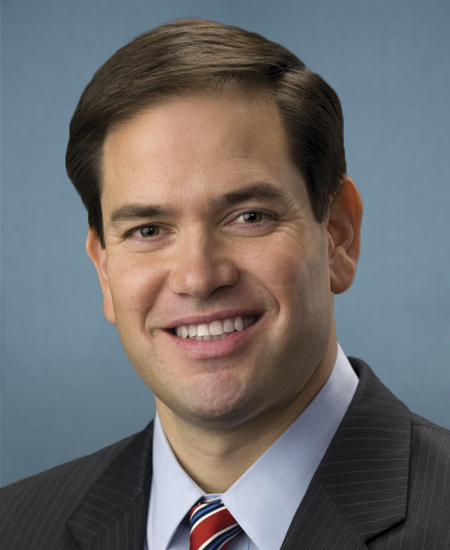
Sen. Marco Rubio
Sponsored bills
Maddy summaryThis bill requires the U.S. Treasury Secretary to review 10 specific Chinese technology and electronics companies within 60 days to determine if they are responsible for or complicit in serious human rights abuses against Uyghurs and other Muslim groups in Xinjiang. If the review finds these entities meet sanctions criteria under existing U.S. laws (like the Global Magnitsky Act), they must be added to the Treasury's sanctions list. The bill directly affects companies including Hikvision, BGI Group, Dahua Technology, Alibaba, and Baidu. It mandates a report to Congress detailing the findings but does not itself impose sanctions. The focus is on initiating a review process to identify entities for potential sanctions under current legal frameworks.
Maddy summaryThis bill requires housing providers receiving federal Section 8 assistance to maintain decent, safe, and sanitary conditions in their properties. It mandates semiannual tenant surveys to identify persistent issues with building conditions or management, triggering a remediation process if problems are confirmed. Providers failing to meet standards face penalties equal to at least 1% of their annual federal housing budget, with collected funds used for repairs or tenant relocation. The bill also requires the Secretary of Housing and Urban Development to submit a report to Congress within one year examining capital reserves and fund usage for these properties.
Maddy summaryThe Safe Temperature Act of 2023 requires owners of federally assisted housing to maintain indoor temperatures between 71°F and 81°F in all living units. It directly affects public housing authorities, project-based housing providers, and supportive housing for the elderly receiving federal funding. The bill amends existing housing laws to mandate this temperature standard and allows using capital or operating funds to cover related costs. This creates a concrete requirement for housing owners to ensure comfortable and safe living conditions without specifying enforcement details.
Maddy summaryThe DEBRIS Act of 2023 imposes sanctions on foreign entities (including governments or organizations outside the U.S.) that create space debris without prior U.S. notification. It requires the President to investigate and report within 30 days if credible evidence shows a foreign entity caused debris through deliberate action (like orbital weapons testing) or negligence (like failing to track satellites or deorbit objects). If confirmed, the President must impose sanctions blocking U.S. transactions with the entity and barring its members from entering the U.S. Exceptions apply for civil space cooperation or UN-related obligations. The bill mandates annual reports to Congress detailing sanctioned entities and reasons for sanctions.
Maddy summaryS 578, the Liberty City Rising Act of 2023, requires public housing agencies and project-based assisted housing owners in designated high-crime areas to implement specific safety measures, including security cameras, locks, and lighting, and establish anonymous hotlines for tenants to report crimes. It defines "high-crime area" using recent violent crime data from local sources and mandates that housing quality inspections include these new safety standards. The bill prioritizes Capital Fund grants for safety projects in such areas and directs HUD to determine high-crime zones within 90 days and establish safety standards within one year. This directly affects public housing agencies and assisted housing owners managing properties in these designated areas.
Maddy summaryThis bill, S 601 (Flood Insurance Affordability Act), amends the National Flood Insurance Act of 1968 to reduce the annual cap on premium increases for flood insurance policies. It directly affects homeowners and property owners covered by the National Flood Insurance Program (NFIP) by lowering the maximum allowable annual premium hike from 18% to 9%. The key mechanism is a specific change to Section 1308(e)(1) of the existing law, altering the percentage limit on how much insurers can raise premiums each year. This is a direct policy adjustment to premium pricing rules within the federal flood insurance program.
Maddy summaryThis bill amends a 2000 law restricting U.S. military contacts with China's People's Liberation Army (PLA). It narrows the scope of prohibited interactions by changing "Advanced logistical operations" to "Logistical operations" and removes an existing exception (subsection (c)). The policy change directly affects U.S. military personnel and Chinese military officials by banning all military logistical coordination with the PLA, not just advanced operations. It does not create new restrictions but clarifies and tightens existing ones. The bill focuses on preventing potential security risks during military logistical exchanges.
Maddy summaryThis bill authorizes U.S. sanctions against Chinese officials and entities involved in activities like military construction, resource access obstruction, or actions threatening stability in the South China Sea and East China Sea. It allows the president to block their U.S. assets, deny visas, restrict exports, and prohibit U.S. investments in sanctioned individuals or entities. The sanctions target those responsible for reclamation, coercion against other nations, or militarization in disputed waters, as defined in the bill. The law aims to enforce international law following a 2016 arbitration ruling on China's maritime claims.
Maddy summaryThis bill requires annual assessments of lead hazards in HUD-assisted housing (like Section 8 properties) to identify risks for children under 6. It mandates HUD to create action plans for remediation, prioritize properties with young children, and report findings to Congress. The law also adds lead paint and lead service lines to mandatory property inspections as urgent safety issues, requiring property owners to address these hazards. It directly affects HUD-managed housing properties and their owners, focusing on concrete safety upgrades rather than new funding or penalties.