

Maddy summaryThis bill prohibits the Thrift Savings Fund (TSP), which invests retirement savings for federal employees and retirees, from purchasing or holding any "security of concern." A "security of concern" includes stocks or investments tied to companies based in, or generating significant revenue from, countries identified as national security threats by the Director of National Intelligence. The rule bans these investments directly and through indirect methods like derivatives or mutual funds, with the TSP Executive Director required to consult the Securities and Exchange Commission biennially to ensure compliance. The policy change directly affects TSP investment options and participant retirement accounts.
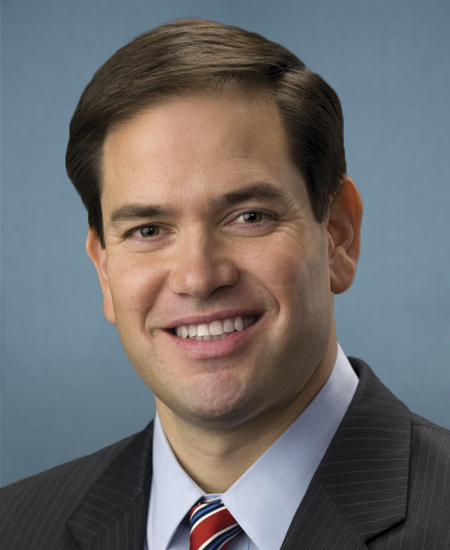
Sen. Marco Rubio
Sponsored bills
Maddy summaryThis bill amends the Lacey Act to create a new rule prohibiting the importation of non-native wildlife species (including mammals, birds, fish, amphibians, and reptiles) unless they were previously imported in "minimal quantities" before the law passed or the Secretary of the Interior approves them after public comment. It also grants the Secretary emergency authority to immediately ban imports of species posing imminent threats to humans, agriculture, or ecosystems for up to three years. The new rules take effect one year after the bill's enactment, requiring the Secretary to define "minimal quantities" within that timeframe. This directly affects importers of wildlife products and strengthens the Department of the Interior's regulatory role in preventing invasive species.
Maddy summaryThe Employee Equity Investment Act of 2023 creates a new program to provide financial leverage to companies that invest in small businesses through employee stock ownership plans (ESOPs) or worker-owned cooperatives. The bill sets specific requirements including minimum investment percentages (75% in covered investments, 50% in ESOP-related investments), the need for independent trustees to evaluate transactions, and detailed demographic reporting on plan participants. It also establishes a Protege EEIC program to help new investment companies with guidance from experienced managers, creates an Office of Employee Ownership for education and technical assistance, and modifies procurement rules to help employee-owned businesses access government contracts. The program has a sunset provision, ending 20 years after the first license is approved.
Maddy summaryThis bill creates new authorities for the Department of Homeland Security and Department of Justice to detect, identify, monitor, and mitigate drone threats to designated high-risk facilities including critical infrastructure, government buildings, airports, and other security-sensitive locations. It establishes a 5-year pilot program allowing select state and local law enforcement agencies to use specific drone detection technologies, with strict requirements for privacy protections, training, and coordination with the Federal Aviation Administration. The bill limits the use of technologies that disrupt radio or electronic signals, requires intercepted communications to be maintained for no more than 180 days, and mandates annual congressional reporting on the use of these authorities. It also includes detailed provisions for risk-based assessments, privacy safeguards, and coordination with transportation authorities to ensure national airspace safety.
Maddy summaryThis bill prohibits U.S. federal agencies from entering contracts for goods or services with businesses that knowingly engage in significant commercial activities (like leasing facilities or equipment) with Venezuela's government, as recognized by the U.S. However, it allows exceptions for humanitarian aid, national security needs, disaster relief, evacuations, and contracts supporting U.S. government operations or embassies in Venezuela. The ban applies to all federal contracts entered into during the three years following the bill's enactment. It directly affects federal contractors and businesses operating in Venezuela that might otherwise work with the Venezuelan government.
Maddy summaryThis bill prohibits federal funding - including Medicaid, ACA subsidies, and other federal health programs - from covering gender transition procedures. It specifically bans taxpayer dollars from being used for medical services like hormone therapy, surgery, or puberty-blocking drugs related to gender transition, except for cases involving disorders of sex development or complications from such procedures (as defined in Section 306). The bill also clarifies that ACA premium credits and cost-sharing reductions cannot apply to health plans covering these procedures, though individuals or states may purchase separate non-federal coverage for them. It directly affects federal health programs and beneficiaries relying on government-funded healthcare.
Maddy summaryThe EARN IT Act of 2023 establishes a National Commission on Online Child Sexual Exploitation Prevention to develop voluntary best practices for interactive computer services (such as social media platforms and messaging apps) to prevent, reduce, and respond to online child sexual exploitation. The Commission will create recommended practices considering different platform sizes and business models, including content moderation, reporting systems, and age verification measures. The bill updates federal law to replace the term "child pornography" with "child sexual abuse material" across numerous statutes and technical amendments. These best practices would be voluntary for platforms to adopt, not mandatory requirements, and must be supported by at least 14 of the Commission's 19 members. The Commission's recommendations will be updated every 5 years and published by the Department of Justice.
Maddy summaryThis joint resolution (SJRES 27) seeks to block a specific rule issued by the Department of Labor's Office of Federal Contract Compliance Programs (OFCCP). The rule in question would have removed religious exemptions from the Equal Opportunity Clause in federal contracts, which currently allows certain contractors to cite religious objections to hiring practices. By requesting congressional disapproval under federal law, this resolution aims to prevent the rule from taking effect, thereby preserving the existing religious exemption for federal contractors. The measure directly affects federal contractors who rely on this exemption in their hiring decisions.
Maddy summaryThis joint resolution (SJRES 26) formally disapproves of the District of Columbia Council’s approval of the local law known as the "Comprehensive Policing and Justice Reform Amendment Act of 2022" (D.C. Act 24-781). It directly affects the District of Columbia by preventing the implementation of that specific policing reform law, which the Council had enacted on January 19, 2023. The resolution is a procedural action by Congress under the District of Columbia Home Rule Act, expressing disapproval of the Council’s action without creating new policy. This disapproval would stop the local law from taking effect, as required by federal law for certain D.C. legislation.
Maddy summaryThis resolution (SRES 212) commemorates the 50th anniversary of women serving as naval aviators in the U.S. Navy, specifically honoring the "First Six" women who earned their pilot wings in 1974. It recognizes their pioneering role in opening naval aviation careers to women and acknowledges Naval Air Station Pensacola's historical significance as the training site. The Senate formally honors their contributions and requests that a copy of the resolution be sent to the base commander. As a ceremonial resolution, it has no legal effect or direct impact on policies or individuals.