

Maddy summaryThis bill adds multi-cancer early detection screening tests to Medicare Part B coverage, directly affecting Medicare beneficiaries. It creates a new coverage category for FDA-approved blood tests (like those analyzing cell-free DNA) that screen for multiple cancer types simultaneously, as defined in the bill. Medicare would cover these tests once every 12 months, and the bill clarifies that this change does not impact existing coverage for standard cancer screenings like mammograms or colonoscopies. The policy change ensures beneficiaries can access these new screening options without unnecessary delays after FDA approval.
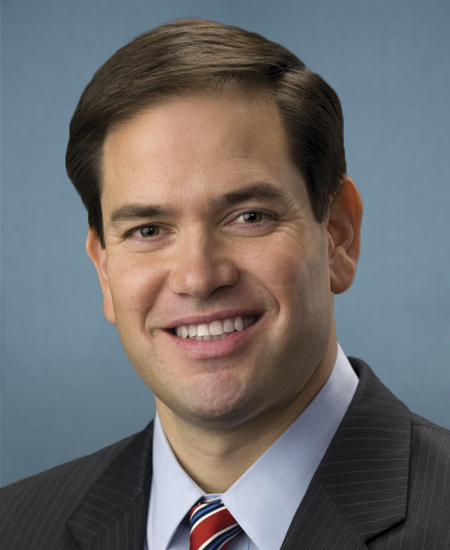
Sen. Marco Rubio
Sponsored bills
Maddy summaryThis bill amends a section of U.S. military law to expand emergency acquisition authority. It allows the U.S. to replenish military stockpiles with defense equipment when those stockpiles are depleted after the U.S. provides such equipment to allies or partners in response to an armed attack by a designated "country of concern" (as defined in existing law). The key provision (new subsection C) specifically covers replenishing stockpiles used to support allies or partners during such attacks, provided the U.S. itself is not involved in the hostilities. This directly affects how the U.S. military manages its stockpiles and provides equipment to international partners during crises.
Maddy summarySRES 257 is a symbolic Senate resolution designating July 19, 2023, as "Glioblastoma Awareness Day." It does not create new laws or funding but formally recognizes the severity of glioblastoma - a rare, aggressive brain cancer with a 6.9% 5-year survival rate - through a designated awareness day. The resolution encourages public awareness, honors those affected by the disease, and supports ongoing research efforts like the Glioblastoma Therapeutics Network. It has no direct impact on patients or healthcare policy, serving only as a ceremonial acknowledgment.
Maddy summaryThe Expediting Natural Gas Exports to Allies Act of 2023 creates a faster approval process for U.S. natural gas exports to specific allied nations, including Ukraine, Taiwan, and others (Cyprus, Moldova, Sweden) from 2023 through 2030 (or longer if the President extends it for national security reasons). It requires the Federal Energy Regulatory Commission (FERC) to expedite approvals for exports to these "covered nations," defined as allies under U.S. law or added during the specified period. However, FERC cannot expedite approvals for nations under U.S. sanctions or those explicitly excluded by Congress for security reasons. The bill does not change existing export authorizations but streamlines reviews for designated allies to support U.S. energy security and economic goals.
Maddy summaryThis bill prohibits U.S. foreign aid to countries designated as state sponsors of terrorism under the Foreign Assistance Act of 1961. It amends Section 620A by removing existing exceptions that allowed aid despite terrorism designations, including language related to the Export-Import Bank. The key change eliminates prior exemptions, requiring a complete halt to all U.S. foreign assistance for these countries. This directly affects nations like Iran, Syria, and North Korea, which are currently listed as state sponsors of terrorism by the U.S. government. The policy change takes effect immediately upon enactment, with no funding permitted for these countries under the amended law.
Maddy summaryS 2010, the Competition in Professional Baseball Act, removes a decades-old legal exemption that previously shielded Major League Baseball (MLB) from federal antitrust laws. The bill directly affects MLB clubs by requiring them to operate under the same antitrust rules as other businesses, ending their special status established by a 1922 Supreme Court case. Key provisions repeal Section 27 of the Clayton Act (which granted the exemption) and explicitly state that MLB clubs are subject to all antitrust laws, including those prohibiting anti-competitive practices. This change would subject MLB’s business operations, such as team relocations or player contracts, to standard antitrust scrutiny. The bill does not alter baseball’s structure but changes its legal framework for competition.
Maddy summaryThe CONNECT for Health Act of 2023 expands Medicare telehealth coverage by removing geographic restrictions, allowing services to be provided from home and other locations, and expanding who can offer telehealth services. The bill repeals the six-month in-person visit requirement for telemental health and allows telehealth use in hospice care recertification. It also includes program integrity measures to address inappropriate billing patterns and requires posting of telehealth service data to improve transparency. This legislation directly affects Medicare beneficiaries, healthcare providers, and telehealth technology vendors by making telehealth more accessible, particularly for rural and underserved populations, those with mobility challenges, and individuals in areas with healthcare workforce shortages.
Maddy summaryThis bill amends the de minimis import rule (allowing low-value shipments under $800 to enter duty-free) to block duty-free entry for goods from nonmarket economy countries (like China or Russia) or countries on a U.S. trade watch list. It requires importers to submit detailed documentation about the item's origin, value, shipper, and importer to U.S. Customs. Importers who provide false information face civil penalties of $5,000 for the first violation. The law directly affects businesses importing small shipments from targeted countries and increases U.S. Customs’ authority to detain and process such goods.
Maddy summaryThe End Government Shutdowns Act (S 2041) would automatically continue federal funding for government programs at the previous fiscal year's level if Congress fails to pass a new budget on time. For the first 120 days, funding would remain at 100% of the prior year's level, then decrease by 1% every 90 days until a new budget is enacted. This prevents shutdowns for programs like national parks, food safety inspections, and federal agency operations by ensuring continuous funding without new legislation. The bill applies to all federal programs requiring annual appropriations, unless another law already specifies their funding.
Maddy summaryThe SAFE Act of 2023 amends a federal law to prohibit the slaughter of horses and other equines (such as donkeys) for human consumption. It extends an existing ban on slaughtering dogs and cats for food to include equines, closing a gap in current law. The key change modifies Section 12515 of the 2018 Agriculture Improvement Act to replace "dog or cat" with "dog, cat, or equine" in the prohibition language. This directly affects meat processors and businesses that might have engaged in slaughtering equines for human consumption, making such activity illegal under federal law.