

Maddy summaryThis bill extends existing U.S. sanctions and restrictions on Venezuela until December 31, 2025, by updating expiration dates in four related laws. It directly affects Venezuelan government entities, businesses, and individuals subject to current U.S. sanctions under the Russian-Venezuelan Threat Mitigation Act, Venezuelan Arms Restriction Act, Venezuela Emergency Relief Act, and Venezuela Defense of Human Rights Act. The key mechanism is amending specific sections to replace 2023 with 2025 as the end date for these measures. This reauthorization maintains current policy without creating new restrictions. The bill focuses solely on extending existing sanctions and aid provisions, not altering their scope or targets.
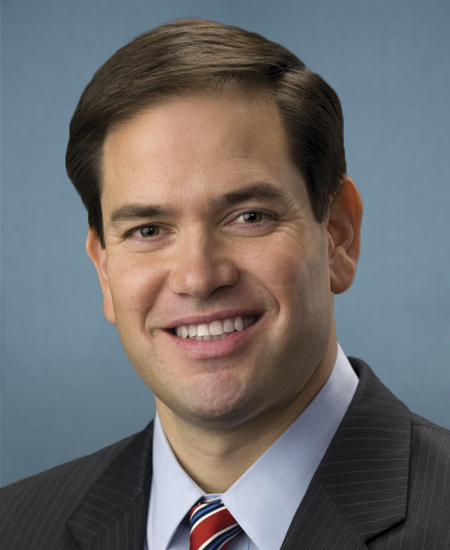
Sen. Marco Rubio
Sponsored bills
Maddy summaryThe FISA Reform and Reauthorization Act of 2023 extends FISA surveillance authorities through 2035 while adding significant new protections for U.S. persons. It requires the FBI to implement stricter procedures for queries of communications, including mandatory training, approval processes for certain queries, and detailed annual reporting on surveillance activities. The bill also mandates accuracy certifications for FISA applications, enhances congressional oversight, and establishes a new FISA Reform Commission to review the surveillance system. These changes aim to balance national security needs with privacy protections for U.S. citizens.
Maddy summaryS 3347 requires the President to designate Ansarallah (the Houthi movement) as a foreign terrorist organization within 30 days of the bill becoming law. It mandates imposing existing U.S. sanctions under Executive Order 13224 on Ansarallah and any foreign person determined to be its official, agent, or affiliate. The bill also requires the President to submit a determination within 30 days about whether specific individuals - Abdul Malik al-Houthi, Abd al-Khaliq Badr al-Din al-Houthi, and Abdullah Yahya al-Hakim - are connected to Ansarallah. This bill directly affects Ansarallah and those designated as its officials or affiliates, triggering automatic sanctions without requiring new legislation.
Maddy summaryThis bill prohibits state and federal governments from denying contracts, funding, or licenses to child welfare service providers (including religious organizations and individuals) who decline to provide services conflicting with their sincerely held religious beliefs or moral convictions. It specifically protects providers from adverse actions like refusing to renew contracts or canceling funding when their religious objections prevent them from offering certain services, such as foster care placements or adoption assistance. The law allows affected providers to sue for violations and requires states that violate the law to forfeit 15% of their federal child welfare funding. It applies to all federally funded child welfare services under Title IV of the Social Security Act, covering services like foster care, adoption support, and family preservation.
Maddy summaryThis bill would repeal a long-standing provision (Section 907) of the Freedom Support Act that has blocked U.S. economic assistance to Armenia since 1997. It directly affects U.S. foreign aid policy toward Armenia by removing the legal ban on providing economic aid. The key mechanism is amending the Foreign Operations Appropriations Act to eliminate the specific restriction on aid funding. If passed, it would allow the U.S. government to provide economic assistance to Armenia without this historical limitation. The bill does not create new aid programs but changes the legal framework for existing aid.
Maddy summaryThis Senate resolution (SRES 471) expresses formal support for National Adoption Day (observed November 18, 2023) and National Adoption Month (November 2023). It promotes awareness about children in foster care awaiting adoption, celebrates adoption success stories, and encourages U.S. citizens to support efforts securing permanent, safe homes for all children. The resolution does not create new laws or funding but serves as a symbolic gesture to highlight adoption needs. It specifically references foster care statistics (e.g., 114,000 children awaiting adoption) to underscore its purpose.
Maddy summaryThis bill (SJRES 43) is a joint resolution seeking to block a Department of Education rule that would have improved income-driven repayment plans for federal student loans. It targets a specific rule (88 Fed. Reg. 43820, July 10, 2023) affecting borrowers in the William D. Ford Federal Direct Loan Program and the Federal Family Education Loan (FFEL) Program. If passed, the resolution would make this rule void, preventing it from taking effect. The resolution uses a specific procedural mechanism under Title 5 of U.S. Code to achieve this disapproval. It directly impacts student loan borrowers who rely on income-driven repayment options.
Maddy summarySRES 460 is a non-binding Senate resolution expressing support for the U.S. dollar as the global reserve currency and highlighting concerns about China's economic influence. It cites China's growing use of the renminbi in global reserves, its Belt and Road Initiative investments, and efforts to expand the digital yuan for cross-border trade. The resolution urges the U.S. to "protect" the dollar's status, monitor China's actions, and strengthen economic ties with allies. As a resolution, it does not create new laws or policies but formally states the Senate's position on these economic matters.
Maddy summaryThis bill extends the funding period for the READ Act program from five to ten fiscal years. It directly affects the READ Act's implementation, which provides resources for literacy development in early childhood education. The key mechanism is amending the existing law to change the duration of authorized funding, ensuring continued support for literacy initiatives through 2033. This is a procedural reauthorization with no new policy changes.
Maddy summarySenate Joint Resolution 49 seeks congressional disapproval of a National Labor Relations Board (NLRB) rule that would have established a new standard for determining when two or more companies are considered "joint employers" under labor law. The rule, published in October 2023, would have affected businesses with complex employment structures, such as franchisors and contractors, by altering how joint employer liability is assessed for wage, hour, and union representation matters. If passed, the resolution would block the rule from taking effect, preserving the previous standard for joint employer determinations. The bill was introduced by Senators Cassidy, Manchin, Braun, McConnell, Marshall, Cramer, Capito, and Paul and referred to the Health, Education, Labor, and Pensions Committee.