

Maddy summarySRES 497 is a Senate resolution (introduced December 13, 2023) expressing the Senate's view that the slogan "From the river to the sea, Palestine will be free" and similar phrases are antisemitic and constitute a call for genocide against the Jewish state. It does not create new laws or affect any individuals or policies; it is solely a symbolic statement of the Senate's position. The resolution formally declares the Senate's "sense" on the meaning of the slogan, based on the signers' interpretation. As a non-binding resolution, it has no legal effect on citizens, government actions, or future legislation.
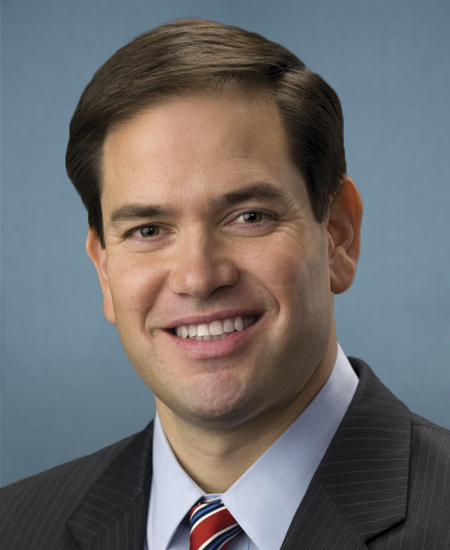
Sen. Marco Rubio
Sponsored bills
Maddy summaryThis bill requires states to establish child support obligations for biological fathers to cover at least 50% of a mother's reasonable out-of-pocket medical expenses (like deductibles, copays, and related costs) incurred during pregnancy and delivery, if the mother requests it. It directly affects biological fathers and mothers who face pregnancy-related medical costs. The bill explicitly excludes abortion-related expenses from this requirement, defining abortion as intentional termination of pregnancy except for specific medical reasons like preserving a live birth or treating ectopic pregnancy. States must implement this through their existing child support systems, with a delayed effective date for states needing new legislation.
Maddy summaryThis bill prohibits U.S. tax credits for advanced manufacturing components produced by companies linked to foreign adversaries. It directly affects manufacturers whose components would otherwise qualify for the 45X tax credit but are instead produced by entities classified as "disqualified" under the law. Key provisions define "disqualified entities" as those owned or controlled by foreign governments, with 10%+ ownership by such entities, or subject to their influence through debt, contracts, or other arrangements. The rule applies to taxable years after the bill's enactment, blocking tax benefits for components tied to entities designated as national security threats.
Maddy summaryS 3494, the Trusted Foreign Auditing Act of 2023, amends the Sarbanes-Oxley Act to address national security concerns about foreign auditors. It defines a "compromised auditor" as a branch or subsidiary of a registered accounting firm operating under the control or influence of a "covered country" (like nations identified in the Director of National Intelligence's threat assessment or specific military designations). The bill prohibits trading in securities of any U.S.-headquartered company ("covered issuer") that uses such a compromised auditor for required audit reports. This creates a direct trading ban enforced by the Public Company Accounting Oversight Board (PCAOB) when these conditions are met.
Maddy summaryThis bill (S 3499) amends emergency defense acquisition rules to allow the Department of Defense to rapidly replenish military stockpiles. It directly affects defense stockpiles and U.S. military support for allies/partners. The key provision creates a new authority enabling the Secretary of Defense to quickly restock weapons and equipment after providing them to a U.S. ally or partner in response to an armed attack by a "country of concern" (as defined in existing law). This applies specifically when the U.S. provides defense articles to respond to such attacks or moves equipment through presidential drawdown authorities.
Maddy summaryS 3488 creates a formal program allowing NASA to temporarily exchange employees with private sector companies for up to two years (renewable to a total of three years). It directly affects NASA civil servants and private sector workers in fields like technology or cybersecurity, requiring NASA employees to return to government service for twice the assignment duration. Key provisions include strict written agreements covering confidentiality, prohibitions on using government information for private gain, and limits (capping participation at 2% of NASA's workforce). The bill mandates annual reporting to Congress on participation numbers, assignment details, and workforce impacts, with a GAO review after three years.
Maddy summaryThe Kids Online Safety Act requires social media platforms and other online services used by minors to implement safety features protecting children under 17. It mandates default privacy controls, limits addictive features like automatic media playback, restricts advertising of harmful products (tobacco, gambling, alcohol) to minors, and requires annual transparency reports about online risks. Platforms with over 10 million monthly U.S. users must provide parental tools, conduct independent audits, and make de-identified data available for research on online harms. The bill focuses on preventing mental health disorders, bullying, sexual exploitation, and addictive behaviors through platform design changes.
Maddy summaryThe Railway Safety Act of 2023 establishes new safety requirements for rail carriers transporting hazardous materials, directly affecting rail companies, shippers, and emergency response agencies. Key provisions include requiring advance notification to emergency responders, mandating gas discharge plans for hazardous materials transport, implementing minimum 2-person crew standards for freight trains (with limited exceptions), and phasing out outdated DOT-111 tank cars by May 2025. The bill also increases civil penalties for safety violations, sets minimum inspection requirements for rail cars carrying hazardous materials, and funds research into safer rail infrastructure and defect detection systems. These concrete changes aim to improve safety for rail transportation of hazardous materials while providing specific implementation mechanisms.
Maddy summaryThe American Investment Accountability Act requires the Commerce Department, Treasury, and Securities and Exchange Commission to submit regular reports to Congress about U.S. investments in countries of concern (including China, Russia, Iran, North Korea, Cuba, and Venezuela) and entities tied to those countries. These reports must detail the value and volume of direct and portfolio investments, broken down by industry sector and U.S. state, while accounting for investments routed through offshore financial centers. The law applies to non-small U.S. businesses making such investments, with the first reports due within one year and subsequent reports every 90 days. This bill adds transparency requirements without restricting investments, providing Congress with detailed data on investment patterns.
Maddy summaryThis bill sets strict conditions the U.S. President must meet before negotiating a new nuclear agreement with Iran. It requires certification that Iran has ended all financial ties with China (including a $400 billion agreement), stopped funding Hamas, and destroyed chemical weapons, while also mandating China cease Uyghur detention. Any proposed agreement must verify the destruction of all Iranian nuclear, missile, and chemical capabilities, and the President cannot proceed without Senate treaty approval. The bill blocks federal funding for such negotiations until these requirements are fulfilled, effectively delaying any deal until these specific conditions are met.