Maddy summaryThis bill authorizes the U.S. President to negotiate a tax agreement with Taiwan through the American Institute in Taiwan (AIT). It would create a formal tax treaty to prevent double taxation and reduce tax evasion for U.S. businesses and taxpayers operating with Taiwan, directly benefiting companies engaged in cross-border trade and investment. The agreement must follow standard U.S. tax convention rules (like the 2016 Model Convention) and requires congressional approval via a specific concurrent resolution before taking effect. The bill does not finalize the treaty but establishes the process for negotiation and U.S. approval.
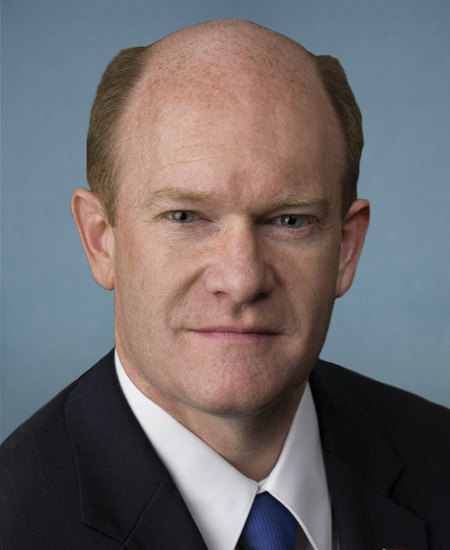
Sen. Christopher A. Coons
Sponsored bills
Maddy summaryThis bill (S 1396) amends the Small Business Act to improve commercialization outcomes for small businesses participating in the SBIR and STTR programs. It requires federal agencies to include commercialization likelihood and add at least one commercialization expert to peer reviews, shortens review timelines from 1 year to 180 days, and mandates each agency to appoint a Technology Commercialization Official to assist awardees. The bill also establishes a new annual "commercialization impact assessment" to track metrics like sales, outside investment, patents, and spin-out companies from SBIR/STTR projects. These changes directly affect small business innovators receiving SBIR/STTR grants and the federal agencies managing these programs.
Maddy summaryThe Peace Corps Reauthorization Act of 2023 (S 1203) authorizes $410.5 million annually for Peace Corps operations through fiscal year 2028 and includes numerous provisions to improve volunteer support and program operations. Key changes include increasing readjustment allowances for volunteers from $125 to $375, extending health care coverage for returning volunteers, and establishing a comprehensive zero-tolerance drug policy for volunteers. The bill also codifies special hiring preferences for returning volunteers in federal positions, creates new protections against retaliation for volunteers reporting issues, and requires the Peace Corps to develop strategies for expanding volunteer presence in Oceania. These provisions directly affect Peace Corps volunteers, returning volunteers, and Peace Corps staff by enhancing support systems and program operations.
Maddy summaryS 936 amends the Small Business Act to integrate career and technical education (CTE) into small business support programs. It requires Small Business Development Centers (SBDCs) and Women’s Business Centers (WBCs) to help small businesses hire CTE program graduates and assist CTE graduates in starting businesses. The bill defines "career and technical education" using the Perkins Act standard and adds specific new service requirements to existing SBDC and WBC programs. This directly affects small businesses seeking talent and CTE students/graduates aiming to launch ventures, with no new funding or tax changes.
Maddy summaryThe International Children with Disabilities Protection Act of 2023 establishes a U.S. government program to support organizations working to keep children with disabilities in family settings rather than residential institutions worldwide. The program provides grants to nongovernmental organizations with disability rights expertise, prioritizing those working in countries with large populations of children in residential care. It funds capacity-building efforts to develop disability leaders, provides training on successful family inclusion models, and creates online programs to share best practices globally. The bill requires annual briefings and triennial reports to Congress on the program's implementation, with funding authorized at $2 million for 2024 and $10 million annually through 2029. This legislation aims to advance policies that ensure children with disabilities grow up with their families and transition to independent living as adults.
Maddy summaryThis bill requires the U.S. President to annually certify whether Hong Kong Economic and Trade Offices (HKETOs) in the U.S. deserve diplomatic privileges (like immunity from local laws). If the President certifies they no longer merit these privileges, HKETOs must close within 180 days. It also mandates that U.S. government agencies seeking partnerships with HKETOs must first obtain a certification confirming such agreements don’t promote Chinese efforts to undermine Hong Kong’s autonomy. Congress can block a certification within 90 days using a disapproval resolution, which would require expedited Senate and House procedures. The bill directly affects HKETOs operating in the U.S. and U.S. agencies engaging with them.
Maddy summary# Summary of Department of State, Foreign Operations, and Related Programs Appropriations Bill This appropriations bill allocates funding for U.S. diplomatic and development programs with specific requirements, restrictions, and funding levels across numerous program areas. ## Key Funding Areas and Requirements: 1. **Global Health Programs**: $600 million minimum for family planning/reproductive health, with additional funding for pandemic response and global health security initiatives. 2. **Gender Equality & Women's Empowerment**: - $250 million minimum for gender-based violence prevention and response - $50 million for the Madeleine K. Albright Women's Leadership Program - $150 million for women, peace, and security initiatives 3. **Education**: - $640.555 million for basic education (Nita M. Lowey Basic Education Fund) - $231.566 million for higher education - $7 million for scholar rescue programs 4. **Environment & Climate**: - $400 million minimum for biodiversity conservation - $200 million for sustainable landscapes - $285 million for adaptation programs - $275 million for clean energy programs 5. **Food Security**: $1.1106 billion minimum for food security and agricultural development 6. **Other Key Programs**: - $300 million for Countering Russian Influence Fund - $103 million for Global Internet Freedom programs - $171.633 million for micro, small, and medium-sized enterprises - $116.4 million for anti-trafficking programs ## Significant Restrictions: 1. **Prohibited Funding**: - No funds for the Russian Federation government - No funds for countries supporting Russian annexation of Crimea - No funds for governments that have refused to extradite individuals for serious crimes - No funds for torture or cruel, inhuman, or degrading treatment 2. **Country Restrictions**: - Restrictions on funding for countries with poor human rights records - Specific prohibitions on funding for certain countries in conflict zones 3. **Management Requirements**: - Detailed spend plans required for all major programs - Prior consultation with Congress required for reorganizations - Strict reporting requirements for all international organizations - Specific requirements for transparency in international organizations 4. **Accountability Measures**: - Mandatory certifications of compliance with financial management policies - Requirements for transparency in international organization funding - Restrictions on use of funds for certain activities (e.g., abortion funding in China) The bill emphasizes transparency, accountability, and specific programmatic requirements while maintaining significant restrictions on funding for certain countries and activities that conflict with U.S. foreign policy objectives.

Maddy summaryThis bill expands Medicare coverage for obesity treatment. It allows more healthcare providers - including nurse practitioners, dietitians, and clinical psychologists - to offer intensive behavioral therapy for obesity, with requirements for coordination with primary care physicians. It also adds Medicare Part D coverage for FDA-approved medications used to treat obesity or manage weight in adults with related health conditions (like diabetes or high blood pressure). These changes directly affect Medicare beneficiaries with obesity, aiming to improve access to proven treatment options. The bill requires annual reports to Congress on implementation progress.
Maddy summaryThe PATHS to Tutor Act of 2023 establishes a federal grant program to fund high-quality tutoring in high-need schools, primarily benefiting students in schools struggling with teacher retention or high new-teacher turnover. It provides $500 million in grants to local partnerships (including schools, educator programs, and community groups) to hire and train tutors - such as college students in teacher prep programs or certified educators - to deliver small-group tutoring aligned with school curriculum. Grants cover tutor stipends, materials, transportation, meals, and professional development, with 85% of funds required to directly support students. The program prioritizes schools serving underserved communities and requires tutors to supplement, not replace, existing teaching staff.
Maddy summaryThe I CAN Act (S 2418) removes barriers for nurse practitioners, certified registered nurse anesthetists, and certified nurse-midwives under Medicare and Medicaid. It allows nurse practitioners to certify patients for cardiac/pulmonary rehabilitation, prescribe exercise, and bill for services previously restricted to physicians. The bill also clarifies that certified registered nurse anesthetists can be reimbursed for evaluation services and removes unnecessary supervision requirements. For certified nurse-midwives, it expands access to home health services and improves coverage for their care under Medicare. These changes aim to increase patient access to care by expanding the scope of practice for advanced nursing professionals.