

Maddy summaryThe SCORE for Small Business Act of 2023 amends the Small Business Act to establish new requirements for the SCORE program, which provides free business counseling and mentoring to small business owners through a network of retired executives. The bill creates a formal cooperative agreement between the Small Business Administration and the SCORE Association, requiring specific financial oversight, detailed annual reporting on program effectiveness, and new standards for online services. It authorizes $18 million annually for the program (2024-2025) and mandates reporting on client demographics, program outcomes, and financial management. The bill directly affects the SCORE Association, the Small Business Administration, and small business owners who receive counseling services through the program.
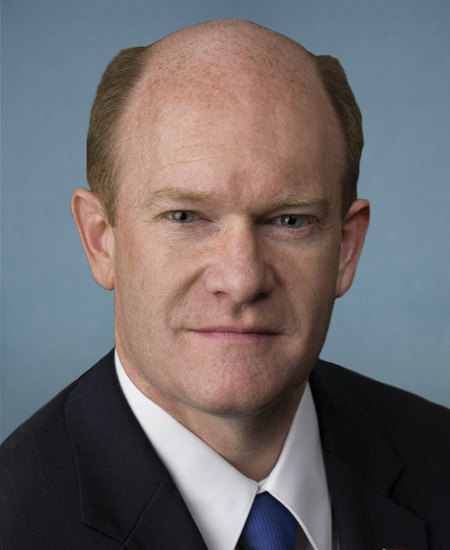
Sen. Christopher A. Coons
Sponsored bills
Maddy summaryThe Project Safe Childhood Act (S 1170) modernizes a federal program to combat online child sexual exploitation and abuse by establishing a nationwide initiative requiring coordination among federal, state, and local law enforcement agencies. It mandates the Attorney General to develop best practices for investigating and prosecuting cases involving child sexual abuse material, with specific protocols for identifying victims and serious offenders. The bill requires each U.S. Attorney to create district-specific strategic plans for coordinating investigations and prosecutions, and authorizes $28.55 million annually for 2023-2028 to support these efforts. It also establishes an annual Safer Internet Day to provide public education about online safety and reporting mechanisms. This legislation directly affects law enforcement agencies, prosecutors, and child protection services working to address online child sexual exploitation.
Maddy summarySRES 435 is a Senate resolution designating October 30 through November 4, 2023, as "National Veterans Small Business Week." It formally recognizes the contributions of veterans who own small businesses, highlighting their role in the economy (over 1.7 million veteran-owned businesses employing 2.9 million people). The resolution expresses support for veterans' entrepreneurship, encourages policies reducing regulatory burdens for small businesses, and thanks veterans for their service through business ownership. This is a symbolic recognition with no new legal requirements or funding.
Maddy summaryThis bill requires the Secretary of Labor to submit annual reports to Congress detailing violations of child labor laws under the Fair Labor Standards Act. The reports must include specific data on violations - such as the number of cases, industries involved, ages and genders of affected child workers (defined as under 18), penalties assessed, and criminal prosecutions. It directly affects children working in violation of labor standards and aims to improve transparency in enforcement. The reports will help Congress monitor trends and inform future policy on child labor accountability.
Maddy summaryThis bill directs the State Department and USAID to strengthen partnerships between U.S. federal agencies and Historically Black Colleges and Universities (HBCUs) focused on Africa. It requires agencies to identify HBCUs already working with them or eligible to participate, then expand educational exchanges for Sub-Saharan African scholars in key sectors like agriculture, public health, democracy, and environmental resilience. The bill also mandates improved grant application support for HBCUs and requires annual congressional briefings on partnership progress. These changes directly affect HBCUs, U.S. foreign agencies, and African scholars participating in exchange programs.
This resolution recognizes October 2023 as National Women's Small Business Month, honoring the role of women small business owners and entrepreneurs and encouraging the support and creation of women-owned small businesses.
Maddy summarySRES 425 is a symbolic Senate resolution designating October 25, 2023, as "Public Radio Music Day" to honor public radio music stations. It expresses the Senate's appreciation for these stations' role in serving over 25 million weekly listeners, supporting local musicians, and preserving diverse music genres across all 50 states and territories. The resolution highlights how these noncommercial stations foster community engagement through local programming, artist discovery, and cultural enrichment without creating new laws or affecting specific groups. As a ceremonial resolution, it has no legal effect but recognizes public radio's community impact.
Maddy summarySRES 426 is a Senate resolution designating November 4, 2023 (the first Saturday of November), as "National Bison Day." It directly recognizes the cultural, historical, and economic significance of bison to Native American tribes, rural communities, and the U.S. ecosystem. The resolution encourages the American public to observe the day with ceremonies and activities, but it does not create new laws, funding, or obligations. This is a symbolic gesture acknowledging bison's role as the national mammal and its importance to tribal heritage and conservation efforts.
Maddy summaryThis Senate resolution designates October 16, 2023, and October 16, 2024, as "World Food Day" in the United States. It encourages Americans to observe these dates through appropriate ceremonies and activities to raise awareness about global hunger and malnutrition. The resolution aligns with the United Nations' longstanding observance of October 16 as World Food Day, which focuses on addressing food insecurity worldwide. It does not create new policies or funding but serves as a symbolic gesture to highlight ongoing global food challenges.
Maddy summaryThe ABC Act requires Medicare, Medicaid, CHIP, and Social Security offices to review and simplify their application, eligibility, and communication processes. It directly affects family caregivers who help loved ones navigate these programs by targeting repeated paperwork, inconsistent information requests, and poor communication. Key mechanisms include mandating agencies to reduce duplicate forms, improve website accessibility (including ADA compliance), shorten call wait times, and provide multilingual support based on feedback from caregivers and advocacy groups. Agencies must submit detailed reports to Congress within one year outlining their findings and planned improvements.