

Maddy summaryThis bill prohibits the detention of pregnant, lactating, or postpartum noncitizens under U.S. immigration law, requiring immediate release unless specific, narrow exceptions apply (e.g., an immediate threat to safety). It bans physical restraints during labor, delivery, or postpartum care, mandates access to comprehensive reproductive health services - including abortion - and requires facilities to conduct biweekly reviews of detained pregnant individuals. Detention facilities must report quarterly on restraint use, detention lengths, and birth outcomes to ensure compliance. The law directly affects immigrant women in immigration custody and applies to all facilities holding such individuals under U.S. immigration authority.
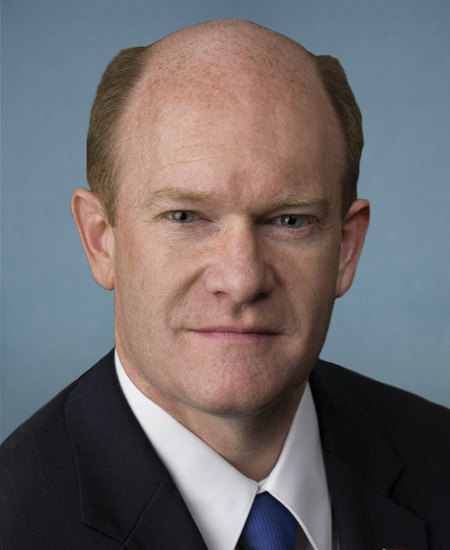
Sen. Christopher A. Coons
Sponsored bills
Maddy summaryThis bill creates a Chief Resilience Officer in the Executive Office of the President to coordinate federal climate adaptation and resilience efforts across government agencies. It establishes a Partners Council with representation from state and local governments, tribal nations, Freely Associated States, non-profits, and the private sector to advise on improving federal support for community resilience. The bill requires a National Adaptation and Resilience Strategy and Implementation Plan within two years, along with an Adaptation and Resilience Clearinghouse to improve access to climate adaptation resources. The law mandates regular assessments of federal resilience efforts and has a sunset provision ending its requirements by September 30, 2033.
Maddy summaryS. 3258, the ALS Better Care Act, establishes a new Medicare payment system for specialized ALS care services. It requires Medicare to provide a supplemental payment of $800 per visit for ALS-related services (like therapy, nursing, and equipment coordination) starting in 2025, with annual adjustments based on inflation and periodic reviews by the Comptroller General. This directly affects ALS patients and specialized clinics that currently face inadequate Medicare reimbursement for these critical services. The bill also mandates a report on clinical trial staffing challenges and ensures telehealth options are included in covered care for patients in rural or underserved areas.
Maddy summarySCONRES 7 is a Senate concurrent resolution condemning Russia’s detention of Vladimir Kara-Murza, a Russian opposition leader jailed for criticizing Vladimir Putin’s regime, the invasion of Ukraine, and advocating for democracy. It calls for his immediate release, urges Russia to free all political prisoners, and expresses solidarity with advocates for democratic values in Russia. The resolution specifically references Kara-Murza’s history of poisoning attempts, his arrest for "spreading false information" after speaking out, and his recent high treason charges. It does not create new laws or impose sanctions but formally expresses congressional opposition to his unjust detention.
Maddy summaryThis resolution designates the week beginning October 8, 2023, as "National Wildlife Refuge Week" to recognize the National Wildlife Refuge System. It encourages public events and activities to celebrate these refuges, which protect habitats, support wildlife conservation (including over 380 threatened species), and contribute to local economies through recreation and tourism. The designation highlights the system's role in providing habitat for over 850 million acres of ecosystems, supporting 41,000 jobs, and fostering community engagement through programs like the Urban Wildlife Conservation Program. It is a symbolic recognition effort with no binding policy changes or funding implications.
Maddy summaryThis bill reauthorizes funding for the DNA Analysis Backlog Elimination Act program, extending the funding period from fiscal years 2019-2024 to 2024-2029. It directly affects law enforcement agencies and crime laboratories that process forensic DNA evidence to reduce backlogs. The key provision updates the timeframe for federal grants that help these agencies conduct DNA testing on unsolved cases. This ensures continued support for analyzing biological evidence in criminal investigations without creating new requirements.
Maddy summaryThe Foundation for International Food Security Act of 2023 establishes an independent U.S. agency to accelerate sustainable agriculture investments that foster global food security. The Foundation will coordinate with U.S. government agencies and private sector partners to fund projects in up to 10 eligible countries that demonstrate commitment to agricultural reform, cost-sharing, and measurable outcomes. The bill authorizes $100 million annually for 10 years (2024-2033), requiring private sector cost-matching and prohibiting support for countries that support terrorism or violate human rights. It includes requirements for annual reporting to Congress on project outcomes, coordination with existing programs, and transparency in how funds leverage private investments. The Foundation must focus on projects that increase agricultural productivity, reduce food loss, improve nutrition, and build resilient food systems while avoiding duplication of existing U.S. government programs.
Maddy summaryThis bill establishes a federal grant program to fund career training for jobs in the offshore wind industry and the broader U.S. maritime sector. The Department of Labor will award grants to eligible entities like community colleges, labor unions, and maritime training centers to develop programs that lead to recognized credentials, with priority given to serving dislocated workers (e.g., from oil/gas or fossil fuel industries), veterans, and individuals facing employment barriers. Grantees must track and report on job placement, wages, and demographic data for participants, and at least 25% of funds must support registered apprenticeships. The program is funded at $25 million annually from 2024 through 2028.
Maddy summaryThe Healthcare Workforce Resilience Act creates 40,000 new employment-based immigrant visas for healthcare workers by recapturing unused visas from fiscal years 1992-2021, with 25,000 reserved for professional nurses and 15,000 for physicians. These visas are exempt from country caps and issued based on priority date, but must be applied for within three years of the bill’s enactment and only for applicants not already eligible under existing visa allocations. The bill also requires employers to attest that hiring foreign workers won’t displace U.S. workers and mandates expedited processing for these applications without additional fees. This policy directly affects nurses and physicians seeking to immigrate for healthcare roles in the U.S., along with their eligible family members.
Maddy summaryThis bill requires Small Business Development Centers (SBDCs) to submit detailed annual reports on program outcomes, including metrics like jobs created, new businesses started, capital secured, and participant demographics. It establishes a Data Collection Working Group to improve how SBDC data is gathered and analyzed, with a report due within 180 days of enactment. SBDCs may now use up to 10% of their budget for marketing their services, and the bill clarifies that fees from private partnerships don’t imply SBA endorsement. These changes aim to enhance transparency, data quality, and outreach for SBDCs serving small businesses nationwide.