

Maddy summaryThe Gun Violence Prevention Research Act of 2023 would authorize $50 million annually for the Centers for Disease Control and Prevention (CDC) to conduct or support research on firearms safety and gun violence prevention for fiscal years 2024 through 2029. This funding would allow the CDC to study the causes and prevention of gun violence, including evaluating safety measures and effective interventions. The research would be conducted under the Public Health Service Act, with the funding added to existing appropriations. The bill does not change current laws but provides dedicated resources for evidence-based research on gun violence as a public health issue.
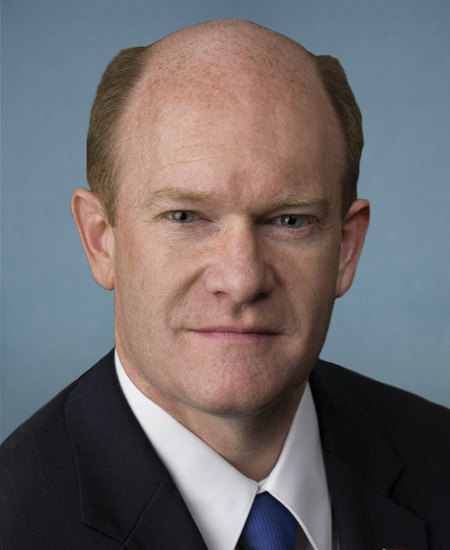
Sen. Christopher A. Coons
Sponsored bills
Maddy summaryThis bill amends federal pretrial detention rules for drug-related cases by updating a legal citation reference and reorganizing detention condition provisions. It directly affects federal courts and prosecutors handling drug charges, as it modifies Section 3142 of Title 18 (which governs pretrial release decisions). The key changes involve replacing outdated statutory references and restructuring the order of detention condition criteria. This is a technical procedural update to existing law, not a substantive policy change.
Maddy summaryThis bill establishes a federal "National Parkinson’s Project" under the Department of Health and Human Services to coordinate efforts across agencies in preventing, treating, and curing Parkinson’s disease and related conditions. It requires an integrated national plan, annual progress assessments, and a public Advisory Council - including patient advocates, researchers, and healthcare providers - to guide strategy and recommend actions. The project mandates data sharing among federal agencies and biannual reports to Congress evaluating federally funded Parkinson’s programs, aiming to improve care coordination, reduce financial burdens on Medicare and families, and advance research on environmental triggers. The law directly affects people living with Parkinson’s, their caregivers, and federal health agencies involved in research and patient services. The initiative is scheduled to sunset in 2035.
This resolution designates March 2023 as National Women's History Month. The resolution also recognizes the celebration of such month as a time to reflect on the contributions that women have made to the United States.
Maddy summaryThe International Human Rights Defense Act of 2023 establishes a permanent Special Envoy for LGBTQI+ human rights at the Department of State to lead U.S. foreign policy efforts addressing discrimination and violence against LGBTQI+ people globally. The bill requires the Special Envoy to develop an annual global strategy to prevent and respond to criminalization, discrimination, and violence against LGBTQI+ individuals, with mandatory reporting on countries that criminalize same-sex relationships or discriminate based on sexual orientation, gender identity, or sex characteristics. It directs U.S. foreign assistance to support programs that protect LGBTQI+ rights, including health initiatives addressing HIV/AIDS in LGBTQI+ communities, and requires training for U.S. personnel and foreign officials on LGBTQI+ rights issues. The bill also mandates regular congressional briefings on the status of LGBTQI+ rights worldwide and U.S. government efforts to address abuses.
Maddy summaryThis bill increases funding limits for the Weatherization Assistance Program and creates a new fund to address structural barriers in homes. It establishes a "Weatherization Readiness Fund" to help states fix structural defects in low-income homes (identified during program inspections) before weatherization measures can be installed. The bill raises the maximum per-unit cost limit for weatherization from $6,500 to $12,000 and adds a provision allowing the Secretary to adjust this limit based on market conditions. These changes directly affect low-income households seeking home energy upgrades and state agencies administering the program.
Maddy summaryThis bill repeals upfront origination fees for new Federal Direct student loans. It directly affects borrowers who take out these loans after March 27, 2022, by eliminating the initial fee charged when the loan is issued. The key provision removes section 455(c) of the Higher Education Act, which previously required these fees for loans under part D of title IV. The change applies to all new direct loans disbursed or consolidation applications received on or after the effective date, meaning borrowers no longer pay this specific fee.
Maddy summaryThe FIRE STATION Act establishes a $750 million grant program to fund construction, renovation, and upgrades of fire and EMS facilities. It directly assists career, volunteer, and combination fire departments, as well as non-hospital-based EMS organizations, by allocating 25% of funds to each category (with an additional 25% for competitive use). Grants can cover building/rebuilding facilities, installing safety systems (like HVAC or backup power), and meeting current building codes focused on firefighter health and safety, with a maximum award of $7.5 million per recipient. Recipients must report annually on fund usage to FEMA, and the Administrator must submit effectiveness reports to Congress.
Maddy summaryThe Global Voices of Freedom Act of 2023 requires the U.S. government to develop a comprehensive strategy within 180 days to better support human rights defenders facing threats globally. It mandates U.S. embassies to establish dedicated contacts for defenders, provide staff training on responding to reprisals, and include human rights defender protections in country-specific diplomatic plans. The bill also directs annual reports to Congress on how foreign governments treat defenders and patterns of retaliation against them. It authorizes $5 million annually (2024-2028) to implement these measures, including embassy training and reporting requirements. The law directly affects U.S. diplomatic missions and human rights defenders working to protect rights in countries where they face violence or harassment.
Maddy summaryThis bill expands Medicaid coverage to people in jail awaiting trial or court proceedings, allowing states to provide medical benefits during pretrial detention. It amends federal law to remove a barrier preventing Medicaid access for incarcerated individuals while their cases are pending. States receiving $50 million in planning grants must develop strategies to recruit healthcare providers, assess inmate health needs, and build infrastructure for seamless care transitions. The policy directly affects individuals in local jails awaiting court dates who qualify for Medicaid under state programs.