

Maddy summaryS 2035, the "Protect IVF Act," establishes federal rights to access and provide fertility treatment, including IVF, under widely accepted medical standards defined by the American Society for Reproductive Medicine. It directly affects patients seeking fertility care, health care providers offering IVF services, health insurance issuers covering such care, and manufacturers of fertility-related drugs or devices. The bill preempts state laws that restrict IVF access in ways inconsistent with medical standards - such as mandating unnecessary procedures, limiting telemedicine, or imposing discriminatory barriers - and allows federal court enforcement against violating state actions. This focuses on protecting existing access rather than creating new benefits or altering insurance coverage requirements.
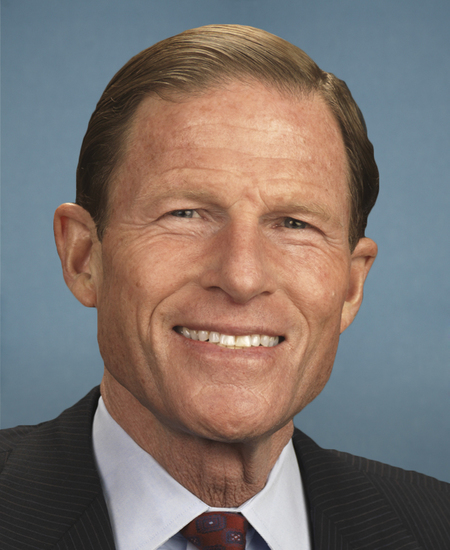
Sponsored bills
Maddy summaryThis bill prohibits colleges and universities from requiring students to waive their right to sue in court through enrollment agreements. It blocks institutions from including forced arbitration clauses or other restrictions (like limiting choice of law, jury trials, or court locations) in contracts with students. The law amends the Higher Education Act to ensure students can pursue legal claims against schools directly in court, rather than through private dispute resolution. It applies to all enrollment agreements between students and institutions of higher education, effective one year after enactment.
Maddy summaryS 2006, the Fit to Serve Act, prohibits the U.S. military from discriminating against service members or applicants based on gender identity. It directly affects all current and prospective members of the Armed Forces by banning specific discriminatory actions, including denying medically necessary health care, requiring service in a sex assigned at birth, or separating members due to gender identity (including gender dysphoria diagnosis). The bill amends Title 10 of the U.S. Code to add new protections, explicitly stating that the military cannot deny service, reenlistment, or health coverage based on gender identity. These changes apply uniformly across all branches and service statuses, ensuring equal treatment under military policy.
Maddy summaryThis bill creates federal grant programs to support runaway and homeless youth aged 15-26, with priority for those under 22. It establishes Basic Center Grants for temporary shelter and services, Transitional Living Grants for longer-term housing with support services, and Prevention Services Grants to help youth at risk of homelessness. The bill requires all services to be trauma-informed, culturally appropriate, and tailored to youth's age, gender, and developmental needs, with specific attention to vulnerable populations including LGBTQ youth, youth of color, and those in child welfare or justice systems. It also mandates data collection on trafficking incidents and services provided to youth victims, while requiring coordination with education, health, and social service systems.
Maddy summaryThis bill amends the Communications Act to clarify that "franchise fee" means only monetary assessments paid to local authorities for cable or community television services. It removes the word "includes" and adds "other monetary" before "assessment" in the definition. This technical change ensures franchise fees are strictly defined as cash payments, not other types of fees or non-monetary obligations. It directly affects cable operators and local governments that collect these fees under existing law. The bill makes no new policy changes but refines the legal definition for clarity.
Maddy summaryS 1970, the MACV-SOG Congressional Gold Medal Act, authorizes a single Congressional Gold Medal to honor the service members of the Military Assistance Command Vietnam-Studies and Observations Group (MACV-SOG) who served during the Vietnam War from 1964 to 1972. The medal, to be presented by congressional leaders, recognizes MACV-SOG’s covert operations in Vietnam, Laos, and Cambodia, including reconnaissance, sabotage, and rescue missions, and acknowledges the unit’s high sacrifice (over 1,500 personnel missing or killed). After presentation, the medal will be displayed at the Smithsonian Institution, with duplicate bronze medals available for sale to cover production costs. This bill is purely commemorative and does not create new policy or affect any current laws.
Maddy summaryThis bill establishes an independent expert panel to review and make recommendations for improving the FAA's Safety Management System (SMS) to ensure comprehensive safety practices across all FAA operations. It requires air carriers to install ADS-B In equipment within 4 years to enhance situational awareness, and mandates safety reviews of airspace operations at major airports, particularly examining military and civilian aircraft near airports. The bill also protects the FAA workforce from hiring freezes and staffing reductions, extends air traffic controller hiring requirements through 2033, and requires risk assessments following transport airplane accidents. These provisions aim to enhance safety coordination between the FAA and Department of Defense while addressing specific safety management and equipment requirements.
Maddy summaryThis bill prevents employers from dropping health insurance coverage for workers during strikes or lockouts. It amends the National Labor Relations Act to prohibit employers from terminating group health plan coverage for employees who are either locked out (during bargaining disputes) or participating in a lawful strike. Employers who violate this rule face civil penalties of up to $75,000 per violation for lockout-related actions (doubling to $150,000 for repeat offenses) or $50,000 for strike-related actions (doubling to $100,000 for repeat offenses). The law directly affects workers engaged in strikes or locked out by employers, ensuring their healthcare coverage continues during these labor disputes.
Treat and Reduce Obesity Act of 2025 This bill expands Medicare coverage of intensive behavioral therapy for obesity. Specifically, the bill allows coverage for therapy that is provided by (1) a physician who is not a primary care physician; or (2) other health care providers (e.g., physician assistants and nurse practitioners) and approved counseling programs, if provided upon a referral from, and in coordination with, a physician or primary care practitioner. Currently, such therapy is covered only if provided by a primary care practitioner. The bill also allows coverage under Medicare's prescription drug benefit of drugs used for the treatment of obesity or for weight loss management for individuals who are overweight.
Maddy summaryS 1974 (the ABC-ED Act of 2025) requires hospitals to track real-time emergency department bed capacity and boarding rates using modernized public health data systems, with grant funding to support this. It also creates a Medicare pilot program testing improved emergency care for older adults (through staffing, infrastructure, and geriatric protocols) and for psychiatric crisis patients (via dedicated units and faster transfers to post-acute facilities). The bill mandates a study by the Comptroller General to evaluate best practices for these data systems and their impact on emergency department wait times, boarding rates, and EMS offload times. The study must be completed within one year of enactment and reported to Congress. This bill directly affects hospitals, emergency departments, and post-acute care facilities (like skilled nursing homes) through new data requirements and pilot program participation.