

Maddy summaryThis bill defines "buy now, pay later" (BNPL) loans under federal law as short-term payment plans for retail purchases repaid in four or fewer interest-free installments with no fees. It extends existing consumer protections from the Truth in Lending Act to BNPL loans, requiring lenders to follow the same rules as credit card issuers regarding dispute resolution, account protections, and customer rights. The bill directly affects BNPL lenders (who must now comply with these rules) and consumers using BNPL services for retail purchases. The Consumer Financial Protection Bureau must issue implementing rules within one year of the law’s enactment.
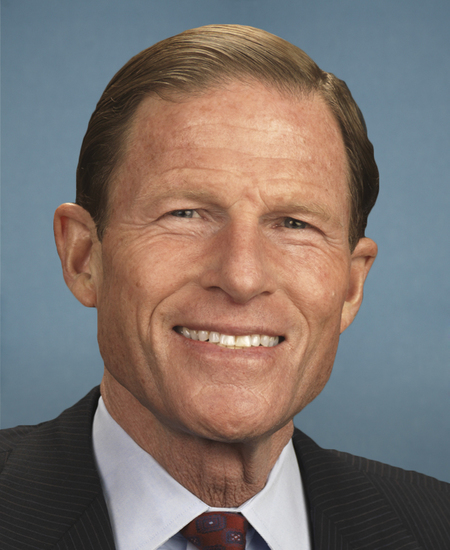
Sen. Richard Blumenthal
Sponsored bills
Maddy summaryThis bill requires the VA to provide telehealth services, mail-order pharmacy benefits, and mandatory beneficiary travel payments to veterans residing in the Freely Associated States (including Palau, the Marshall Islands, and Micronesia) within one year of enactment. It mandates quarterly reporting to Congress on implementation progress and associated costs. The law directly affects veterans in these Pacific Island nations by expanding access to critical healthcare and travel support services previously not uniformly guaranteed.
Maddy summaryThis non-binding Senate resolution (SRES 566) recognizes the critical role of Department of Veterans Affairs (VA) employees in providing essential health care to veterans. It highlights the VA's service to over 7 million patients, high veteran trust in VA care, and its performance in quality metrics compared to non-VA facilities. The resolution urges the VA to support its employees and reaffirms congressional commitment to ensuring veterans have access to high-quality, veteran-centered care through VA facilities or community providers. It does not create new policies or funding but serves as a symbolic acknowledgment of VA staff contributions.
Maddy summarySRES 549 is a Senate resolution urging the Trump Administration to seize vessels in Russia's "shadow fleet" that transport sanctioned oil. It directly addresses the executive branch, citing that these vessels (561 ships carrying 60-80% of Russia's oil exports) evade sanctions and fund Russia's war in Ukraine. The resolution condemns shadow fleet operations as undermining U.S. sanctions and calls for seizing such vessels, referencing prior U.S. seizures of similar vessels involved in Iran oil smuggling. It does not create new law but formally urges enforcement action.
Maddy summaryThis bill establishes federal funding for research and development of alternative protein sources using biomanufacturing and bioprocessing technologies. It creates Centers of Excellence at agricultural institutions (including 1890 Land-Grant Universities), authorizes $50 million annually for food biomanufacturing facility grants, and provides $25 million yearly for workforce training programs. The bill directly affects research institutions, food biomanufacturing companies, and agricultural workforce development programs by providing grants for scaling production of plant-based and lab-grown proteins. It requires the USDA to develop a national strategy on protein security by 2026, focusing on supply chain resilience, job creation, and U.S. competitiveness in the global protein market. The legislation aims to diversify food systems and support domestic production of protein sources using underutilized biomass.
Maddy summaryThis bill repeals Section 230 of the Communications Act of 1934, which currently shields online platforms from most liability for user-generated content. It would remove this legal protection, potentially making platforms more liable for content posted by users. The bill also updates references to Section 230 in other federal laws (like the Trademark Act and criminal codes) to instead reference Section 223 of the Communications Act. The changes would take effect two years after the bill is enacted.
Maddy summaryThis bill requires manufacturers of self-driving vehicle systems to publicly define and declare the specific conditions (like weather, road types, or time of day) where their technology is designed to operate safely. It mandates that these "operational design domains" be submitted to the National Highway Traffic Safety Administration (NHTSA) and posted on the manufacturer's website. The law prohibits systems from functioning outside these declared domains and adds civil penalties for violations. This directly affects car companies developing autonomous driving technology, imposing new transparency and safety compliance requirements.
Maddy summaryThis bill amends the Clayton Act to add a reference to itself within existing antitrust enforcement language. Specifically, it modifies Section 4C(a)(1) to include the phrase "or section 2 of this Act" after "any violation of the Sherman Act." The change directly affects how antitrust enforcement actions under the Clayton Act are referenced in legal proceedings. The bill does not introduce new substantive policy requirements but alters the statutory citation structure for consistency with its own provisions. (1 sentence summary: This procedural bill updates the Clayton Act's reference to itself in antitrust enforcement language.)
Maddy summaryS 3544, the Federal Firearm Licensing Act, would require most individuals to obtain a federal license to purchase, receive, or possess a firearm, with exceptions for states that have comparable state licensing systems. To qualify, applicants must complete firearms safety training (including a written test and hands-on shooting demonstration), pass a background check, and provide personal details, firearm specifics, and seller information. Licenses would be valid for one firearm within 30 days and expire after five years, with renewal requiring the same safety training and background check. The bill also mandates point-of-sale background checks through licensed dealers and requires sellers to report all firearm transactions to the federal government within three business days.
Maddy summaryThe GRACE Act (S 3535) sets a minimum annual refugee admission target of 125,000 for the U.S., requiring the President to determine this number based on humanitarian needs and national interest. It introduces community/private sponsorship for refugees, allowing groups to provide initial resettlement services instead of traditional agency support. The bill mandates quarterly public reports to Congress on admissions numbers, regional allocations aligned with UN resettlement needs, processing times, security checks, and any shortfall in meeting targets. This directly affects refugees seeking admission, the Department of Homeland Security (which administers processing), and Congress (through transparency requirements).