

This bill directs the National Oceanic and Atmospheric Administration (NOAA) to establish grant programs to support living shoreline projects and research on nature-based infrastructure. NOAA must award grants to state or local governments, nonprofit organizations, and Indian tribes to (1) implement climate-resilient living shoreline projects; and (2) encourage innovation in the use of natural materials to protect coastal communities, habitats, and natural system functions. A grant to carry out a living shoreline project may be used only to carry out the project, including administration, design, permitting, entry into negotiated indirect cost rate agreements, and construction; monitor, collect, and report data on the performance of the project, in accordance with the standard NOAA develops; or incentivize landowners to engage in such projects. NOAA shall award competitive research grants to eligible entities, including U.S. territories, to carry out projects focused on developing and assessing the effectiveness of innovative approaches to nature-based infrastructure for specified climate-related purposes. NOAA shall award grants to such entities for projects that focus on, among other things assessing the effectiveness of installed nature-based infrastructure, or novel approaches to nature-based infrastructure and living shorelines.
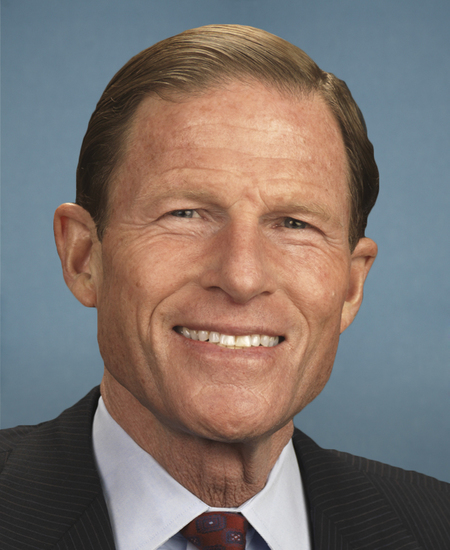
Sen. Richard Blumenthal
Sponsored bills
Real Emergency Access for Aging and Disability Inclusion for Disasters Act or the REAADI for Disasters Act This bill establishes programs and requirements to assist individuals with disabilities and older adults (age 50 or older) with disaster preparedness. Among other provisions, the bill requires the establishment of an advisory committee that includes disabled individuals and older adults to oversee the use of funds made available by this bill; allows states to contract with Centers for Independent Living to provide services and support to disabled individuals in preparing for hazards; requires the Department of Health and Human Services to award grants to carry out projects of national significance that, among other things, create opportunities for disabled individuals and older adults to directly contribute to disaster preparedness, recovery, and mitigation; modifies and expands the membership of the National Advisory Committee on Individuals with Disabilities and Disasters to ensure that it represents the diversity of the disabled and older adult communities; and establishes the Disability and Disaster Preparedness Advisory Commission to review settlement agreements involving potential violations of the Rehabilitation Act of 1973 and the Americans with Disabilities Act of 1990. The Government Accountability Office must study the compliance of federal agencies with such enactments in expending funds to support disabled individuals and older adults in responding to, recovering from, and mitigating disasters.
September 11 Transparency Act of 2021 This bill requires declassification reviews of certain documents related to investigations into the terrorist attacks on September 11, 2001. The Office of the Director of National Intelligence, the Department of Justice, and the Central Intelligence Agency must complete reviews of certain documents by deadlines specified in the bill.
Preventing Harmful Exposure to Phthalates Act This bill prohibits the use of any phthalate chemical as a food contact substance. (A food contact substance is any substance intended for use as a component of materials used in manufacturing, packing, packaging, transporting, or holding food if such use is not intended to have a technical effect in such food.) The Food and Drug Administration (FDA) must review FDA-regulated products other than food to determine whether use of such products leads to exposure to phthalate chemicals. This review must be publicly available on the website of the Department of Health and Human Services.
Get Toxic Substances Out of Schools Act of 2021 This bill addresses the provision of Environmental Protection Agency (EPA) grants to prevent and eliminate toxic substances, particularly in certain school environments. The EPA is authorized make grants to Indian tribes (in addition to the current authority to provide grants to states) to establish and operate programs to prevent or eliminate unreasonable risks associated with a chemical substance or mixture of which the EPA is unlikely to address during the 24-month period after the grant is made. The bill also authorizes the EPA to partner with the Department of Labor (with respect to enforcement of labor standards) to provide grants to states and Indian tribes to identify, prevent, or eliminate risks associated with the presence of a chemical substance or mixture in eligible facilities (i.e., public school facilities operated by a local educational agency, facilities operated by an early childhood education program, and center-based child care facilities operated by an eligible child care provider). The EPA has permanent authority to provide grants to Indian tribes (in addition to the current authority to provide such grants to states) to (1) provide technical assistance to local educational agencies, early childhood education programs, and eligible child care providers to address environmental concerns in eligible facilities; and (2) develop and implement state and tribal programs to support the remediation of toxic substances in eligible facilities. Under the bill, the EPA must also provide specified outreach and guidelines related to environmental hazards in eligible facilities.
Beyond the Box for Higher Education Act of 2021 This bill requires the Department of Education to issue guidance and recommendations for institutions of higher education to remove criminal and juvenile justice questions from their admission applications.
Harlem Hellfighters Congressional Gold Medal Act This bill provides for the award of a Congressional Gold Medal to the 369th Infantry Regiment, commonly known as the Harlem Hellfighters, in recognition of their bravery and outstanding service during World War I.
Environmental Justice Act of 2021 This bill requires agencies to address and mitigate the disproportionate impact of environmental and human health hazards on communities of color, indigenous communities, and low-income communities resulting from agencies' programs and policies. The bill also requires agencies to address cumulative impacts of pollution in permitting decisions and expands the types of legal actions available to individuals regarding charges of federal discriminatory practices. Specifically, the bill provides statutory authority for a variety of existing programs, executive orders, federal guidance, and committees concerning environmental justice, including Executive Order 12898; a guidance issued in 1997 by the Council on Environmental Quality titled Environmental Justice Guidance Under the National Environmental Policy Act ; a guidance issued in 2016 by the Environmental Protection Agency titled EPA Policy on Consultation and Coordination with Indian Tribes: Guidance for Discussing Tribal Treaty Rights ; the National Environmental Justice Advisory Council; the Environmental Justice Small Grants Program; and the Environmental Justice Collaborative Problem-Solving Cooperative Agreement Program. In addition, the bill requires agencies renewing or issuing specified permits under the Clean Water Act or the Clean Air Act to consider the cumulative impacts of pollution. The bill also allows individuals to bring actions under the Civil Rights Act against entities that receive federal assistance and engage in discriminatory practices that have a disparate impact. Currently, individuals must request that federal agencies bring such actions on their behalf.
State Public Option Act This bill allows residents who are not already eligible for Medicaid and not concurrently enrolled in other health insurance coverage to buy into a state Medicaid plan beginning January 1, 2022, at the option of the state. State Medicaid programs may set premiums and cost-sharing requirements for such coverage in accordance with specified limitations. The bill also (1) provides the enhanced Federal Medical Assistance Percentage (i.e., federal matching rate) to every state that expands Medicaid coverage for individuals who are newly eligible under the Patient Protection and Affordable Care Act, regardless of when such expansion takes place; and (2) requires state Medicaid programs to cover comprehensive reproductive health care services, including abortion services.
Insular Area Climate Change Act This bill provides support through programs and financial assistance for climate change planning, mitigation, adaptation, and resilience in U.S. territories (American Samoa, Guam, Northern Mariana Islands, Puerto Rico, and the U.S. Virgin Islands), the Freely Associated States (Micronesia, Marshall Islands, and Palau), and other specified areas. For example, the bill requires the Technical Assistance Program of the Department of the Interior's Office of Insular Affairs to provide technical assistance for climate change planning, mitigation, adaptation, and resilience to the territories and Freely Associated States. It also establishes an Insular Area National Program Office within the Environmental Protection Agency to build and strengthen infrastructure to withstand natural disasters, expand renewable energy and energy efficiency, and provide technical assistance in the territories and Freely Associated States. Additionally, the bill establishes several grant programs to assess and reduce the impacts of climate change, expand renewable energy and energy efficiency, or expand sustainable infrastructure to withstand natural disasters in the territories and Freely Associated States.