

Maddy summaryThis bill requires colleges to notify students participating in state or federally funded work-study programs about their potential eligibility for SNAP (food stamp) benefits. Specifically, institutions must send electronic notifications detailing SNAP eligibility requirements, state-specific application contacts, and an official document confirming work-study status to overcome a common eligibility barrier. The notifications must be developed jointly by the Education and Agriculture Departments and tailored to each student’s state. This directly affects undergraduate and graduate students in work-study programs who may qualify for SNAP but face confusion about their eligibility.
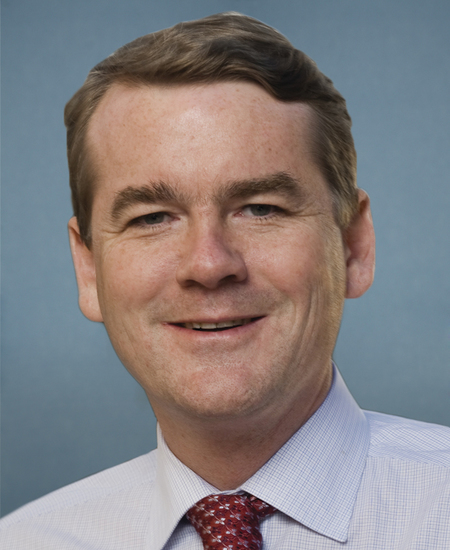
Sen. Michael F. Bennet
Sponsored bills
Maddy summaryThe Give Kids a Chance Act of 2023 amends FDA drug development rules to require new pediatric cancer studies for certain cancer drugs. It mandates that pharmaceutical companies conducting molecularly targeted cancer drug development must include pediatric studies designed to gather age-specific data on dosing, safety, and efficacy for drugs treating pediatric cancers. This applies to drugs with a single new active ingredient or combinations where each ingredient was previously approved for adult cancer treatment. The law requires FDA guidance within one year of enactment and includes reporting requirements to Congress on implementation progress and a GAO study on the policy's effectiveness. The changes apply to drug applications submitted three years after the bill's enactment.
Maddy summaryThis bill requires states to allow eligible voters to register or update their registration at polling places on election day for federal elections, starting with the November 2024 general election. It mandates that polling places provide the necessary forms for registration or changes, directly affecting voters and state election systems. States already without voter registration requirements for federal elections are exempt. The law includes a phased implementation for states needing time, requiring at least one compliant location per 15,000 voters in each jurisdiction before November 2026.
Maddy summaryThis proposed constitutional amendment would give Congress and states the authority to regulate campaign contributions and spending, including setting limits and prohibiting corporations from spending money to influence elections. It explicitly protects freedom of the press by stating the amendment cannot be used to abridge it. If ratified by three-fourths of state legislatures, it would establish a new constitutional standard for campaign finance regulation.
Maddy summaryThe Carbon Dioxide Removal Research and Development Act of 2023 establishes a federal program to research and develop carbon dioxide removal technologies across multiple departments. It creates an Office of Fossil Energy and Carbon Management within the Department of Energy to coordinate research and authorizes over $10 billion in funding through 2033 for projects including direct air capture, forest restoration, soil carbon management, and ocean-based removal techniques. The bill requires lifecycle analyses and environmental justice assessments for all technologies and establishes competitive demonstration projects with specific cost requirements. Federal agencies must prioritize carbon removal research in their programs, directing billions of dollars toward advancing these technologies to reduce atmospheric carbon dioxide levels.
Maddy summaryThis bill provides $16 billion in federal funding over five years (2024-2028) to stabilize the child care sector. It directly affects child care providers by offering grants to offset operating costs, support higher wages for early childhood educators without increasing fees for families, and expand access to high-quality care. Key provisions include funding for providers in underserved areas (like rural communities, infant/toddler care, and inclusive services for children with disabilities) and a requirement that 99% of funds go directly to providers. The funds are administered through the existing framework of the American Rescue Plan Act's child care program.
Maddy summaryThis bill requires current and new Members of Congress, along with their spouses and dependent children (under 19 and IRS dependents), to divest or place most investments - including stocks, bonds, and derivatives - into qualified blind trusts within 120 days of enactment or assuming office, with limited 180-day extensions total. It prohibits acquiring new covered investments during congressional service, except for inheritances (which must be handled within 120 days), and excludes diversified funds, Treasury securities, and retirement plan holdings from the requirement. Non-compliance triggers monthly civil penalties equal to the member’s salary, enforced by ethics offices that must publicly report compliance details. The law aims to prevent conflicts of interest by separating lawmakers' personal financial interests from legislative duties.
Maddy summaryThis bill (S 2757) freezes current payment rates for veterans' transportation services provided through "special modes" (like non-emergency medical transport) starting January 1, 2023, preventing the VA from lowering these rates without strict conditions. It directly affects veterans relying on these transportation services and the contractors providing them. The key provision allows rate increases but requires the VA to conduct a detailed economic impact review, consult with veterans' groups and industry experts, and ensure new rates cover actual costs before any decrease can occur. This aims to protect veterans' access to care by preventing rate cuts that could disrupt transportation services.
Maddy summaryThis bill amends the Federal Crop Insurance Act to improve the Whole Farm Revenue Protection Program for farmers. It directly affects producers who use this insurance, expanding eligible marketing methods to include direct-to-consumer sales, local/regionally sold products, and identity-preserved crops. Key changes include requiring crop rotation (replacing "may" with "shall"), allowing IRS Schedule F tax forms as sufficient revenue proof (with limited exceptions), reducing paperwork for farms with $1 million+ gross revenue, and expanding discounts to cover at least 10 commodities. The bill also sets a $500,000 limit on revenue growth adjustments and includes provisions to better account for disaster payments in revenue calculations.
Maddy summaryThis bill reauthorizes the Joint Chiefs Landscape Restoration Partnership program through 2028, extending its existing authorization period. It expands the program’s scope to include wildfire recovery and enhancing soil/water resources, while requiring coordination between the Natural Resources Conservation Service and Forest Service on forest management and science. The bill updates wildfire risk language to include post-wildfire impacts and ties project funding to state forest action plans. The program directly affects federal agencies (Natural Resources Conservation Service, Forest Service) and state/local entities managing landscape restoration projects.