

Adoptee Citizenship Act of 2021 This bill provides for the automatic acquisition of citizenship for certain individuals adopted by a U.S. citizen. A child born outside the United States and adopted by a U.S. citizen shall automatically acquire citizenship upon meeting certain requirements, regardless of when the adoption was finalized. Currently, adoptees who were over the age of 18 on February 27, 2001, do not automatically acquire citizenship. An individual born outside the United States and residing in the United States shall automatically acquire citizenship if the individual (1) was adopted by a citizen before becoming 18 years old, (2) was physically present in the United States in the citizen parent's custody pursuant to lawful admission before becoming 18 years old, (3) never acquired citizenship before this bill's enactment, and (4) was lawfully residing in the United States on this bill's enactment date. An individual born outside the United States and residing outside the United States but who otherwise meets all of the requirements shall automatically acquire citizenship upon being physically present in the United States pursuant to lawful admission. Such an individual shall be subject to a background check. If the background check reveals the individual has committed a crime that was not properly resolved, the individual may not receive a visa unless the Department of Homeland Security and Department of State have coordinated with law enforcement to ensure that action was taken to resolve the issue.
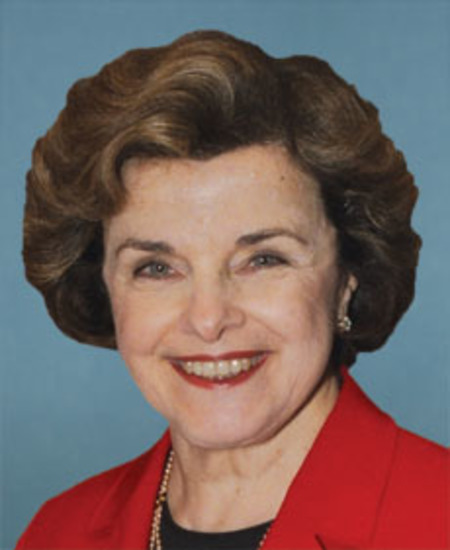
Sen. Dianne Feinstein
Sponsored bills
This bill requires the Joint Committee on the Library to enter into an agreement to obtain a statue of Shirley Chisholm, the first African American woman elected to Congress. The committee shall place the statue in a permanent public location in the U.S. Capitol.
Carbon Capture, Utilization, and Storage Tax Credit Amendments Act of 2021 This bill extends the carbon oxide sequestration tax credit through 2030. It also permits taxpayers to elect to receive a payment in lieu of the tax credits for carbon oxide sequestration and qualifying advanced coal projects. The bill also makes other modifications to certain carbon sequestration credits, including (1) an allowance of carbon sequestration credits against the base erosion minimum tax, (2) modifications to sequestration requirements for certain qualifying advanced coal project credit equipment, and (3) increasing the sequestration credit value for direct air capture projects.
Baby Food Safety Act of 2021 This bill imposes certain safety requirements on infant and toddler food. The bill establishes maximum levels of certain toxic elements (cadmium, and lead, mercury, and inorganic arsenic) allowable in infant and toddler food, defined as food intended to be sold for children up to 36 months old. The Food and Drug Administration (FDA) shall periodically review and, if necessary, further lower these levels. The FDA may also establish limits on other toxic elements upon review of relevant health and dietary data. Furthermore, facilities that manufacture, process, pack, or hold infant and toddler food must have certain controls and plans to ensure that their food complies with the limits on toxic elements established by this bill. Such facilities shall also make publicly available certain information, including results from tests for toxic elements in their infant and toddler foods. The bill also expands the FDA's authority to require a recall of adulterated or misbranded food to include infant and toddler food that exceeds limits on toxic elements. The Centers for Disease Control shall carry out a public awareness campaign about the risks of toxic elements in infant and toddler food. The FDA shall commission research on agricultural methods that minimize levels of toxic heavy metals in crops.
This bill makes changes to facilitate data sharing between the Supplemental Nutrition Assistance Program (SNAP) and programs that subsidize communication services to verify eligibility for applicable programs. Specifically, the Federal Communications Commission (FCC) must award grants to states and tribes for establishing or modifying connections between databases with information regarding benefit programs (e.g., SNAP) and the National Lifeline Eligibility Verifier to verify eligibility for the Lifeline program (which subsidizes telephone and internet services for low-income individuals) and the Emergency Broadband Benefit Program (which subsidizes broadband services for those who suffered income loss during the COVID-19 pandemic and other eligible households). The bill also reauthorizes through FY2026 the fund that supports the Emergency Broadband Benefit Program. In addition, the FCC must establish an automated connection to share data between the National Lifeline Eligibility Verifier and the National Accuracy Clearinghouse for SNAP. The FCC must coordinate with the Department of Agriculture to establish the connection.
Workforce Data for Analyzing and Tracking Automation Act of 2021 or the Workforce DATA Act This bill provides for a study by the National Academies of Science, Engineering, and Medicine on measuring the impact of automation on the workforce. Specifically, the bill requires the Department of Labor to request the academies to enter into an arrangement to conduct a consensus study on how to measure the impact of automation on the workforce, including job creation, job displacement, job retention, and the shifting of skills in demand due to automation. In addition, Labor must establish an advisory board, or form a subcommittee of an existing advisory board, to provide recommendations on addressing the impact of automation on the workforce.
Civilian Climate Corps Act of 2021 This bill requires the Departments of the Interior and Agriculture, in coordination with other relevant federal agencies, to enter into an interagency agreement establishing a Civilian Climate Corps, to be operated in accordance with the National and Community Service Act of 1990 and the Domestic Volunteer Service Act of 1973. A project carried out by the corps must (1) prioritize efforts to assist disproportionately impacted communities, or be carried out in partnership with a qualified youth service or conservation corps; (2) be coordinated with tribal and Native American communities to protect natural cultural resources; and (3) accomplish one or more of particular objectives such as conserving, monitoring, and restoring public land and water to help mitigate and adapt to climate change.
Healthcare Workforce Resilience Act This bill makes previously unused immigrant visas available to nurses and physicians who petition for such a visa before the date that is 90 days after the end of the declared national emergency relating to the COVID-19 (i.e., coronavirus disease 2019) outbreak. The number of visas available shall be the total number of unused employment-based immigrant visas from FY1992-FY2020, up to 40,000. Of such visas, 25,000 shall be reserved for nurses and 15,000 for physicians. Certain family members may accompany the principal beneficiary of a visa provided under this bill, and visas for such family members shall (1) be made available from the unused visas from FY1992-FY2020, and (2) not be counted against the 40,000 cap. Visas provided under this bill shall be exempt from per-country limitations.
This resolution condemns and denounces all forms of anti-Asian sentiment, including those related to COVID-19 (i.e., coronavirus disease 2019), and calls on federal law enforcement officials, working with state and local agencies, to take specified steps. The resolution calls on federal officials to expeditiously investigate and document all credible reports of hate crimes, harassment, bullying, and threats against the Asian American and Pacific Islander communities; the Attorney General to work with state and local agencies and Asian American and Pacific Islander community-based organizations to prevent discrimination and to expand culturally competent and linguistically appropriate education campaigns on public reporting of hate crimes; and the Department of Health and Human Services to issue guidance describing best practices to mitigate racially discriminatory language in describing the pandemic. The resolution recommits the United States to serving as a model for the world in building a more inclusive, diverse, and tolerant society by (1) prioritizing language access and inclusivity in communication practices, and (2) combating misinformation and discrimination that puts Asian Americans and Pacific Islanders at risk.
This resolution celebrates the successes and contributions of Latinas in the United States and recognizes the changes still to be made to ensure that Latinas can realize their full potential as equal members of society.