Lead-Free Drinking Water for All Act of 2021 This bill reauthorizes through FY2031 and revises the Environmental Protection Agency's grant program for reducing lead in drinking water, including by establishing a deadline for grant recipients to fully replace lead service lines.
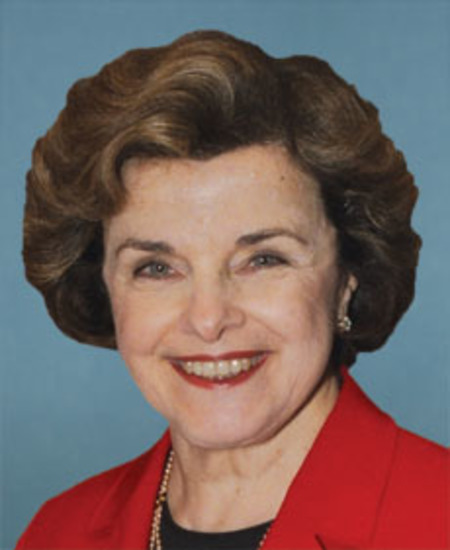
Sen. Dianne Feinstein
Sponsored bills
Better Care Better Jobs Act This bill establishes programs and provides funds for state Medicaid programs to improve home- and community-based services (HCBS), such as home health care, personal care, case management, and rehabilitative services. Specifically, the bill provides funds for the Centers for Medicare & Medicaid Services to award planning grants, develop quality measures, and provide technical assistance to states regarding specified HCBS improvements, particularly with respect to access, utilization, and the associated workforce. The bill also increases the Federal Medical Assistance Percentage (i.e., federal matching rate) for HCBS in states that develop plans and meet specified benchmarks for improvements. The bill also makes permanent (1) the Money Follows the Person Rebalancing Demonstration Program (a grant program to help states increase the use of HCBS for long-term care and decrease the use of institutional care), and (2) certain provisions regarding Medicaid eligibility that protect against spousal impoverishment for recipients of HCBS.
Even Playing Field Act This bill addresses pay equity for amateur athletes and other personnel. It allows recognition, or continued recognition, of a national governing body of an amateur sports organization only if it provides equal investment, promotional support, working conditions (including staff support and facilities and equipment for training and competition), and wages and other compensation to all amateur athletes, without discrimination based on sex. National governing bodies must report periodically to Congress regarding pay equity. Each report shall include (1) the median compensation for amateur athletes, coaches, trainers, managers, administrators, and officials, disaggregated by race, gender, and employment category; and (2) the minimum and maximum compensation paid to such personnel, disaggregated by race, gender, and employment category.
Growing Climate Solutions Act of 2021 This bill authorizes the Department of Agriculture (USDA) to establish a voluntary Greenhouse Gas Technical Assistance Provider and Third-Party Verifier Certification Program to help reduce entry barriers into voluntary environmental credit markets for farmers, ranchers, and private forest landowners. A voluntary environmental credit market is a market through which agriculture and forestry credits may be bought or sold. Entities eligible to participate in the program are (1) providers of technical assistance to farmers, ranchers, or private forest landowners in carrying out sustainable land use management practices that prevent, reduce, or mitigate greenhouse gas emissions, or sequester carbon; or (2) third-party verifiers that conduct the verification of the processes described in the protocols for voluntary environmental credit markets. Among other requirements, USDA must publish (1) a list of protocols and qualifications for eligible entities; (2) information describing how entities may self-certify under the program; (3) information describing how entities may obtain the expertise to meet the protocols and qualifications; and (4) instructions and suggestions to assist farmers, ranchers, and private forest landowners in facilitating the development of agriculture or forestry credits and accessing voluntary environmental credit markets. USDA must also establish an advisory council to make recommendations regarding the list of protocols and qualifications, best practices, and voluntary environmental credit markets. The bill also rescinds certain funds provided in the American Rescue Plan Act of 2021 and makes the funds available for the certification program.
Israel Relations Normalization Act of 2021 This bill requires the Department of State to take certain actions promoting the normalization of relations between Israel, Arab states, and other relevant countries and regions. Specifically, the State Department must develop a strategy on expanding and strengthening the Abraham Accords (the term used to refer collectively to agreements between Israel and the United Arab Emirates and between Israel and Bahrain marking the public normalization of relations between the two Arab countries and Israel). The strategy must include a description of how the U.S. government will encourage further normalization of relations with Israel. The State Department must report on the status of efforts to promote normalization of relations with Israel and other countries, including information on (1) laws that punish individuals for people-to-people relations with Israelis (i.e., anti-normalization laws), and (2) instances of the use of state-owned or state-operated media outlets to promote the prosecution of citizens or residents of Arab countries calling for peace with Israel.
Patsy T. Mink and Louise M. Slaughter Gender Equity in Education Act of 2021 This bill requires the Department of Education (ED) to establish an Office for Gender Equity to support state and local educational agencies, institutions of higher education, and elementary and secondary schools in fully implementing title IX of the Education Amendments of 1972, which prohibits discrimination on the basis of sex in federally funded education programs or activities. The office may provide grants and perform activities to reduce or prevent sex discrimination in all areas of education. The office must provide technical assistance and annual training to title IX coordinators and develop a handbook for conducting self-evaluations of title IX compliance. The training must address discrimination based on multiple characteristics, including race, ethnicity, national origin, disability status, religion, age, or actual or perceived sex. The office may award grants to eligible entities and partnerships that apply to carry out programs and activities designed to implement title IX and prevent and reduce sex discrimination, including programs that increase access to resources. ED must coordinate with the Institute of Education Sciences and other federal entities to investigate, identify, and disseminate best practices to (1) reduce and prevent sex stereotyping, bias, and discrimination in educational materials; (2) address sex-based harassment and violence on campuses; (3) develop counseling and career guidance training; (4) mitigate implicit bias in teaching and discipline; and (5) address the needs of students who face discrimination based on multiple characteristics.
Puppies Assisting Wounded Servicemembers for Veterans Therapy Act or the PAWS for Veterans Therapy Act This bill implements a program and a policy related to service dog therapy for veterans. Specifically, the bill requires the Department of Veterans Affairs (VA) to implement a five-year pilot program to assess the effectiveness of addressing post-deployment mental health and post-traumatic stress disorder through a method where veterans train service dogs for veterans with disabilities. The bill also authorizes the VA to provide service dogs to veterans with mental illnesses, regardless of whether they have a mobility impairment.
Oil and Gas Bonding Reform and Orphaned Well Remediation Act This bill establishes incentives and requirements to clean up orphaned oil and gas wells, including by (1) establishing a program to remediate, reclaim, and permanently plug such wells located on federal land, state land, or land under the jurisdiction of Indian tribes; and (2) revising bonding requirements for oil and gas development on public land leased from the federal government. Such bonds are required to ensure developers have adequate financial resources to remediate and reclaim public land, water, or other resources after wells are abandoned or oil and gas development ceases.
Lori Jackson-Nicolette Elias Domestic Violence Survivor Protection Act This bill makes changes to the federal statutory framework that prohibits the shipment, transport, receipt, or possession of firearms or ammunition by an individual who is subject to a qualifying domestic violence court order. Under current law, a qualifying domestic violence court order must meet certain requirements, including to (1) be issued after a hearing of which the individual had notice and an opportunity to participate; and (2) restrain the individual from harassing, stalking, or threatening an intimate partner (i.e., a current or former spouse, a co-parent of a child, or a current or former cohabitant) or the child of an intimate partner. This bill expands the scope of qualifying domestic violence court orders to include an order that is issued after an ex parte hearing (i.e., a hearing with only one party present); restrains the individual from harassing, stalking, or threatening a dating partner or former dating partner; or restrains the individual from intimidating a witness. Current law also prohibits an individual who is convicted of a misdemeanor crime of domestic violence from shipping, transporting, receiving, or possessing firearms or ammunition. These restrictions generally only apply to spouses, co-parents, and cohabitants, and to offenses that involve physical force or deadly weapons. This bill expands the scope of these restrictions to include dating partners and offenses that involve stalking. Finally, the bill authorizes grants for state, local, and tribal governments to remove firearms and take other steps after a domestic violence court order is issued.
Washington, D.C. Admission Act This bill provides for admission into the United States of the state of Washington, Douglass Commonwealth, composed of most of the territory of the District of Columbia. The commonwealth shall be admitted to the Union on an equal footing with the other states. The Mayor of the District of Columbia shall issue a proclamation for the first elections to Congress of two Senators and one Representative of the commonwealth. The bill applies current District laws to the commonwealth and continues pending judicial proceedings. The commonwealth (1) shall consist of all District territory, with specified exclusions for federal buildings and monuments, including the principal federal monuments, the White House, the Capitol Building, the U.S. Supreme Court Building, and the federal executive, legislative, and judicial office buildings located adjacent to the Mall and the Capitol Building; and (2) may not impose taxes on federal property except as Congress permits. District territory excluded from the commonwealth shall be known as the Capital and shall be the seat of the federal government. The bill maintains the federal government's authority over military lands and specified other property. The bill provides for expedited consideration of a joint resolution repealing the Twenty-third Amendment to the Constitution, which provides for the appointment of electors of the President and Vice President. The bill continues certain federal authorities and responsibilities, including regarding employee benefits, agencies, courts, and college tuition assistance, until the commonwealth certifies that it is prepared to take over the authorities and responsibilities. The bill establishes the Statehood Transition Commission to advise the President, Congress, and District and commonwealth leaders on the transition.