

Water Conservation Rebate Tax Parity Act This bill expands the tax exclusion for energy conservation subsidies provided by public utilities to include certain subsidies for water conservation or efficiency measures and storm water management measures. The bill excludes from gross income subsidies provided (directly or indirectly) (1) by a public utility to a customer, or by a state or local government to a resident of such state or locality, for the purchase or installation of any water conservation or efficiency measure; and (2) by a storm water management provider to a customer, or by a state or local government to a resident of such state or locality, for the purchase or installation of any storm water management measure.
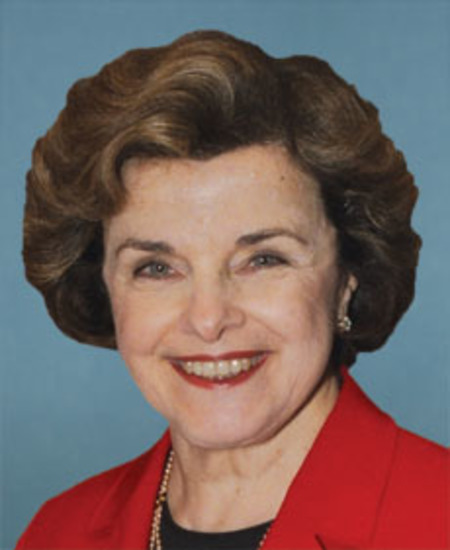
Sen. Dianne Feinstein
Sponsored bills
Women's Retirement Protection Act This bill modifies the requirements for employer-sponsored pension plans to (1) extend spousal consent requirements that currently apply to defined benefit pension plans to defined contribution pension plans; and (2) allow certain long-term, part-time workers to participate in pension plans that include either a qualified cash or deferred arrangement or a salary reduction agreement. Financial product or service providers who sell retirement financial products or services must provide purchasers of their products or services an easily accessible link to the website of the Consumer Financial Protection Bureau to obtain information relating to retirement planning or later life economic security. The Women's Bureau of the Department of Labor shall award grants to certain community-based organizations to (1) improve the financial literacy of women who are working age or in retirement, and (2) assist low-income women and survivors of domestic violence in obtaining qualified domestic relations orders and the benefits they are entitled to through the orders.
Protect Drinking Water from PFAS Act of 2021 This bill requires the Environmental Protection Agency (EPA) to address the level of perfluoroalkyl and polyfluoroalkyl substances (PFAS) in drinking water. PFAS are man-made and may have adverse human health effects. A variety of products contain PFAS, such as nonstick cookware or weatherproof clothing. The EPA must publish a maximum contaminant level (MCL) and promulgate a national primary drinking water regulation for PFAS that includes perfluorooctanoic acid (commonly referred to as PFOA) and perfluorooctane sulfonic acid (commonly referred to PFOS). The MCL and regulation must be protective of the health of subpopulations that may be at greater risk than the general population of adverse health effects from exposure to PFAS in drinking water.
Wildfire Smoke Emergency Declaration Act of 2021 This bill authorizes the President to declare a smoke emergency and provide emergency assistance to affected communities under specified circumstances. Specifically, the President, upon determining that there is, or anticipating that there will be, a significant decrease in air quality due to wildland fire smoke in one or more states, may declare a smoke emergency. The governor or other agency of a state that is or will be affected may request such a declaration. If the President declares a smoke emergency, the Federal Emergency Management Agency (FEMA) and other federal agencies may provide emergency assistance to states and local communities that are or will be affected by the emergency, including grants, equipment, supplies, and personnel and resources for establishing smoke shelters, air purifiers, and additional air monitoring sites. The Small Business Administration may provide grants to any small business concern that loses a significant amount of revenue due to wildland fire smoke in an area in which the President has declared a smoke emergency.
Cyber Incident Notification Act of 2021 This bill requires federal agencies and certain entities to report cybersecurity intrusion incidents to the Cybersecurity and Infrastructure Security Agency (CISA) and addresses related issues. Within 24 hours of a confirmed intrusion (or potential intrusion), the targeted agency or entity must report the intrusion to CISA. CISA must promulgate rules relating to the bill, including the information that must be included in each incident report and the entities that must comply with the reporting requirements. At minimum, the covered entities must include federal contractors and owners or operators of critical infrastructure. Similarly, such rules must at minimum require federal agencies and covered entities to report all intrusions involving a nation-state, advanced persistent threat cyber actor, or transnational organized crime group. If a covered entity fails to meet the bill's requirements, CISA may assess a civil penalty of up to 0.5% of the entity's gross revenue for each day the violation lasts. If the violating entity has federal contracts, the General Services Administration may impose additional penalties, including removal from the Federal Contracting Schedule. A violation by a federal agency must be referred to that agency's office of the inspector general, which must treat the case as a matter of urgent concern. CISA, the Department of Justice, and the Office of the Director of National Intelligence must provide periodic reports to Congress concerning the current cyber threat picture facing federal agencies and covered entities.
Safe Schools Improvement Act of 2021 This bill requires states to direct their local educational agencies (LEAs) to establish policies that prevent and prohibit bullying and harassment of elementary and secondary school students. In particular, these policies must prohibit bullying and harassment based on race, color, national origin, sex, sexual orientation, gender identity, disability, or religion. Further, LEAs must provide (1) students, parents, and educational professionals with annual notice of the conduct prohibited in their disciplinary policies; (2) students and parents with grievance procedures that target such conduct; and (3) the public with annual data on the incidence and frequency of that conduct at the school and LEA level. The Department of Education must conduct and report on an independent biennial evaluation of programs and policies to combat bullying and harassment in elementary and secondary schools. The National Center for Education Statistics must collect state data to determine the incidence and frequency of the conduct prohibited by LEA disciplinary policies.
Protecting Access to Lifesaving Screenings Act of 2021 or the PALS Act This bill makes a series of changes relating to health insurance coverage of screening mammography. Specifically, the bill requires that any provision of law referring to current recommendations of the U.S. Preventive Services Task Force (USPSTF) with respect to breast cancer screening mammography be administered as if (1) the provision referred to USPSTF recommendations last issued before 2009; and (2) those recommendations applied to any screening mammography modality, including any digital modality of such a procedure. This requirement shall also apply to the Veterans Health Administration's policy on mammography screening for veterans. In addition, the bill preserves Medicare coverage for screening mammography, without a requirement for coinsurance, and expands the definition of screening mammography to include any digital modality of such a procedure. Further, the Centers for Medicare & Medicaid Services may not decrease the frequency with which screening mammography may be paid by Medicare for a woman over 39 years of age. In 2009, the USPSTF updated its guidelines to recommend against routine screening mammography for women between 40 to 49 years of age and to recommend biennial, instead of annual, screening mammography for most women between 50 to 74 years of age. In 2015, through the appropriations process, a three-year moratorium was placed on implementing the guidelines; the moratorium was subsequently renewed until January 1, 2023.
Urban Indian Health Providers Facilities Improvement Act This bill expands the authority of the Indian Health Service (IHS) to make funds available for urban Indian organizations to renovate, construct, or expand urban Indian health facilities. Specifically, the bill authorizes the IHS to (1) make funds available for renovations even if the renovations are not minor, and (2) make funds available for purposes other than assisting the organizations in meeting certain accreditation standards.
Corn Ethanol Mandate Elimination Act of 2021 This bill revises the renewable fuel program to eliminate the annual renewable fuel standard. The existing standard requires 36 billion gallons of renewable fuel that is produced from renewable biomass to be blended into transportation fuel by 2022. The renewable fuel standard includes fuels that are produced from renewable biomass, such as corn. The bill would not affect the standards under the program for advanced biofuel, cellulosic biofuel, or biomass-based diesel.
Support Through Loss Act This bill provides employees with 24 hours of paid leave time each year for an absence resulting from a pregnancy loss or other specified circumstance related to pregnancy, fertility, or an unsuccessful assisted reproductive procedure or adoption match. Employers must notify each employee about the availability of this paid leave and may not discriminate or discharge an employee for exercising or attempting to exercise the right to such paid leave. The bill provides for enforcement of this requirement by the Department of Labor and through civil action brought by an employee or individual. Further, the bill requires specified federal agencies to conduct research and publish information about pregnancy loss and related evidence-based treatment options.