

Maddy summarySenate Resolution SRES 320 calls for the immediate release of Eyvin Hernandez, a U.S. citizen and Los Angeles County public defender wrongfully detained in Venezuela since March 2022. It urges the Biden administration, including the Secretary of State and Special Presidential Envoy for Hostage Affairs, to use all available tools to secure his release and condemns Venezuela’s practice of detaining U.S. citizens for political purposes. The resolution also expresses support for all U.S. citizens wrongfully detained abroad and solidarity with Hernandez and his advocates. As a non-binding resolution, it does not create new law but formally states the Senate’s position on this specific case.
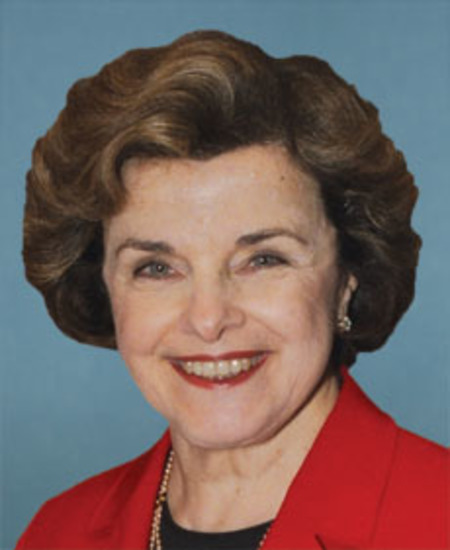
Sen. Dianne Feinstein
Sponsored bills
Maddy summarySRES 326 is a procedural Senate resolution (not a law) designating August 23, 2023, as "National Poll Worker Recruitment Day." It formally recognizes the importance of poll workers in elections and encourages eligible citizens to volunteer for this role in the 2023 elections. The resolution has no binding effect but aims to raise awareness about the need for poll workers. It directly affects the public by inviting them to participate in election administration.
Maddy summaryThis resolution (SRES 323) is a symbolic Senate measure supporting Fentanyl Prevention and Awareness Day on August 21, 2023. It urges all Americans to promote drug prevention, educate youth about fentanyl dangers, and participate in community activities to foster drug-free lifestyles. The resolution does not create new laws or allocate funds but formally acknowledges the severity of the fentanyl crisis - highlighting its role in over 107,000 overdose deaths in 2021 - and encourages public awareness efforts. It directly affects all U.S. citizens, with particular focus on youth, schools, and communities working to prevent fentanyl-related harm.
Maddy summaryThe Preventing Election Subversion Act of 2023 restricts how state officials can remove local election administrators who manage federal elections. It requires removals to be based only on proven inefficiency, neglect of duty, or misconduct - prohibiting politically motivated removals - and allows affected local officials to challenge improper removals in federal court. States must report removals to the Justice Department within 30 days (or 48 hours if near an election) for oversight. The bill also adds new rules to limit last-minute challenges to voter eligibility on Election Day, requiring documented, good-faith challenges with sworn statements.
Maddy summaryThis bill creates a new Farmworker Coordinator position within the U.S. Department of Agriculture (USDA) to improve how farmworkers access federal programs. The Coordinator will assess existing outreach, develop coordination plans across USDA agencies (like the Farm Service Agency and Food and Nutrition Service), and communicate program eligibility information directly to farmworker employers. Key duties include measuring program outcomes for farmworkers, identifying research priorities, and recommending new initiatives. The bill directly affects farmworkers by aiming to make USDA programs more accessible and effective, while requiring coordination across multiple USDA offices.
Maddy summaryThe Break the Cycle of Violence Act creates federal grant programs to fund community-based violence intervention initiatives that aim to reduce gun violence in high-risk communities. It authorizes $300 million in 2024, increasing to $700 million annually from 2026-2031, for grants to community organizations and local governments to implement evidence-based strategies that provide trauma-informed services, job training, and wraparound support to individuals at high risk of violence. The bill establishes a National Community Violence Response Center to coordinate efforts, collect data, and share best practices, while also creating IMPACT grants for job training programs targeting opportunity youth in communities disproportionately affected by gun violence. The legislation specifically addresses racial disparities in violence exposure, with findings showing Black children and teens are over 12 times more likely to be shot to death than White peers. The program requires grantees to use strategies that reduce violence without contributing to mass incarceration, and to partner with community organizations reflecting the populations impacted by violence.
Maddy summaryThis bill requires credit reporting agencies to use only a consumer's current legal name on credit reports after the consumer requests it. It directly affects individuals who have legally changed their names (e.g., through marriage or court order) but still see old names on their credit reports. The key provision mandates that agencies stop using any prior names upon receiving a consumer's written request, ensuring credit reports reflect the most up-to-date legal identity. This change removes outdated name information from credit reports without requiring additional consumer verification beyond the initial request.
Maddy summaryThis bill defines "ghost guns" as firearms (including frames and receivers) without a unique serial number from a licensed manufacturer or importer. It requires all new firearms to have a serial number engraved by a licensed maker and prohibits unlicensed individuals from manufacturing, selling, transferring, or possessing ghost guns after a one-year transition period (starting one year after enactment). The bill also bans unlicensed engraving of serial numbers on firearms and updates rules to ban undetectable firearms, with penalties including fines and up to 5 years in prison for repeat violations. These changes directly affect unlicensed gun builders, sellers, and possessors of ghost guns, while allowing licensed dealers a grace period for compliance.
Maddy summaryThis bill amends Section 249 of the Immigration and Nationality Act to change eligibility criteria for a specific immigration provision. It replaces the previous requirement of having entered the U.S. before July 1, 1924, or January 1, 1972, with a new rule requiring applicants to have entered at least 7 years prior to their application date. This change would directly affect long-term residents who entered after 1972 but have lived continuously in the U.S. for at least 7 years, making them eligible under this provision. The amendments take effect 60 days after the bill is enacted.
Maddy summaryThis bill creates the Office of the Farm and Food System Workforce within the Department of Agriculture to improve access to USDA programs for farm and food system workers. The office, led by a Coordinator, will coordinate outreach, develop language-accessible communications, and provide recommendations to improve services for workers in food production, processing, transportation, and related fields. It establishes an Advisory Committee with worker representation and an Interagency Council to coordinate across federal departments. The office will issue annual reports on worker demographics, health outcomes, and barriers to accessing USDA programs. The bill terminates the existing Farmworker Coordinator position once the new office is fully operational.