

Disaster Equity and Fairness Act This bill makes changes in the provision of federal disaster assistance to underserved communities and other specified recipients. Underserved community means populations sharing a particular characteristic and geographic communities that have been systematically denied a full opportunity to participate in aspects of economic, social, and civic life. Specifically, the bill increases the federal cost share to a local government or Indian tribal government in connection with a second or subsequent major disaster during any three-year period. The Federal Emergency Management Agency (FEMA) may provide assistance to a state, local government, or Indian tribal government to reimburse the cost of coordinating food delivery, production, and distribution in the event of a major disaster. FEMA must provide direct technical assistance to eligible entities for applications and prioritize specified categories of communities, including underserved communities, those that have demonstrated a compelling need, and those that are exposed to increased hazards or vulnerabilities. The bill increases the federal cost share for a recipient (1) that will use the assistance in, or for the benefit of persons who are members of, an undeserved community; or (2) who is in, or who is a member of, an underserved community.
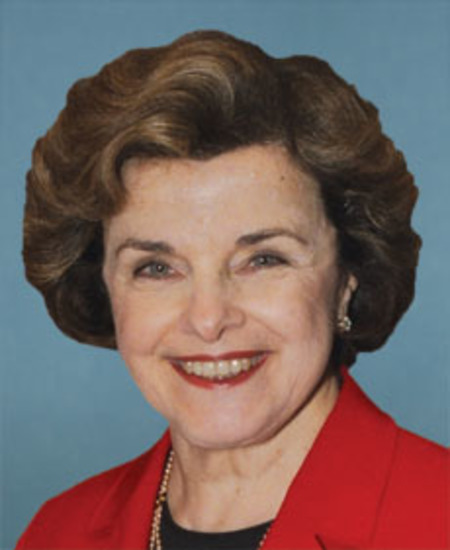
Sen. Dianne Feinstein
Sponsored bills
Preventing Vigilante Stalking Act of 2021 This bill increases the maximum prison term for a stalking offense, if the offense is committed with the intent to obtain health care information of an individual or to prevent the health care decisions of an individual.
Wildfire Emergency Act of 2021 This bill provides for programs and activities in support of forest restoration, wildfire mitigation, and energy resilience. The Department of Agriculture (USDA) shall select landscape-scale forest restoration projects located west of the 100th meridian to implement on National Forest System land and on land adjoining National Forest System land. USDA shall establish a pilot program under which USDA may enter into conservation finance agreements with public or private persons to implement and monitor such projects. The Department of Energy shall establish a program to support critical infrastructure and microgrids, including by improving the energy resilience and power needs of critical facilities (e.g., hospitals) through the use of microgrids, renewable energy, energy efficiency, reduced electricity demand, and on-site storage. USDA and the Department of the Interior shall establish one or more centers in western states to train individuals in methods relevant to the mitigation of wildfire risk. USDA shall establish a competitive grant program to support workforce development in forestry and fire management.
Wildfire Resilient Communities Act This bill provides funding and sets forth provisions to address wildland fire management in certain at-risk communities that are within the vicinity of federal lands that are at high risk from wildfire. The bill provides funding for specified federal agencies to carry out hazardous fuels reduction projects. These federal agencies shall prioritize projects that (1) are conducted in areas that are within or adjacent to at-risk communities or high value watersheds, have very high wildfire hazard potential, or are in fire regime I, II, or III; or (2) are designed to integrate and advance two or more of the goals established in a specified wildland fire management report to create fire-adapted communities, to restore and maintain resilient landscapes, and to achieve safe, effective fire response. The Department of Agriculture and the Department of the Interior shall furnish financial and technical assistance to at-risk communities that are adjacent to federal land, including through states, to assist such communities in planning and preparing for wildfire. The bill makes permanent the Collaborative Forest Landscape Restoration Program. The bill removes the limits on the number of proposals that may be funded for ecological restoration treatments for priority forest landscapes under the program. The Forest Service may continue to select the number of proposals that are determined likely to receive adequate funding. The bill establishes the County Stewardship Fund for making payments to counties that have a contract for a stewardship contracting project on federal land within their boundaries.
National Prescribed Fire Act of 2021 This bill directs the Department of Agriculture (USDA) and the Department of the Interior to significantly increase the number and size of prescribed fires conducted on federal lands. Before the end of FY2023, Interior and USDA shall each have carried out a minimum of one prescribed fire on each unit of the National Forest System (with exceptions), unit of the National Wildlife Refuge System, unit of the National Park System, and Bureau of Land Management district (1) that includes an area that has a historical low-severity fire regime, has a historical fire-return interval of not more than 35 years, and is larger than 100 acres; and (2) less than half of which was burned by a wildland fire during the previous 10-year period. Interior shall establish a collaborative prescribed fire program to provide financial assistance to eligible entities to conduct prescribed fires in priority landscapes. Interior shall establish an incentive program to encourage the implementation of large, cross-boundary prescribed fires. Interior and USDA shall hire additional employees and provide training to increase the number of skilled and qualified prescribed fire practitioners in the departments and other organizations. To address the public health and safety risk of the expanded use of prescribed fire, USDA and Interior shall conduct research to improve or develop, among other things, cost-effective, and consistent mitigation strategies for communities impacted adversely by smoke from prescribed fire.
Securing Inspector General Independence Act of 2021 This bill limits the circumstances under which the President or certain agency heads may remove an Inspector General or place an Inspector General on non-duty status. Before an Inspector General may be removed, Congress must be given a detailed account of the reasons for the removal and the Inspector General shall remain on the job for 30 days while Congress considers those reasons.
Inspector General Access Act of 2021 This bill transfers responsibility for investigating certain allegations of misconduct from the Department of Justice (DOJ) Office of Professional Responsibility to the DOJ Office of the Inspector General. Specifically, the bill transfers responsibility for allegations relating to a DOJ attorney's authority to investigate, litigate, or provide legal advice.
Improving Seniors' Timely Access to Care Act of 2021 This bill establishes several requirements and standards relating to prior authorization processes under Medicare Advantage (MA) plans. Specifically, MA plans must (1) establish an electronic prior authorization program that meets specified standards, including the ability to provide real-time decisions in response to requests for items and services that are routinely approved; (2) annually publish specified prior authorization information, including the percentage of requests approved and the average response time; and (3) meet other standards, as set by the Centers for Medicare & Medicaid Services, relating to the quality and timeliness of prior authorization determinations.
Keeping Workers Safe Act This bill requires the Department of Labor to notify the public about certain enforcement actions taken against an employer for safety and health violations. First, Labor must issue a notice of each enforcement action with a penalty greater than $60,000. Second, Labor must issue a notice of each enforcement action resulting from (1) multiple, serious violations, or (2) repeated violations classified as other-than-serious. Labor must issue a notice within seven days of taking the enforcement action and distribute it through regional and local newspapers in the area where the employer is located; applicable trade, industry, or labor organizations; and relevant state and local government entities.
Freedom to Vote Act This bill addresses voter registration and voting access, election integrity and security, redistricting, and campaign finance. Specifically, the bill expands voter registration (e.g., automatic and same-day registration) and voting access (e.g., vote-by-mail and early voting). It also limits removing voters from voter rolls. Next, the bill establishes Election Day as a federal holiday. The bill declares that the right of a U.S. citizen to vote in any election for federal office shall not be denied or abridged because that individual has been convicted of a criminal offense unless, at the time of the election, such individual is serving a felony sentence. The bill establishes certain federal criminal offenses related to voting. In particular, the bill establishes a new criminal offense for conduct (or attempted conduct) to corruptly hinder, interfere with, or prevent another person from registering to vote or helping someone register to vote. Additionally, the bill sets forth provisions related to election security, including by requiring states to conduct post-election audits for federal elections. The bill outlines criteria for congressional redistricting and generally prohibits mid-decade redistricting. The bill addresses campaign finance, including by expanding the prohibition on campaign spending by foreign nationals, requiring additional disclosure of campaign-related fundraising and spending, requiring additional disclaimers regarding certain political advertising, and establishing an alternative campaign funding system for certain federal offices.