This resolution recognizes the Hispanic Association of Colleges and Universities National Internship Program for 30 years of providing internship opportunities to Hispanic and underrepresented students attending Hispanic-serving institutions and other institutions of higher education.
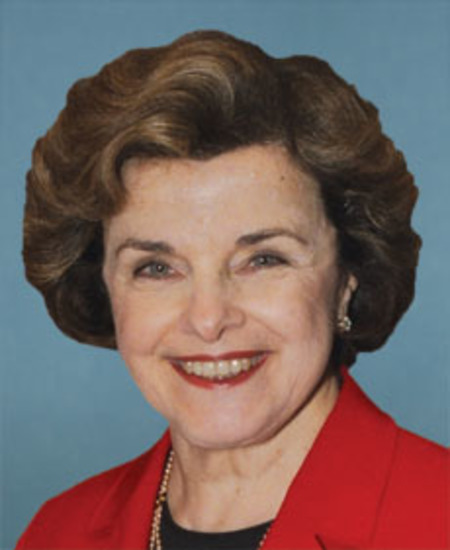
Sen. Dianne Feinstein
Sponsored bills
Maddy summarySRES 599 is a Senate resolution (not a law) introduced in April 2022 that honors military children during the National Month of the Military Child (observed each April). It recognizes the sacrifices of approximately 2 million military children who have experienced parental deployment since 9/11, live with disabled veterans, or have lost a military parent. The resolution urges all Americans to support military children through ceremonies and activities during April, aligning with existing Department of Defense and Veterans Affairs programs. It does not create new policies or funding but symbolically acknowledges military children's contributions and challenges.
Maddy summarySRES 588 is a symbolic Senate resolution designating April 2022 as "Financial Literacy Month." It does not create new laws or policies but calls for public awareness about the importance of personal financial education. The resolution urges federal, state, local, school, nonprofit, and business entities to observe the month with activities highlighting financial education's role in helping individuals manage debt, build wealth, and make informed money decisions. It references statistics on financial challenges (like high credit card debt and low high school financial literacy requirements) but does not mandate any specific actions or funding. This is a procedural designation with no direct effect on individuals or new legislative requirements.
Humanitarian Standards for Individuals in U.S. Customs and Border Protection Custody Act This bill imposes requirements and standards related to the care of aliens in U.S. Customs and Border Protection (CBP) custody. CBP must conduct an initial health screening of each individual in custody to identify those with acute conditions and high-risk vulnerabilities and to provide appropriate healthcare. CBP must conduct the screening within 12 hours of each individual's arrival at a CBP facility, and within 6 hours for certain priority individuals such as children and individuals with disabilities. The bill imposes various requirements related to providing such screenings, such as providing interpreters, chaperones, and mental health treatment when necessary. CBP must ensure detainees have access to drinking water, toilets, sanitation facilities, hygiene products, food, and shelter. The bill imposes certain standards relating to such requirements, such as the minimum amount of drinking water for each detainee and the acceptable temperature range of the shelters. The Department of Homeland Security (DHS) must enter into memoranda of understanding with various government agencies to address instances when surge capacity is necessary. The DHS Office of the Inspector General must conduct unannounced inspections of ports of entry, border patrol stations, and detention facilities and report the results to Congress. The Government Accountability Office must assess CBP's management of such facilities, whether CBP and DHS processes are in compliance with this bill's requirements, and the behavior of CBP personnel in carrying out this bill. DHS shall publicly release on its website, on a quarterly basis, aggregate data on complaints of sexual abuse at CBP facilities.

Pre-Registration Of Voters Everywhere Act or the PROVE Act This bill requires each state to implement a preregistration process under which individuals age 16 or older may apply to register to vote in federal elections. Further, states must ensure that eligible preregistered individuals are registered to vote in federal elections held on or after the date the individual turns age 18. The Election Assistance Commission must make grants to states to increase the involvement of individuals under age 18 in public election activities.
Medicaid Saves Lives Act This bill requires and provides funds for the Department of Health and Human Services to establish a program that provides health benefits to the Medicaid expansion population in states that have not expanded Medicaid. Specifically, the program must provide coverage for individuals who are newly eligible for Medicaid under the Patient Protection and Affordable Care Act (i.e., the Medicaid expansion population) without premiums and in accordance with Medicaid cost-sharing and other requirements. The bill also extends and increases the temporarily enhanced Federal Medical Assistance Percentage (i.e., federal matching rate) for states that elect to participate in Medicaid expansion if they have not already done so.
This bill requires the Joint Committee on the Library to obtain, and the Architect of the Capitol to permanently install in the U.S. Capitol or on the U.S. Capitol Grounds, statues honoring Associate Justices of the Supreme Court Sandra Day O'Connor and Ruth Bader Ginsburg.
Maddy summarySRES 593 is a Senate resolution honoring former U.S. Senator Kaneaster Hodges, Jr. of Arkansas, who served from 1977 to 1978. The resolution expresses the Senate’s "profound sorrow" at his death and directs the Secretary of the Senate to transmit an enrolled copy to his family. It also calls for the Senate to adjourn as a mark of respect. This is a ceremonial resolution with no policy provisions or direct impact on legislation or constituents.
Food and Fuel Family Savings Act This bill allows an individual taxpayer an inflation rebate for the first taxable year beginning in 2022. The amount of such rebate is $600 ($1,200 for joint returns), plus $600 for each of the taxpayer's dependents. The amount of the rebate is reduced for taxpayers whose adjusted gross income exceeds certain levels. The bill imposes a 5% surcharge on individuals whose modified adjusted gross income exceeds $10 million and a 3% surcharge for incomes exceeding $25 million. It also imposes surcharges on certain high income estates and trusts. The bill increases the maximum corporate income tax rate to 26.5% for corporate taxable income exceeding $5 million.
Hispanic Educational Resources and Empowerment Act of 2022 This bill directs the Department of Education to (1) award grants to Hispanic-serving institutions of higher education (IHEs) to improve and expand innovative collaboration agreements between local educational agencies and IHEs to better serve Hispanic and Latino students, (2) provide technical assistance to such IHEs, and (3) contract with a third party to conduct an independent evaluation of grant activities. Such grants must be used for specific activities, such as improving school-based and institutional practices to prepare students for postsecondary education and addressing nonacademic needs of students that are barriers to college enrollment.