

Freedom to Travel for Health Care Act of 2022 This bill prohibits anyone from interfering with a person's ability to access out-of-state reproductive health care. (Reproductive health care is defined as medical, surgical, counseling, or referral services related to pregnancy, the termination of a pregnancy, contraception services, and other reproductive care.) Specifically, the bill prohibits anyone from restricting, discriminating against, or otherwise disadvantaging anyone who receives, provides, or assists with out-of-state reproductive health care that is legal in the state in which it is provided. The bill allows the Department of Justice to bring a civil action and establishes a private right of action for violations. The bill specifically waives any applicable governmental immunity and preempts any contravening state laws.
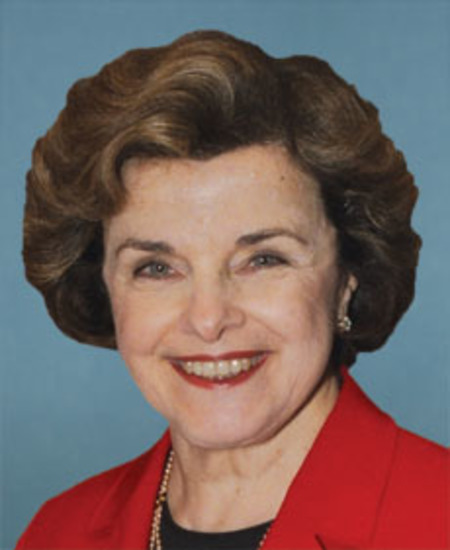
Sen. Dianne Feinstein
Sponsored bills
Youth Voting Rights Act This bill expands voting access for youth. Specifically, the bill establishes a private right of action to enforce the Twenty-Sixth Amendment, which prohibits denying or abridging the right to vote based on age. Additionally, the bill directs each state to designate as voter registration agencies all offices within public institutions of higher education (IHEs) that provide assistance to students, implement a preregistration process to allow minors who are 16 years or older to register to vote in federal elections that take place when or after the preregistered individual turns age 18, and ensure the availability of polling places on campuses of IHEs (with the availability of waivers). The bill prohibits durational residency requirements for voting in all federal elections. Currently, this prohibition applies only to voting for the offices of President and Vice President. States and local jurisdictions with voter identification requirements must treat IHE-issued student identification cards as voter identification. The Election Assistance Commission (EAC) must make grants to states to increase the involvement of individuals under age 18 in public election activities. The Government Accountability Office must report to Congress on trends related to voter registration, absentee voting, and provisional voting. The EAC must also collect and make publicly available certain data from states.
This resolution designates June 2022 as African-American Music Appreciation Month. Further, the resolution recognizes the contributions of African Americans to the musical heritage of the United States; the wide array of talented and popular African-American musical artists, composers, songwriters, and musicians who are underrecognized for contributions to music; the achievements, talent, and hard work of African-American pioneer artists and the obstacles that those artists overcame to gain recognition; and the need for African-American students to have greater access to, and participation in, music education in schools across the United States. The resolution also recognizes Black History Month and African-American Music Appreciation Month as an important time to celebrate the impact of the African-American musical heritage on the musical heritage of the United States.
This resolution (1) recognizes the increase in educational opportunities, including in sports, for women and girls since the passage of title IX of the Education Amendments of 1972; and (2) encourages the Department of Education and the Department of Justice to ensure that students have a safe learning environment by working to ensure schools prevent and respond to discrimination and harassment on the basis of sex.
This resolution celebrates the 50th anniversary of the Federal Pell Grant program and expresses support for the designation of June 23 as National Pell Grant Day.
Facilitating Large-Scale Water Recycling and Reuse Projects Act This bill modifies the Bureau of Reclamation's Large-Scale Water Recycling Program, which provides grants to water and power delivery authorities in certain western states for the planning, design, and construction of large-scale water recycling and reuse projects that have a total cost of $500 million or more. Specifically, the bill removes the program's sunset provision and revises eligibility requirements.
Coordinating Substance Use and Homelessness Care Act of 2022 This bill requires the Department of Housing and Urban Development to award competitive grants to improve coordination of health care and homelessness services for individuals who are homeless, have significant behavioral health issues (e.g., substance use disorders), and voluntarily seek assistance. Entities eligible for these grants include local and tribal governments, public housing agencies that administer housing choice vouchers, and certain nonprofits.
Fair Housing Improvement Act of 2022 This bill prohibits discrimination against individuals based on their source of income, veteran status, or military status in the sale or rental of housing and other related real estate transactions and services.
Stop Anti-Abortion Disinformation Act or the SAD Act This bill prohibits advertisements that use deceptive or misleading statements related to the provision of abortion services. Abortion services include (1) surgical and non-surgical procedures to terminate a pregnancy, or (2) providing referrals for such procedures. The Federal Trade Commission must promulgate rules to implement the prohibition, and the bill provides for enforcement by the commission.
Fairness for Farm Workers Act This bill extends overtime pay protections to agricultural workers. The bill requires employers, beginning in 2023, to compensate agricultural workers for hours worked in excess of their regular hours (i.e., 55 hours in 2023, 50 hours in 2024, 45 hours in 2025, and 40 hours in 2026) at not less than one and one-half times the employee's regular rate. For employers with 25 or fewer employees, the overtime pay requirements begin in 2026. These overtime pay requirements do not apply, as under current law, to employees who are the parent, spouse, child, or other member of the employer's immediate family. The bill also repeals the exemption from overtime pay requirements for employers in various agriculture-related industries, including certain small farms, irrigation projects, sugar processing, and cotton ginning and compressing.