

Maddy summaryThe Drone Act of 2023 amends federal law to criminalize specific dangerous drone uses, directly affecting individuals and organizations operating drones in prohibited ways. It creates new offenses for weaponizing drones (e.g., attaching firearms or explosives), using drones to transport contraband into prisons or across borders, interfering with emergency operations, and flying drones in restricted airspace near airports or critical infrastructure. Violations carry penalties of up to 20 years in prison or fines, with death penalty eligibility for cases causing fatalities. The law targets documented threats like drone-assisted smuggling at borders, contraband delivery to prisons, and safety hazards near airports, as noted in the bill’s findings.
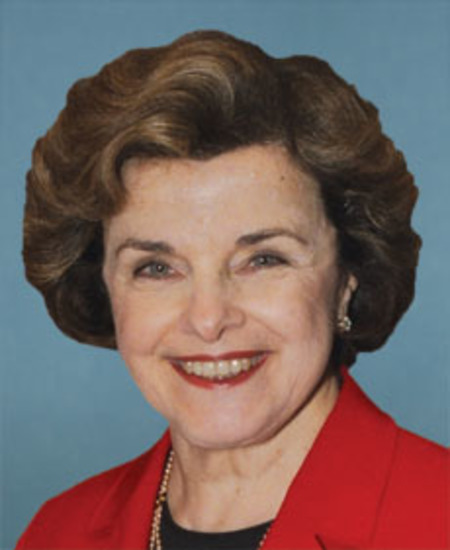
Sen. Dianne Feinstein
Sponsored bills
Maddy summaryThe Wildfire Emergency Act of 2023 creates multiple programs to address wildfire risks across western U.S. landscapes. It establishes a pilot program using conservation finance agreements to leverage private investment for landscape-scale forest restoration on National Forest System lands, with funding limits of $250 million over 10 years and a maximum of $50 million per agreement. The bill also creates a program to improve energy resilience of critical facilities through microgrids and renewable energy ($100 million authorized), provides funding for fire-resilient building retrofits, and establishes Western prescribed fire centers for training. Additionally, it creates a $50 million grant program (2023-2027) to support community capacity building in disadvantaged communities for land stewardship activities on National Forest System lands. The legislation requires reports evaluating these programs within 4 years of enactment.
Maddy summaryS 129, the Korematsu-Takai Civil Liberties Protection Act of 2023, prohibits federal authorities from detaining individuals solely based on protected characteristics. The bill amends federal law to define "protected characteristics" as race, ethnicity, national origin, religion, sex, gender identity, sexual orientation, disability, and any additional characteristics the Attorney General may designate. It explicitly bans imprisonment or detention based exclusively on these traits, with no allowance for the Attorney General to remove any listed characteristic. This directly affects anyone subject to federal detention, ensuring protections against discrimination in custody decisions under current law.
Maddy summaryThis symbolic resolution designates January 2023 as "National Stalking Awareness Month" to raise public awareness about stalking. It directly affects the general public, stalking victims, and organizations providing victim support services by encouraging broader education and resource-sharing. The key mechanism is the Senate’s formal designation of the month, coupled with calls for policymakers, law enforcement, colleges, and community groups to increase awareness and support for victims. The resolution does not create new laws but promotes existing efforts to address stalking through coordinated public education and resource availability.
Maddy summaryThe Better Care Better Jobs Act (S 100) aims to improve access to home and community-based services (HCBS) for Medicaid beneficiaries by providing federal funding to states for developing improvement plans and implementing an HCBS Infrastructure Improvement Program. The bill offers enhanced federal funding (a 10 percentage point increase in Medicaid matching rates) to states that meet requirements including maintaining or expanding HCBS access, improving direct care worker wages and training, and implementing quality measurement systems. States must develop detailed plans assessing current HCBS availability, workforce conditions, and barriers to access, and then report annually on progress toward specific benchmarks. The bill also makes permanent certain Medicaid provisions related to spousal impoverishment protection and extends the Money Follows the Person program, directly affecting Medicaid beneficiaries and direct care workers.
Maddy summaryThe SOAR Permanent Authorization Act permanently authorizes annual funding of $75 million for the District of Columbia's Opportunity Scholarship Program, replacing previous funding levels. It requires participating schools to be fully accredited by a DC-recognized body or meet specific U.S. immigration program standards. The bill updates evaluation requirements to focus on student academic progress (not just achievement), compares scholarship program outcomes to public school peers, and prioritizes tutoring for students from lowest-performing schools when funds are limited. This directly affects D.C. students eligible for opportunity scholarships and the organizations administering the program.
Maddy summaryThis bill would admit Washington, D.C. as the 51st state, officially named "State of Washington, Douglass Commonwealth," granting it full representation in Congress with two Senators and one Representative. It would establish a "Capital" area within the new state that remains under federal jurisdiction, including the White House, Capitol Building, and other key government properties. The bill would repeal the District of Columbia's congressional delegate position and the 23rd Amendment, which currently provides D.C. with electoral votes in presidential elections. It would also provide for the transition of federal properties, courts, and government functions while maintaining federal control over the Capital area.
Maddy summaryThe BUILD for Veterans Act of 2023 aims to improve how the Department of Veterans Affairs manages its physical infrastructure, including buildings, land, and related assets used to deliver health care and services to veterans. Key provisions require the VA to establish dedicated staffing for capital asset management at medical centers, develop performance metrics to track progress, and create a comprehensive 10-year strategic plan addressing staffing, budgeting, and planning needs. The bill also mandates climate resilience reviews for VA facilities, centralized management of asset disposal and reuse, and regular reports to Congress on capital asset projects, funding requirements, and performance metrics. These changes directly affect VA's operations across all medical centers, facilities, and infrastructure assets under its jurisdiction, aiming to make capital asset management more efficient and responsive to veterans' needs.
Maddy summaryThis bill establishes a 13-member commission to study the history of slavery in the U.S. and its ongoing effects on African Americans. The commission will examine slavery from 1619 to 1865, post-emancipation discrimination (including Jim Crow, redlining, and educational inequity), and current disparities in wealth, incarceration, and health. It will compile evidence and recommend potential remedies to Congress, including educational initiatives and frameworks for compensation, but does not authorize any reparations payments. The commission must submit its findings within one year of its first meeting.
Maddy summaryThe West Coast Ocean Protection Act of 2023 prohibits the federal government from leasing offshore federal waters for oil and gas drilling along the coasts of California, Oregon, and Washington. It amends federal law to ban new leases for exploration, development, or production of oil and natural gas in these specific coastal regions. This policy directly affects federal leasing decisions and any companies seeking to operate oil and gas projects in these waters. The law prevents future drilling permits in these areas without requiring new congressional action.