

Maddy summaryThe Vote at Home Act of 2023 would require states to mail ballots to all registered voters for federal elections at least two weeks before election day, eliminate unnecessary barriers to voting by mail (like notary requirements), and provide free postage for mailed ballots. It also establishes automatic voter registration through state motor vehicle departments, where individuals applying for driver's licenses would be automatically registered to vote unless they opt out within 21 days. These provisions aim to increase voting accessibility for all voters, particularly people with disabilities, rural voters, and those with scheduling conflicts. The bill would take effect for federal elections beginning in 2024, with automatic voter registration taking effect 180 days after enactment. The legislation focuses on expanding voting options through mail-in voting and simplified registration processes.
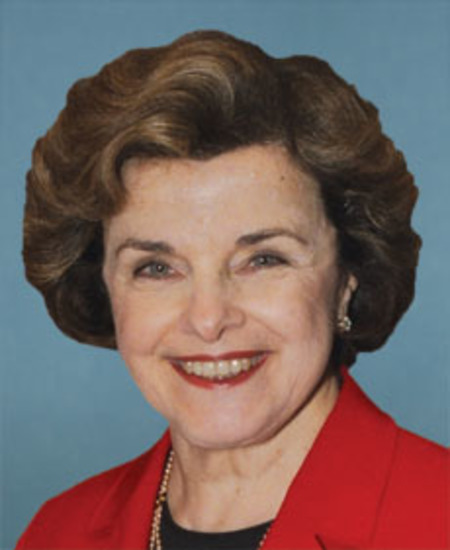
Sen. Dianne Feinstein
Sponsored bills
Maddy summaryThe AFTER Act of 2023 requires U.S. federal research facilities to develop adoption programs for animals no longer needed for research and deemed suitable for retirement (excluding rats and mice). It mandates these facilities to create regulations within 90 days of enactment, prioritizing placement with animal rescue organizations, sanctuaries, or shelters that meet specific non-commercial, non-breeding standards. The bill explicitly preserves stricter state animal welfare laws and ensures chimpanzees used in federal research can still access existing sanctuary programs. This directly affects federally funded research institutions and the animals they have used in studies, shifting policy toward adoption over euthanasia or indefinite holding.
Maddy summaryThe American Dream Employment Act of 2023 (S 672) amends a federal appropriations law to allow House and Senate employees with specific immigration protections to receive pay for their work. It explicitly includes individuals holding deferred action (like DACA), deferred enforced departure, or temporary protected status (TPS) who have a current work authorization document. This change removes a prior exclusion that may have prevented these employees from being compensated while working for Congress. The bill directly affects federal workers in Congress who are in these immigration status categories and possess valid work permits under the referenced programs.
Maddy summaryThis bill requires the Attorney General to develop a report within 150 days of enactment, proposing programs to provide mental health care for public safety officers. It directly affects police officers, firefighters, EMTs, and 911 dispatchers - groups identified as having higher rates of PTSD and suicide risk than the general population. The report must outline evidence-based treatment options (including telehealth), confidentiality protections, and efficient state/local implementation methods, plus draft grant conditions and funding estimates. The bill does not fund programs directly but sets a process for creating them.
Maddy summaryThis bill requires the Environmental Protection Agency (EPA) to create new reporting rules for large cryptocurrency mining operations, defined as those using at least 5 megawatts of power (either as a single facility or multiple facilities owned by the same company with combined power use). It mandates these operations to report both direct greenhouse gas emissions from their own energy use and indirect emissions from purchased electricity under the Clean Air Act. Additionally, the EPA must conduct a comprehensive study on crypto mining's environmental impacts - including emissions, energy consumption patterns, effects on communities near mining sites, and potential grid strain - and submit a report to Congress within 18 months. The study will cover locations, emissions data, public health risks, and energy sources, with $5 million in funding allocated for both the reporting rule development and the study.
Maddy summarySRES 57 is a Senate resolution honoring David Ferdinand Durenberger, a former U.S. Senator from Minnesota (served 1978-1989). It commemorates his life and career, highlighting his role as the lead Republican sponsor of the Americans with Disabilities Act and his work protecting Minnesota's natural resources like the Boundary Waters Canoe Area Wilderness. The resolution directs the Senate to formally recognize his passing and transmit a copy to his family. This is a ceremonial resolution with no policy changes or direct impact on constituents.
Maddy summaryThe Sustaining Our Democracy Act creates a federal program that provides states with funding for election administration improvements and increased voter access. It allocates $2 billion annually from a trust fund to support specific activities like upgrading voting equipment, expanding early and mail voting, recruiting election workers, and protecting election officials from threats. States must submit detailed plans describing how they'll use the funds for approved activities, and the program prohibits using funds for restrictions on voting access or improper audits. The Office of Democracy Advancement and Innovation will oversee the program and ensure funds are used appropriately. This legislation directly affects all states participating in federal elections by providing resources to strengthen election systems and increase access for underserved communities.
Maddy summaryS 622, the Helping Heroes Act of 2023, creates a new Family Support Program to provide services for children of disabled veterans. It directly affects veterans with service-connected disabilities rated at 70% or higher and their children under 18. The bill requires the VA to place full-time Family Coordinators at each medical center to assess family needs, connect them to services like mental health support, educational assistance, and after-school programs, and coordinate with non-VA providers. The program mandates annual reporting on participants and outcomes, including demographic data and service effectiveness, and requires VA to include family support resources in military transition programs.
Maddy summaryThis bill provides temporary civil protections for federal workers during government shutdowns. It allows workers who are furloughed or working without pay to seek court-ordered stays on rent, mortgage payments, student loans, taxes, and insurance premiums during the shutdown and for 30 days afterward. Key provisions include halting evictions, foreclosures, and student loan collections without court approval, while preventing penalties or negative credit reporting during the covered period. These protections apply to all federal employees and contractor staff, excluding criminal matters and child support.
Maddy summaryThe Child Labor Prevention Act amends the Fair Labor Standards Act to clarify that child labor protections apply to all work arrangements, including those involving independent contractors. It updates definitions by replacing terms like "employee" with "worker" and explicitly stating that "employer" includes anyone engaging a worker (including independent contractors) for remuneration. The bill also increases civil penalties for violations (with annual inflation adjustments) and adds criminal penalties for repeated or willful violations of child labor laws. These changes ensure existing child labor rules cover modern work structures without altering core prohibitions, such as age limits for employment.