

This bill expands the purposes for which the Department of Commerce is authorized to make economic adjustment grants to include travel promotion, and it authorizes Commerce to cover up to 100% of the cost of a travel promotion project. Further, the bill authorizes the appropriation of $2.25 billion to make these grants to cover costs associated with promoting safe and healthy travel practices and economic recovery in communities impacted by a decline in travel and tourism as a result of COVID-19 (i.e., coronavirus disease 2019).
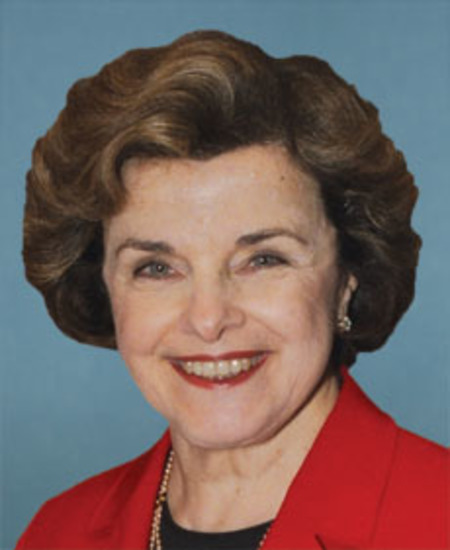
Sen. Dianne Feinstein
Sponsored bills
Safe Environment from Countries Under Repression and Emergency Act or the SECURE Act This bill allows qualified nationals of a country that has or had a temporary protected status designation to obtain permanent resident status. Such an alien qualifies for permanent residence if the alien had temporary protected status, qualified for such status on certain dates, or was present in the United States due to having been granted deferred enforced departure status that extended past a certain date; has been continuously present in the United States for three years before applying for adjustment or before being removed after a certain date; is not inadmissible or deportable for certain reasons; and passes applicable background checks. The continuous presence requirement may be waived in certain instances. A spouse, domestic partner, child, or unmarried child of a qualifying alien may also obtain permanent resident status under the bill upon meeting certain requirements. An alien with a pending application shall receive work authorization and be eligible for travel authorization. An alien may not be removed if the alien (1) has a pending application, or (2) is prima facie eligible for permanent resident status under this bill and intends to apply. Information from applications may not be used or shared for immigration enforcement, with limited exceptions such as for identifying fraudulent claims. The Department of Homeland Security must report to Congress when terminating a country's temporary protected status designation with an explanation justifying the termination.
Arctic Refuge Protection Act of 2021 This bill designates approximately 1,559,538 acres of land within Alaska in the Arctic National Wildlife Refuge as a component of the National Wilderness Preservation System.
Gun Violence Prevention Research Act of 2021 This bill authorizes the Centers for Disease Control and Prevention to conduct or support research on firearms safety or gun violence prevention.
This resolution supports the goals of National Catholic Schools Week, an event cosponsored by the National Catholic Educational Association and the U.S. Conference of Catholic Bishops and established to recognize the contributions of Catholic elementary and secondary schools in the United States.
Tracking COVID-19 Variants Act This bill expands viral genomic sequencing, disease surveillance, and other public health research activities. Specifically, the Centers for Disease Control and Prevention (CDC) must issue guidance on the sequencing of the virus that causes COVID-19 (i.e., coronavirus disease 2019). Additionally, the CDC must establish a program to strengthen genomic sequencing, analytics, and disease surveillance activities. As part of this program, the CDC must provide grants and technical assistance to health departments to build their capacity to carry out such activities. Furthermore, the National Center for Health Statistics (NCHS) must carry out a demonstration program to expand an existing program that links different federal data sets for statistical public health research, including research on food insecurity, housing instability, and other social determinants of health. In particular, the program must support linkages with the National Death Index, a database of death records maintained by the NCHS.
Family and Medical Insurance Leave Act or the FAMILY Act This bill entitles every employee to a family and medical leave insurance (FMLI) monthly benefit payment of two-thirds of the employee's regular pay, limited to a maximum of $4,000, for not more than 60 days of qualified caregiving. The bill establishes the Office of Paid Family and Medical Leave within the Social Security Administration to administer the FMLI program. An FMLI benefit payment must be coordinated with any periodic benefits received under a state or local temporary disability insurance or family leave program. The bill imposes a tax on employers, employees, and self-employed individuals to fund FMLI benefits. It also establishes the Federal Family and Medical Leave Insurance Trust Fund to hold tax revenues.
Americans Giving Care to Elders (AGE) Act of 2021 This bill allows a tax credit for a portion of a taxpayer's expenses for eldercare. The credit applies to expenses to care for certain relatives or members of the taxpayer's household who have attained the age of 65 and require assistance with activities of daily living. Eldercare expense include amounts paid for: medical care, lodging away from home, adult day services, personal care, respite care, assistive technologies and devices (including remote health monitoring), environmental modifications (including home modifications), and counseling or training for a caregiver. The amount of eldercare expenses incurred during any year that may be taken into account for the credit may not exceed $6,000.
COVID-19 Whistleblower Protection Act This bill establishes whistleblower protections for government contractors and private sector workers who may witness waste, fraud, or abuse or be victims of misconduct with respect to a COVID-19 (i.e., coronavirus disease 2019) pandemic-related program, project, or activity. Specifically, employers may not discharge, demote, or otherwise discriminate against such protected individuals who disclose information concerning fraud, misuse, or other misconduct related to COVID-19 program funds. A protected individual may submit to the Department of Labor a complaint alleging a violation of these protections and Labor may adjudicate such complaints and award relief in accordance with the Internal Revenue Service whistleblower procedures.
Paycheck Fairness Act This bill addresses wage discrimination on the basis of sex. Specifically, it (1) limits an employer's defense that a pay differential is based on a factor other than sex to only bona fide job-related factors in wage discrimination claims, (2) enhances nonretaliation prohibitions, (3) makes it unlawful to require an employee to sign a contract or waiver prohibiting the employee from disclosing information about the employee's wages, and (4) increases civil penalties for violations of equal pay provisions. Additionally, the Equal Employment Opportunity Commission (EEOC) and the Office of Federal Contract Compliance Programs must train EEOC employees and other affected parties on wage discrimination. The bill directs the Department of Labor to (1) establish and carry out a grant program for negotiation skills training for girls and women, (2) conduct studies to eliminate pay disparities between men and women, and (3) make available information on wage discrimination to assist the public in understanding and addressing such discrimination. The bill also establishes the Secretary of Labor's National Award for Pay Equity in the Workplace for an employer who has made a substantial effort to eliminate pay disparities between men and women. Finally, the bill requires the EEOC to issue regulations for collecting from employers compensation and other employment data according to the sex, race, and national origin of employees for use in enforcing laws prohibiting pay discrimination.