

Maddy summaryThis bill, S 2484, requires all states to allow the possession, distribution, and use of fentanyl and xylazine test strips - devices that detect dangerous drugs in user substances - without criminal penalties. It directly affects people who use drugs by removing legal barriers to accessing these life-saving tools, which help prevent overdoses by revealing adulterants like fentanyl. The law overrides current state laws that still classify these strips as "drug paraphernalia" in some states, particularly for xylazine detection. It mandates state compliance with federal authorization for these products, which are already legal in 36 states but restricted in others. The bill aims to expand nationwide access to these strips, which studies show reduce overdose risks when used before drug consumption.
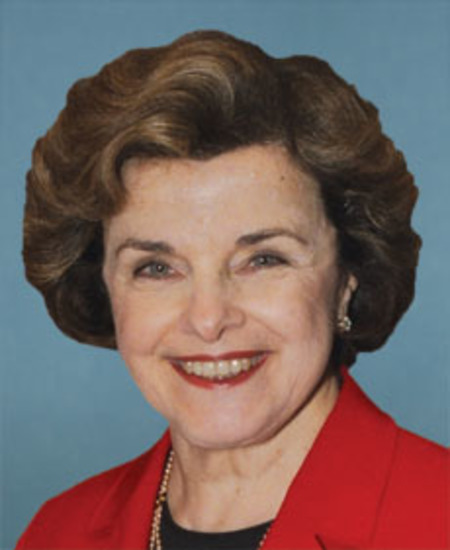
Sen. Dianne Feinstein
Sponsored bills
Maddy summaryS 2494, the Communications, Video, and Technology Accessibility Act of 2023, requires closed captioning and audio description for all video programming delivered via internet protocol (streaming services), with implementation deadlines up to 6 years depending on programming type (live, near-live, or prerecorded). The bill mandates that video playback devices include accessible controls for captioning and audio description, and establishes advisory committees to develop technical standards for these requirements. It directly affects streaming platforms, content providers, and device manufacturers, aiming to improve accessibility for people with hearing, visual, and speech disabilities.
Maddy summary# Summary of Proposed Election Reform Legislation This comprehensive legislative document outlines a wide-ranging election reform bill with multiple titles addressing various aspects of voting rights, election administration, and election integrity. Key provisions include: 1. **Democracy Restoration** (Title I): - Restores voting rights for citizens with criminal convictions (except those serving felony sentences in correctional institutions) - Requires states to notify individuals of restored voting rights upon completion of sentence or release from custody - Includes enforcement mechanisms for states to comply with the restoration provisions 2. **Voter Identification Requirements** (Title II): - Establishes a standardized system for voter identification requirements - Specifies acceptable forms of identification (including many government-issued documents) - Requires states to provide free identification documents to eligible voters - Includes funding ($5 million annually for 5 years) to cover costs 3. **Voter List Maintenance** (Title III): - Prohibits "voter caging" (using undeliverable mail to challenge voter eligibility) - Requires states to verify voter ineligibility using objective and reliable evidence - Limits removal of voters from registration lists to specific circumstances (death, permanent move) - Mandates notice requirements for voters removed from lists 4. **Election Integrity** (Title IV): - Prohibits interference with voter registration (Section 612) - Restricts removal of local election administrators to cases of inefficiency, neglect, or malfeasance - Prohibits harassment and intimidation of election workers - Bans deceptive practices in elections (false information about voting procedures, qualifications, or endorsements) The legislation aims to expand voting access while maintaining election integrity, with specific focus on eliminating barriers for people with criminal convictions, ensuring fair voter list maintenance, and protecting election workers from harassment and intimidation. It also includes provisions for enforcement through civil actions, criminal penalties, and reporting requirements.
Maddy summaryThis bill adjusts the boundaries of the Santa Monica Mountains National Recreation Area in California by formally adding the "Rim of the Valley Unit" to the existing protected area. It directly affects landowners and users within the newly defined boundary, which is specified using two maps: an existing 2001 map and a proposed 2023 map. The key mechanism is the boundary revision process, allowing minor future adjustments after notifying congressional committees and publishing in the Federal Register. Existing water and utility facilities within the added area may continue operating but must minimize environmental impact during maintenance or modifications.
Maddy summaryThe Peace Corps Reauthorization Act of 2023 (S 1203) authorizes $410.5 million annually for Peace Corps operations through fiscal year 2028 and includes numerous provisions to improve volunteer support and program operations. Key changes include increasing readjustment allowances for volunteers from $125 to $375, extending health care coverage for returning volunteers, and establishing a comprehensive zero-tolerance drug policy for volunteers. The bill also codifies special hiring preferences for returning volunteers in federal positions, creates new protections against retaliation for volunteers reporting issues, and requires the Peace Corps to develop strategies for expanding volunteer presence in Oceania. These provisions directly affect Peace Corps volunteers, returning volunteers, and Peace Corps staff by enhancing support systems and program operations.
Maddy summaryThe Energy and Water Development and Related Agencies Appropriations Act, 2024 (S 2443) allocates funding for federal energy and water infrastructure programs across multiple agencies for fiscal year 2024. The bill provides specific funding for Corps of Engineers civil works projects including flood control, river and harbor maintenance, and ecosystem restoration; Department of Interior water projects such as the Central Utah Project; and Department of Energy programs focused on energy efficiency, renewable energy, and nuclear energy. Key provisions include restrictions on fund reprogramming between programs, requirements for congressional reporting, and designations of certain funds as emergency requirements. This bill directly affects federal agencies managing water infrastructure, energy projects, and environmental programs, as well as state and local entities that receive federal funding for these initiatives.
Maddy summaryThis bill allows the President to declare a "smoke emergency" when wildfire smoke causes significant air quality deterioration across one or more states, following a request from a state governor. If declared, the federal government (via FEMA and other agencies) can provide direct assistance to affected states and communities, including grants for smoke shelters, air purifiers, and air monitoring equipment. It also authorizes Small Business Administration grants for small businesses that suffer significant revenue loss due to smoke in declared emergency areas. The bill ensures funding for these specific smoke emergency assistance programs is exempt from standard budget adjustment rules. (3 sentences)
Maddy summaryThis bill requires the National Instant Criminal Background Check System (NICS) to retain records related to firearm background checks for as long as needed to determine if a person is barred from gun ownership under federal or state law. It mandates that if NICS hasn't resolved a check within 30 days, it must notify the person in writing and allow them to submit corrections to their records. The bill also specifies that NICS must search key databases - including the NICS Index, National Data Exchange, and crime databases - to verify eligibility. These changes directly affect individuals seeking to purchase firearms and the federal system managing background checks.
Maddy summaryS 2370 (BARK Act of 2023) amends the Bill Emerson Good Samaritan Food Donation Act to expand liability protections for donations of pet food and supplies. It adds definitions for "pet," "emotional support animal," and "pet supply" to the law, and creates new protections ensuring donors and receiving organizations (nonprofits or local governments) cannot face legal liability for the condition of donated pet food/supplies given in good faith for pets, service animals, or emotional support animals. This directly affects pet owners, animal welfare organizations, and businesses donating pet-related items. The key change extends existing food donation protections to cover pet food and supplies, removing legal barriers to such donations.
Maddy summaryThe Smoke and Heat Ready Communities Act of 2023 establishes a new federal grant program to help communities prepare for wildfire smoke and extreme heat. It provides funding for air pollution control agencies to support activities like monitoring air quality, deploying monitoring equipment, equipping public buildings with air filtration, and distributing protective masks. The bill also creates four research centers at higher education institutions to study health impacts and develop community response strategies, and funds competitive grants for states, tribes, and local governments to develop collaborative community plans. These provisions directly affect communities vulnerable to poor air quality from wildfire smoke and extreme heat events, focusing on concrete preparedness measures rather than regulatory changes.