This resolution supports the designation of October 1 through October 7, 2023, as National 4–H Week and recognizes the important role of 4–H in youth development and education.
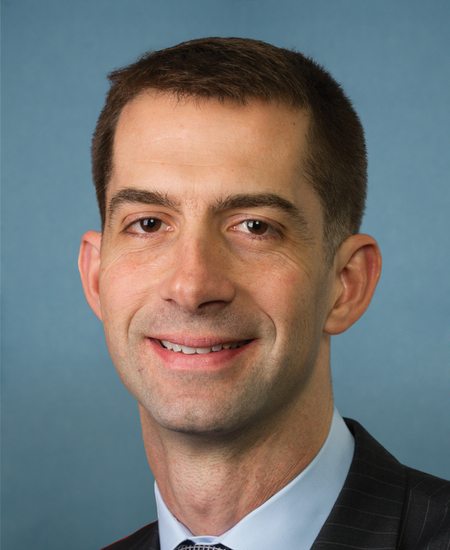
Sen. Tom Cotton
Sponsored bills
Maddy summarySRES 394 is a Senate resolution introduced on October 3, 2023, honoring the late James L. Buckley, a former U.S. Senator from New York (1971-1977) who died in 2023. The resolution expresses the Senate's sorrow at his passing and directs the Senate to communicate the resolution to the House of Representatives and Buckley's family, while calling for an immediate adjournment in his memory. This ceremonial resolution does not create new laws or affect any policies, as it solely serves to commemorate Buckley's life and legacy.
Maddy summaryS.3028, the PUNISH Act of 2023, extends existing U.S. sanctions against Iran by preventing their modification or removal until a specified termination date. It requires the Secretary of State to submit annual reports to Congress assessing whether Iran's government or affiliated entities (like the Islamic Revolutionary Guard Corps) have engaged in activities such as assassinations, violence against U.S. citizens, or politically motivated detention of Iranian nationals in the U.S. The bill maintains current sanctions tied to Executive Orders 13871, 13876, 13902, and 13949, as well as sanctions on Iran's Central Bank and National Development Fund. These measures remain in effect until the President certifies compliance with specific conditions under the Comprehensive Iran Sanctions Act.

Maddy summaryThis joint resolution seeks congressional disapproval of a U.S. Fish and Wildlife Service rule that designated the Northern Long-Eared Bat as an endangered species under the Endangered Species Act. The rule, published in November 2022 (87 Fed. Reg. 73488), would have provided federal protections for the bat and restricted activities impacting its habitat. If passed, this resolution would block those protections from taking effect, removing the bat’s endangered status. It uses a procedural mechanism under Title 5, U.S. Code, allowing Congress to reject agency regulations.
Maddy summarySRES 380 is a non-binding Senate resolution designating October 1-7, 2023, as "Religious Education Week" to recognize the role of religious education in U.S. schools. It calls on all 50 states, territories, and the District of Columbia to accommodate students attending religious classes during school hours through "released time" programs. The resolution affirms that religious education contributes to students' moral, ethical, and civic development, referencing existing programs where approximately 540,000 public school students participate annually. As a symbolic gesture, it does not create new laws or alter funding, focusing instead on celebrating current religious education practices.
Maddy summaryThis bill prohibits public elementary, secondary schools, and colleges from receiving federal funding if they use their facilities to house non-citizens under federal immigration orders (excluding those already admitted to the U.S.). It amends existing law to block federal financial assistance for schools that provide shelter for these individuals, while exempting short-term disaster shelters (under 72 hours) or facilities used during declared disasters. The policy directly affects public educational institutions receiving federal programs, requiring them to avoid hosting such non-citizens to maintain funding eligibility. It does not restrict schools from housing other groups or affect private institutions.
Maddy summaryS 2953 requires the federal government to annually identify and review significant regulations that are duplicative (overlapping with other rules), burdensome (imposing excessive costs or unfunded mandates), or outdated (not updated in 10 years). The Office of Information and Regulatory Affairs Administrator must compile a list of such regulations, consult with agencies, and submit it to Congress for review. Congress then has 30 days to propose joint resolutions for repeal, which would move through expedited procedures in both chambers with limited debate and no amendments. The bill directly affects federal agencies responsible for creating regulations and businesses/individuals subject to those regulations, but does not automatically repeal any rules - only establishes a process for Congress to act on identified regulations.
Maddy summarySRES 208 is a Senate resolution designating November 12, 2023, as "National Warrior Call Day." It encourages U.S. citizens, particularly those connected to military service, to reach out to veterans through peer-to-peer conversations to support their mental health and transition from military life. The resolution highlights veteran suicide statistics (6,146 deaths in 2020) and emphasizes that isolation - exacerbated by the pandemic - increases risks for conditions like PTSD. It does not create new programs but urges public engagement to connect veterans with support systems. This is a symbolic, awareness-raising measure with no binding policy changes.
Maddy summaryThis bill requires standardized presentations about Department of Veterans Affairs (VA) benefits during preseparation counseling for service members transitioning from military to civilian life. It mandates that these presentations be reviewed by the VA and veterans service organizations before use, include information on how to file claims, and cannot promote specific organizations. The VA must also submit annual reports to Congress detailing which veterans service organizations participated, attendance numbers, and recommendations for improvement. The bill directly affects service members receiving transition assistance, ensuring they receive consistent, accurate information about VA benefits.
Maddy summaryS 2911, the "Protecting the Right To Keep and Bear Arms Act of 2023," prevents federal officials from using emergency declarations to impose gun control. It bans the President from declaring emergencies under the National Emergencies Act or the Stafford Act for gun control purposes, and stops the Health and Human Services Secretary from declaring public health emergencies for the same reason. The bill also amends the Stafford Act to explicitly prohibit emergency declarations that would restrict firearm possession, sale, or transfer of firearms, ammunition, or related accessories. This directly affects how federal emergency powers can be used during crises, limiting actions that could impact gun rights under the Second Amendment.