

Maddy summaryThis bill prohibits the Surgeon General and federal agencies from mandating COVID-19 vaccination for interstate travel. It also bans interstate transportation providers (like airlines, trains, and buses) from denying service to travelers based solely on their COVID-19 vaccination status. The law specifically applies to interstate passenger transportation under Department of Transportation jurisdiction and explicitly excludes intrastate travel. It does not affect existing health regulations or require vaccination for travel. The bill clarifies that no federal authority may impose a vaccine mandate for travel under this law.
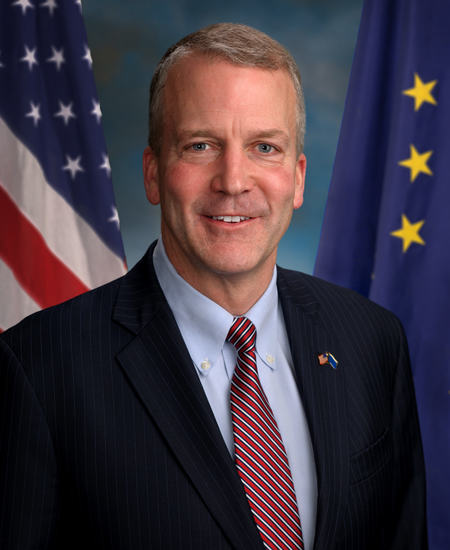
Sen. Dan Sullivan
Sponsored bills
Maddy summaryThis bill modifies U.S. tax code to boost research and development (R&D) investment by businesses. It allows companies to immediately deduct R&D costs (instead of amortizing them over 5 years) and expands refundable tax credits for small businesses, raising the annual credit cap from $250,000 to $750,000 by 2032. Small businesses with gross receipts under $15 million can now qualify for higher credit rates (up to 20% of R&D costs) and may exclude years with no R&D expenses when calculating credits. The changes apply to taxable years beginning after December 2022, directly benefiting R&D-focused startups and small businesses.
Maddy summaryThis bill establishes a temporary commission to develop a comprehensive U.S. strategy for relations with China, requiring a "whole-of-government" approach across all federal departments and agencies. The China Grand Strategy Commission would be composed of government officials and appointed experts with China expertise, tasked with defining U.S. national security priorities, assessing economic and security ties, and making recommendations to protect U.S. interests. The commission must submit its final report by September 1, 2025, and will terminate 120 days after submission. This proposal creates a structured process for developing coordinated policy toward China without implementing immediate policy changes.
Maddy summaryThis joint resolution (SJRES 20) seeks to block a 2023 rule from the Department of Justice and Bureau of Alcohol, Tobacco, Firearms and Explosives (ATF) that classified certain firearms with stabilizing braces as rifles under federal law. If passed, it would nullify the rule, meaning firearms equipped with these braces would no longer be subject to the rule’s classification requirements. The resolution uses the congressional disapproval process under Title 5, U.S. Code, to stop the rule from taking effect, directly affecting firearm manufacturers and owners who use stabilizing braces on weapons.
Maddy summaryThis is a ceremonial Senate resolution (SRES 110) honoring the late James George Abourezk, the first Arab American to serve in the U.S. Senate (1973-1979) from South Dakota. It commemorates his legacy, including his work re-establishing the Senate Committee on Indian Affairs and co-authoring key Native American rights legislation like the Indian Child Welfare Act. The resolution directs the Senate to adjourn in his memory and send a copy to his family, acknowledging his service as a representative and advocate for Native American communities. As a procedural resolution, it has no legislative effect beyond commemoration.
Maddy summaryS 821 establishes a new U.S. Ambassador-at-Large for the Arctic Region within the State Department, appointed by the President with Senate approval. This position coordinates U.S. foreign policy across Arctic-related issues - including security, environmental protection, indigenous affairs, resource management, and scientific research - reporting directly to the Secretary of State. The Ambassador will work with other federal agencies and coordinate with Arctic Council nations (the U.S., Canada, Denmark, Iceland, Norway, Sweden, Finland, and Russia) on matters affecting the defined Arctic region, which includes northern U.S. territories, the Arctic Ocean, and adjacent seas. The bill creates a dedicated diplomatic role to centralize U.S. engagement in Arctic affairs without altering existing agency authorities.
Maddy summaryThe GAS PRICE Act (S 783) requires the Energy Information Administration (EIA) to produce annual reports detailing federal policies, regulations, or executive orders issued since January 2021 that may increase U.S. energy prices. These reports must be submitted to Congress and made public within 60 days of the bill's enactment and yearly thereafter. The bill does not change energy prices or create new regulations; it only mandates documentation of existing policies potentially affecting prices. The EIA is directly responsible for compiling and publishing these reports.
Maddy summaryThis bill authorizes the minting of commemorative coins to mark the 100th anniversary of the U.S. Foreign Service. It specifies three coin types: up to 50,000 $5 gold coins (90% gold), 400,000 $1 silver coins (90% silver), and 750,000 half-dollar clad coins, all to be issued in 2025. A surcharge ($35 for gold, $10 for silver, $5 for half-dollars) will be added to each coin's sale price, with all funds going directly to the Association for Diplomatic Studies and Training to support its diplomatic history preservation work. The bill ensures no net cost to the government by requiring all design, production, and marketing expenses to be recovered through coin sales.
Maddy summaryThis bill removes a permitting requirement for fire retardant discharges during firefighting operations. It states that federal agencies (like the Forest Service and National Park Service), state governments, local governments, and tribal governments do not need a permit under the Clean Water Act for fire retardant used in fire suppression, control, or prevention. The key provision eliminates a specific permit requirement (Section 402 of the Federal Water Pollution Control Act) for these emergency fire activities. This directly affects agencies and personnel conducting wildfire response operations across public lands and communities.
Maddy summaryThis concurrent resolution expresses Congress's support for the Local Radio Freedom Act by opposing new fees for local radio stations playing music over the air. It states that imposing performance fees would harm the longstanding relationship between radio stations and the music industry, jeopardize emergency broadcasts and local programming, and cause economic hardship for radio stations and small businesses (like bars and retail stores) that rely on free music licensing. The resolution specifically urges against any new fee, tax, or royalty related to radio stations' public performance of sound recordings. As a non-binding statement, it does not create new law but formally advocates for maintaining the current system.