

Maddy summarySRES 76 is a symbolic Senate resolution expressing condolences and solidarity with the people of Türkiye and Syria following the February 6, 2023 earthquake. It does not create new laws or funding but formally acknowledges the disaster's impact (including 42,000 deaths and widespread displacement) and urges continued humanitarian aid. The resolution specifically calls for aid to avoid supporting the Assad regime in Syria and encourages international efforts to improve access for relief. As a procedural resolution, it directly affects no individuals or entities through policy changes.
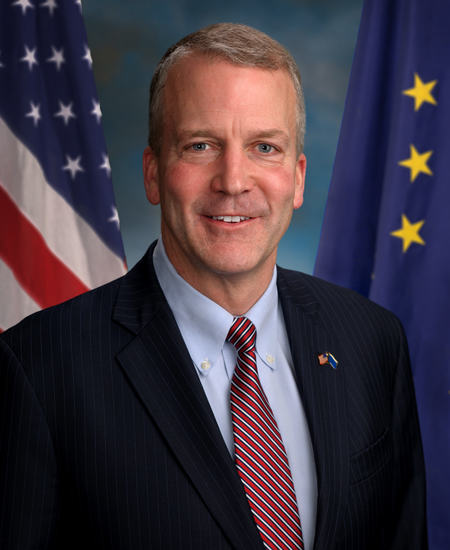
Sen. Dan Sullivan
Sponsored bills
Maddy summaryThis bill would authorize the U.S. government to impose economic sanctions on Chinese officials and entities if China launches a military invasion of Taiwan. Within 3 days of a "covered determination" (either by the President within 24 hours of an invasion or by Congress via a joint resolution), the President must block property, restrict visas, prohibit Chinese entities from trading on U.S. stock exchanges, ban U.S. financial investments in Chinese entities, and prohibit imports of Chinese-made goods. The sanctions would target Chinese officials with decision-making power over military actions against Taiwan, Chinese financial institutions, and entities affiliated with the Chinese government or Communist Party. The legislation defines "military invasion" broadly to include amphibious landings, missile attacks, naval blockades, and cyberattacks against Taiwan as a deterrent measure.
Maddy summaryThis bill would block U.S. federal funding for two international environmental agreements until China's classification in those treaties changes. Specifically, it prohibits funds for the Montreal Protocol (ozone layer protection) until China is removed from "developing country" status, and blocks funds for the UN Climate Change Convention until China is added to Annex I (the list of developed nations). The bill requires the President to certify to Congress that these treaty changes have occurred before funding can resume. It affects only U.S. government spending on these agreements, not direct policy changes for citizens or businesses.
Maddy summaryThis bill establishes a federal "National Parkinson’s Project" under the Department of Health and Human Services to coordinate efforts across agencies in preventing, treating, and curing Parkinson’s disease and related conditions. It requires an integrated national plan, annual progress assessments, and a public Advisory Council - including patient advocates, researchers, and healthcare providers - to guide strategy and recommend actions. The project mandates data sharing among federal agencies and biannual reports to Congress evaluating federally funded Parkinson’s programs, aiming to improve care coordination, reduce financial burdens on Medicare and families, and advance research on environmental triggers. The law directly affects people living with Parkinson’s, their caregivers, and federal health agencies involved in research and patient services. The initiative is scheduled to sunset in 2035.
Maddy summaryThe Venezuelan Democracy Act establishes specific criteria for determining when Venezuela has a transition government or democratically elected government, including requirements for respecting human rights, restoring democratic institutions, and releasing political prisoners. It imposes financial sanctions on the Maduro regime, blocking transactions related to debt instruments and cryptocurrency, and restricts Venezuela's membership in international financial institutions until a democratically elected government is in place. The bill authorizes U.S. support for democratic groups, human rights observers, and humanitarian assistance to the Venezuelan people, while directing that aid be provided through transition or democratically elected governments. Sanctions can be suspended or terminated if Venezuela meets the established democratic transition criteria, aiming to promote democratic change through targeted sanctions and support for democratic institutions.
Maddy summaryThis bill (SJRES 22) seeks to block a specific rule issued by the Department of Education regarding federal student loan modifications. It targets the rule titled "Waivers and Modifications of Federal Student Loans," which included a one-time debt relief program announced in October 2022. The resolution requests Congress disapprove the rule under the Congressional Review Act, preventing the Department from implementing it. If approved, the rule would have no legal effect, directly affecting how student loan borrowers could access modifications or debt relief under that specific policy.
Maddy summaryThis bill establishes the Federal Energy Regulatory Commission (FERC) as the sole lead agency for environmental reviews (NEPA) of natural gas pipeline projects, requiring other federal and state agencies to coordinate with FERC early in the process. It mandates strict deadlines (90 days after FERC completes review) for agencies to issue required permits, with public tracking of progress on FERC’s website. The bill directly affects natural gas project developers, FERC, and state/federal agencies handling permits, streamlining reviews to reduce delays. Key mechanisms include requiring agencies to join FERC’s review process or face restrictions on supplemental reviews, and mandating regular progress reports to FERC. It focuses on procedural coordination, not environmental standards, to expedite project approvals.
Maddy summaryS 989, the North American Energy Act, requires federal approval for new cross-border oil, natural gas, or electricity infrastructure projects in the U.S. It mandates that the Federal Energy Regulatory Commission (FERC) or Secretary of Energy issue a "certificate of crossing" within 90 days for such projects, unless they're deemed not in the U.S. public interest. The bill specifically accelerates approvals for natural gas imports/exports to Canada and Mexico (requiring approval within 30 days) and eliminates the need for Presidential permits for these projects. It does not affect existing facilities or projects with pending permits, and it repeals certain existing requirements for electricity transmission approvals. This bill directly affects energy companies seeking to build new border-crossing infrastructure.
Maddy summaryThis bill directs the U.S. Treasury to instruct American representatives at multilateral development banks (like the World Bank and Asian Development Bank) to oppose new loans to China. It is based on findings that China exceeded the income threshold for graduation from development assistance in 2016 and has since received over $20 billion in loans from these institutions. The bill requires annual reports tracking China's borrowing, U.S. voting efforts to end lending to countries that have surpassed graduation thresholds, and the status of China's eligibility. It directly affects China's access to multilateral development financing and the operational policies of these banks.
Maddy summaryThis bill prohibits entities controlled by the governments of Iran, North Korea, China, or Russia from purchasing or leasing agricultural land in the United States. It also prevents these entities from participating in most Department of Agriculture programs if they own or lease agricultural land, with limited exceptions for food safety and certain agency programs. The bill amends existing reporting requirements to include security interests and leases in the Agricultural Foreign Investment Disclosure Act, requiring more comprehensive transparency about foreign ownership. It mandates annual reports to Congress on foreign ownership risks and the effectiveness of current monitoring systems. The legislation aims to protect agricultural land from foreign influence while improving transparency about who owns U.S. farmland.