

Maddy summaryThis bill prohibits the Thrift Savings Fund (TSP), which invests retirement savings for federal employees and retirees, from purchasing or holding any "security of concern." A "security of concern" includes stocks or investments tied to companies based in, or generating significant revenue from, countries identified as national security threats by the Director of National Intelligence. The rule bans these investments directly and through indirect methods like derivatives or mutual funds, with the TSP Executive Director required to consult the Securities and Exchange Commission biennially to ensure compliance. The policy change directly affects TSP investment options and participant retirement accounts.
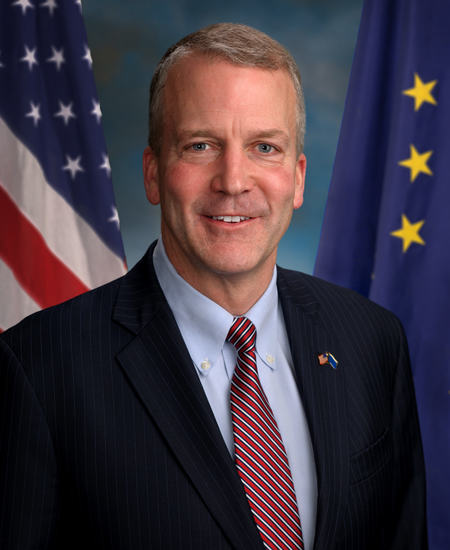
Sen. Dan Sullivan
Sponsored bills
Maddy summaryThis bill creates new federal criminal offenses for killing or assaulting public safety officers (including law enforcement, firefighters, judges, and related personnel) who are acting in their official duties or targeted due to past duties. It expands federal jurisdiction to cover such crimes when they involve interstate travel, weapons, or economic disruption, or when the victim is a federal officer or works for a federally funded agency. Penalties include minimum 10-year prison sentences for killing such officers (or death in capital cases) and 2-20 years for assaults, depending on injury severity. The bill also requires the U.S. Sentencing Commission to add 5-level enhancements for cases where officers were lured to be attacked.
Maddy summaryThis bill creates new authorities for the Department of Homeland Security and Department of Justice to detect, identify, monitor, and mitigate drone threats to designated high-risk facilities including critical infrastructure, government buildings, airports, and other security-sensitive locations. It establishes a 5-year pilot program allowing select state and local law enforcement agencies to use specific drone detection technologies, with strict requirements for privacy protections, training, and coordination with the Federal Aviation Administration. The bill limits the use of technologies that disrupt radio or electronic signals, requires intercepted communications to be maintained for no more than 180 days, and mandates annual congressional reporting on the use of these authorities. It also includes detailed provisions for risk-based assessments, privacy safeguards, and coordination with transportation authorities to ensure national airspace safety.
Maddy summaryThis bill amends the Robert T. Stafford Disaster Relief Act to require the federal government to cover at least 75% of eligible costs for fire suppression and response activities funded under Section 420. It directly affects state and local governments receiving federal disaster relief by guaranteeing a higher minimum federal cost share and allowing funds to cover predeployment of fire resources. Key provisions include setting the 75% federal cost share floor (previously lower or variable), explicitly permitting predeployment expenses, and mandating a rulemaking within 3 years to establish criteria for potentially increasing the federal share further. The changes apply only to funds appropriated after the bill's enactment.
Maddy summaryThis joint resolution (SJRES 23) seeks congressional disapproval of a specific rule issued by the National Marine Fisheries Service. The rule, published in the Federal Register on June 24, 2022, established regulations for listing endangered/threatened species and designating critical habitat under the Endangered Species Act. If passed, this resolution would nullify that rule, preventing it from having legal effect. The bill directly affects how the National Marine Fisheries Service implements species protection under federal law.
Maddy summaryThis bill requires federal executive agencies to return to their pre-pandemic telework policies by December 31, 2019, effectively ending widespread remote work arrangements established during the COVID-19 emergency. It directly affects all federal employees in executive agencies by limiting remote work options until agencies submit a detailed study to Congress analyzing telework impacts on mission performance, costs (like underused office space and incorrect pay classifications), and employee productivity tools. Agencies must then submit a plan to expand telework, which the Office of Personnel Management must certify will improve mission performance, reduce costs, and ensure secure remote work capabilities before any changes can take effect. The law prohibits agencies from expanding telework until this study, plan, and certification process is completed.
Maddy summaryS 1554, the National American Indian Veterans Charter Act, grants a federal charter to the existing nonprofit organization National American Indian Veterans, Incorporated. This charter formally recognizes the group as a federally chartered entity under Title 36 of the U.S. Code, authorizing it to operate as a nonprofit dedicated to serving American Indian veterans. Key provisions include granting the organization exclusive rights to its name and insignia, requiring it to maintain tax-exempt status, and mandating annual reports to Congress on its activities (though these reports are not public documents). The bill directly affects American Indian veterans by legally solidifying the organization’s role as their representative body for advocacy, outreach, and support services.
Maddy summaryThe SAFE Banking Act of 2023 creates a legal safe harbor for financial institutions that provide services to state-sanctioned marijuana businesses and hemp-related legitimate businesses. It prevents federal banking regulators from taking adverse actions against depository institutions for serving these businesses solely because they operate within state-legal marijuana frameworks. The bill also ensures income from legal marijuana businesses can be considered for qualifying for federally backed mortgage loans and requires updated guidance for suspicious activity reporting related to these businesses. These provisions aim to address longstanding banking access barriers for businesses operating within state-legal marijuana and hemp industries.
Maddy summaryThis bill allows the Secretary of Health and Human Services to adjust Medicare payment rates for skilled nursing facilities located in Alaska or Hawaii to account for their unique circumstances, such as higher operating costs due to geographic isolation. It directly affects Medicare-certified nursing facilities in those two states by enabling potential rate increases to better reflect their specific challenges. The key provision amends the Social Security Act to add a new clause permitting these adjustments as determined appropriate by the Secretary. The bill does not specify exact payment amounts or timelines, only establishing the authority for such adjustments.
Maddy summaryThis Senate resolution (SRES 200) expresses support for designating April 30-May 6, 2023, as "National Small Business Week" to honor small businesses and entrepreneurs across the United States. It recognizes that small businesses (over 33 million nationwide supporting 62 million jobs) are vital to the U.S. economy and highlights their resilience. The resolution specifically calls for celebrating their contributions, acknowledging challenges they face, and supporting efforts to improve access for underserved small businesses. As a symbolic gesture - not a law - it does not create new policies or funding but formally recognizes small business impact.